
Last Updated: October 30, 2026
Quick Summary
Choose a medium mattress if you are a side sleeper who needs cushioning at the shoulders and hips, and a firm mattress if you sleep on your back or stomach and need steadier support. The medium vs firm mattress decision depends on sleep position, body weight and where your pain sits, not the firmness label alone.
- Medium mattresses give more contouring at the hips and shoulders for pressure relief.
- Firm mattresses resist sinking and often steady back sleepers and heavier bodies.
- Firmness describes surface feel; support depends on the deeper core layers.
- Heavier sleepers compress the comfort layer more and feel a softer effective firmness.
- Give a new mattress at least two weeks before judging whether it helps your back.
Table of Contents
- Medium vs Firm Mattress: How the Two Firmness Levels Differ
- How Mattress Firmness Is Measured on the Firmness Scale
- Best Mattress Firmness for Back Pain by Pain Type
- Mattress Firmness for Side Sleepers With Back Pain
- How Body Weight and Sleep Position Change the Right Firmness
- How to Test a Mattress and Adjust to a New Firmness
- Booking Your Durable Mattress Trial for Your Back
- Frequently Asked Questions
Medium vs Firm Mattress: How the Two Firmness Levels Differ
Choosing between a medium vs firm mattress for back pain comes down to how much the surface lets your spine sink in versus how much it holds your body up. The difference is worth understanding before you buy. The right answer depends less on the label and more on your sleep position and pain pattern.
A medium mattress cushions the shoulders and hips a little more, which can relieve pressure points for side sleepers. A firm mattress resists sinking. Neither is universally better. Sleep Foundation guide to mattress firmness describes these trade-offs in detail.
Here is the core difference in plain terms:
- Medium: More contouring, more give at the hips and shoulders, better pressure relief for many side sleepers.
- Firm: Less sink, stronger resistance, often steadier support for back sleepers and heavier bodies.
How Mattress Firmness Is Measured on the Firmness Scale
Firmness is not standardized by any single legal rule, and each manufacturer calibrates its own scale, so a "firm" from one brand may feel different from a "firm" from another.
That inconsistency is why the number alone is a weak buying signal. A rating describes the intended feel of the top comfort layer, not how the mattress will behave under your body. Two mattresses both labeled "firm" can feel completely different if one uses a dense support core and the other relies on a thin layer of high-density foam over springs.
Firmness Is Not the Same as Support
This is the most common misconception in mattress shopping, and it matters for back pain. Firmness is how the surface feels when you first lie down, plush, cushioning, or hard. Support is how well the deeper layers keep your spine in neutral alignment and prevent the heaviest parts of your body from sinking out of line.
A mattress can feel plush on top and still support your spine, and a mattress can feel hard on the surface while sagging in the middle. For back pain, support is the property that matters most; firmness is the feel you use to match your sleep position and comfort preference. When you shop, ask how the support core is built, coil gauge, foam density, and layer thickness, rather than relying on the firmness number alone.
What Actually Changes How Firm a Mattress Feels
Several construction and body factors shift perceived firmness even when the label stays the same:
- Comfort-layer thickness: A thick plush top layer can make a firm support core feel medium. A thin top layer exposes the firmer core sooner.
- Foam density: Higher-density foams resist compression longer and feel firmer under load; lower-density foams soften faster.
- Coil gauge and count: Thicker-gauge coils feel firmer; more coils distribute weight more evenly and can soften the overall feel.
- Body weight and shape: A heavier sleeper compresses the comfort layer more and feels a softer effective firmness; a lighter sleeper stays closer to the surface and feels the core sooner.
- Temperature: Memory foam softens in warmth, so a mattress can feel firmer in a cool room and softer after you have been lying on it.
Treat the firmness rating as a starting point, not a guarantee. Read the construction details, layer thickness, foam density, and coil specs, and judge how the mattress actually feels under your body.
Keep the firmness-versus-support distinction in mind as you read the recommendations below.
The table below sums up what changes how firm a mattress actually feels, using the factors the article describes.
| Factor | Effect on feel | Note |
|---|---|---|
| Comfort-layer thickness | Thick top layer feels softer | Can make a firm core feel medium |
| Foam density | Higher density feels firmer | Resists compression longer |
| Coil gauge and count | Thicker gauge feels firmer | More coils spread weight evenly |
| Body weight | Heavier sleepers feel softer | Compresses the comfort layer more |
| Temperature | Warm memory foam softens | Can feel firmer in a cool room |
Best Mattress Firmness for Back Pain by Pain Type
The best firmness depends on where your pain sits and what triggers it. Back pain is not one problem, so a single recommendation rarely fits everyone.
Lower Back Pain and Spinal Alignment
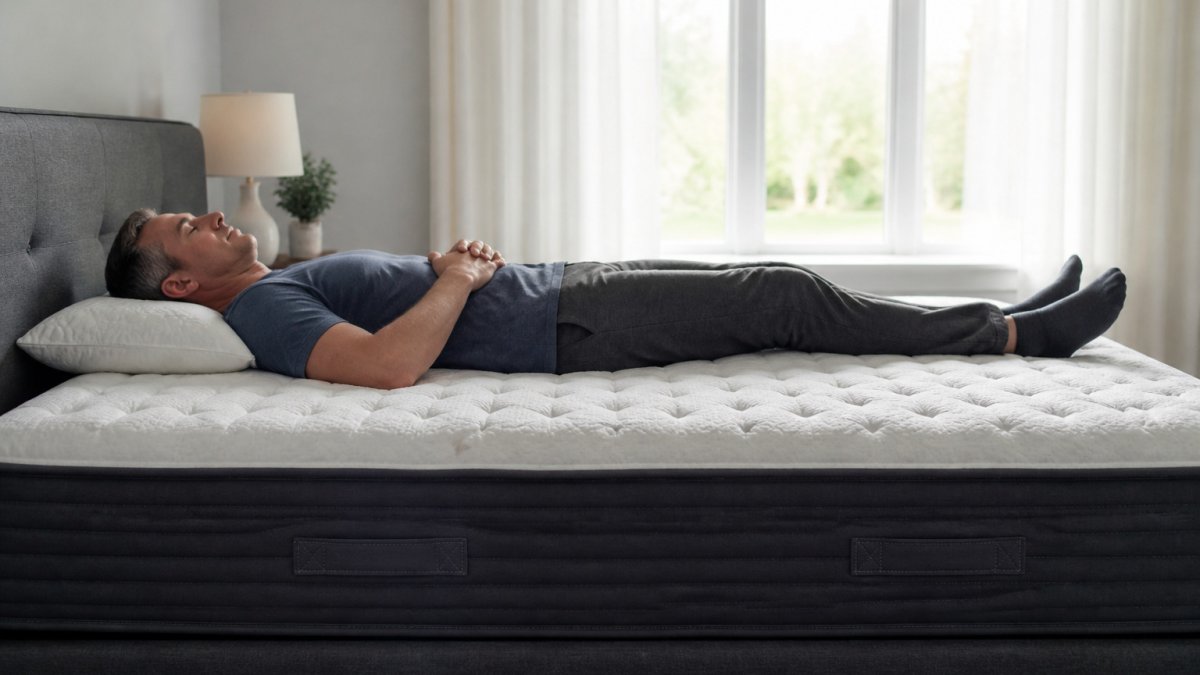
If your pain is in the lower back, the goal is keeping the spine straight from neck to hips. A surface that sags lets the pelvis tilt and strains the lumbar area. A medium-firm to firm surface can hold the spine level while still easing pressure at the hips.
Test this yourself. Lie on your back and check whether a hand fits under your lower back with light resistance. Too much room suggests the mattress is too soft.
When Back Pain Warrants Professional Medical Advice
A new mattress is not a treatment for injury or ongoing medical conditions. See a doctor or physical therapist if pain is severe, spreads down a leg, comes with numbness or weakness, follows an accident, or lasts more than a few weeks despite rest and changes at home. A clinician can tell you whether firmness is part of the solution at all.
Mattress Firmness for Side Sleepers With Back Pain
Side sleepers often prefer medium surfaces because the shoulders and hips need room to sink slightly. Without that give, pressure builds at the joints and the spine can bend sideways. Some side sleepers with back pain may find a medium-firm mattress that keeps the midsection supported suits them. You can compare options in our best mattresses for side sleepers guide.
If you sleep on your side and wake with lower back discomfort, a surface that is too firm may be the cause. Pay attention to whether your waist sits in a neutral line when you lie on your side.
How Body Weight and Sleep Position Change the Right Firmness
Body weight changes how a mattress feels, and it can change how the same mattress feels from one sleeper to another. Heavier sleepers compress the comfort layer more, so a surface that feels medium on a lighter person may feel softer than expected on a heavier one. Lighter sleepers may find firm mattresses feel harder than the rating suggests.
Sleep position matters just as much. Back sleepers usually benefit from firmer support so the lumbar region does not dip; side sleepers need enough give at the shoulder and hip to keep the spine straight; stomach sleepers need a firmer surface that stops the hips from sinking and arching the lower back. Combine the two factors when you choose.
A Practical Weight-and-Position Framework
Rather than memorizing rules, use this decision framework to narrow your choice between medium and firm:
- Back sleeper, average weight: Medium-firm is usually the safer starting point. It holds the lumbar spine level while still cushioning the hips. Choose firm if you wake with lower-back stiffness and prefer a harder surface.
- Back sleeper, heavier body: Firm often works better because a medium surface may compress enough to let the pelvis tilt. Confirm the support core is rated for your weight.
- Back sleeper, lighter body: Medium may feel firmer than the label suggests; a firm mattress can feel like a board. Start with medium and use the trial period to test.
- Side sleeper with back pain: Medium is usually the better match for shoulder and hip pressure relief, but medium-firm can work if the waist stays in a neutral line.
- Stomach sleeper: Firm is generally the better choice to keep the hips from dipping and the lower back from arching.
- Couples with different weights or positions: A medium-firm surface is a common compromise. Check the construction details of any mattress you consider.
Why the Same Mattress Feels Different to Different People
Perceived firmness is a product of your body and the mattress construction together, not the label alone. A 150-pound back sleeper and a 250-pound back sleeper can lie on the same medium mattress and have opposite experiences: the lighter sleeper stays on top of the comfort layer and feels the support core, while the heavier sleeper sinks through it and feels the firmer base. That is why a mattress that feels supportive to one partner can feel like a hammock to the other.
Match firmness to your sleep position first, then adjust for body weight. If you and your partner differ on both, prioritize a medium-firm surface or a flippable mattress that lets each side pick a feel.
If you are unsure, start with the firmness that matches your dominant sleep position and use the trial period to confirm it under your own body weight.
How to Test a Mattress and Adjust to a New Firmness
Most people need one to three weeks to adapt to a new firmness, and the first few nights can feel unfamiliar even if the mattress is a good fit. Give your body time before deciding it is wrong.
Here is a practical way to evaluate a mattress at home:
- Sleep on it for at least two weeks, tracking morning back stiffness.
- Note whether pain eases, stays the same, or worsens.
- Check spinal alignment in your usual sleep position.
- Flip the mattress on schedule, since the 2-sided construction is designed to help prevent premature wear.
Watch out: a mattress that causes sharp pain or numbness after several weeks should be reassessed with a clinician.
Booking Your Durable Mattress Trial for Your Back
If you want a firm feel for back support, the firm option in the Durable Mattress hybrid collection is worth considering.
Durable Mattress offers 2-sided, flippable hybrid mattresses designed to help prevent premature wear. Choose the firmness that matches your sleep position and pain pattern, then give it a fair trial. Shop Mattresses to find the level that fits your back.
Frequently Asked Questions
Is a medium or firm mattress better for back pain?
Neither firmness is better for every back. Firm mattresses can suit stomach and back sleepers, while medium or medium-firm options can suit side sleepers who need pressure relief at the shoulders and hips. If your pain is severe, persistent or radiates down a leg, talk to a doctor before changing your bed. Durable Mattress offers medium, firm and soft options in its hybrid collection, and current pricing is available on the Durable Mattress website.
Can a mattress that is too firm cause back pain?
Yes. A mattress that is too firm can leave pressure points at the hips and shoulders, which pushes the spine out of its natural curve and can cause morning stiffness. Signs that a mattress is too firm include waking with aching shoulders or hips, lying awkwardly to avoid pressure, or feeling that your body sits on top of the bed rather than sinking in slightly. Side sleepers are the most likely to notice this. A medium or medium-soft feel often reduces these pressure points while still supporting alignment.
What mattress firmness is best for side sleepers with back pain?
Side sleepers with back pain usually do best on a medium or medium-firm mattress. The surface needs enough give to cushion the shoulder and hip, which carry most of your weight in this position, while still keeping the spine level. A mattress that is too soft lets the hips sink and twist the spine, and one that is too firm creates pressure at the joints. Using a pillow between the knees can further support alignment on any firmness.
How do I know if my mattress is too soft or too firm?
Lie in your usual sleep position for 10 to 15 minutes and check your spine. A mattress that is too soft lets your hips or shoulders sink so your spine bends out of line, while one that is too firm keeps your body resting on top with pressure at the hips and shoulders. Waking with new aches usually points to a firmness problem.


Double the life of your mattress today
Our mattresses will help you get the sleep you need. Not sure which one’s right for you? Check out our firmness guide below.