
Last Updated: November 14, 2026
Quick Summary
To flip mattress safely, first confirm it is double-sided by checking the law tag and manufacturer instructions, then turn it over so the underside faces up, usually every six months alternating with a rotation. Never flip a one-sided mattress, because you would sleep on the support core and may void the warranty.
- Flipping turns the mattress over, while rotating spins it head-to-foot on the same side.
- Rotate most mattresses every three months during months 1-12, then every six months from year 2.
- Memory foam mattresses should be rotated every six months and never flipped unless the maker says the design is two-sided.
- A pillow-top on one side only means rotate only, since flipping puts the pillow-top against the frame.
- Check slats, box spring, frame and foundation type before blaming the mattress for sagging.
Table of Contents
- Flipping vs. Rotating: What's the Difference?
- How to Rotate a Mattress by Yourself
- How Often Should You Rotate a Mattress?
- How Often Should You Rotate a Memory Foam Mattress?
- What Is a Double-Sided Mattress and Can You Flip It?
- How to Tell If Your Mattress Is Designed to Be Flipped
- Preventing Uneven Wear, Indentations, and Sagging
- Check Your Bed Base and Foundation for Support
- Frequently Asked Questions
Flipping vs. Rotating: What's the Difference?
Flipping and rotating are not the same thing, and confusing them is the fastest way to damage a mattress. To flip mattress means turning it over so the top surface becomes the bottom. Rotating means spinning it head-to-foot on the same side.
Here is the short version:
- Rotate = spin the mattress 180 degrees so the foot end moves to the head end.
- Flip = turn the mattress over so the underside faces up.
- Rotate only = the rule for one-sided mattresses.
- Rotate and flip = the rule for two-sided designs.
The goal of flipping a mattress to prevent wear is simple: spread body weight across more surface area. But whether you should flip at all depends on how the mattress is built. Most modern beds are single-sided, meaning they have a comfort layer on top and a support core below.
That single design detail decides everything else in this guide.
How to Rotate a Mattress by Yourself
Rotating a mattress alone is doable with the right technique, but the technique changes with the mattress type, the frame, and the room. The trick is to move the mattress in controlled stages instead of trying to lift and swing it in one motion. A queen mattress is heavy and awkward, and a bad lift is how people hurt their backs.
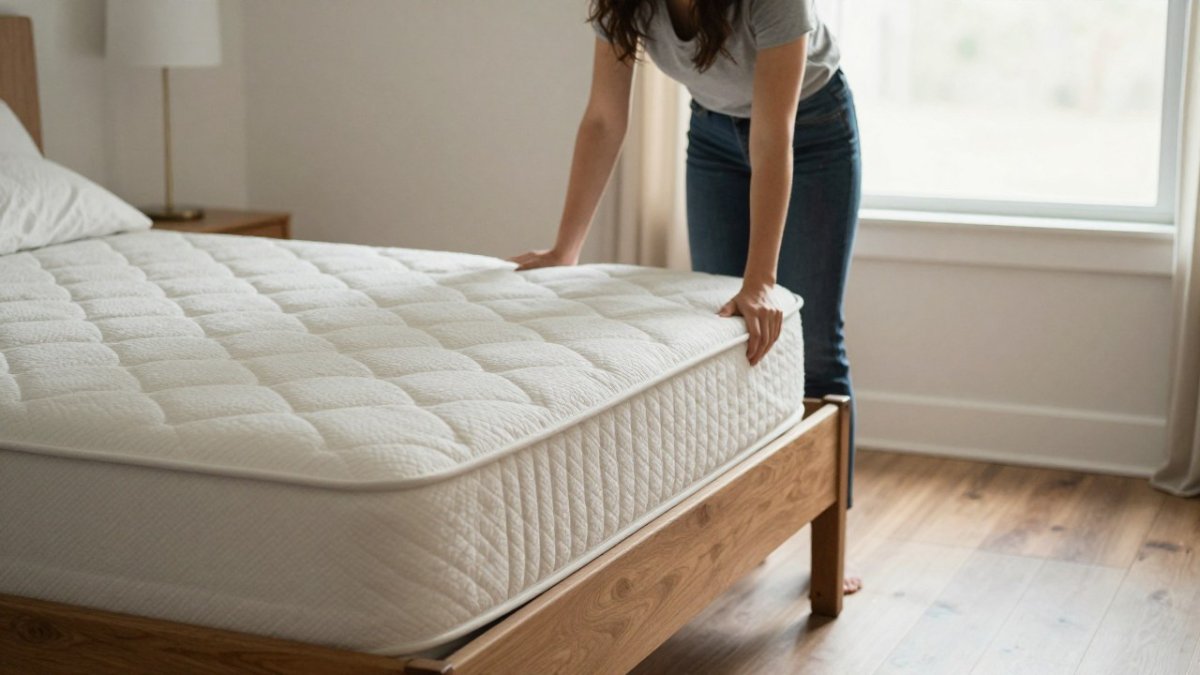
The woman is American.
Before You Start: Clearance, Weight, and Help
Measure the space before you commit. You need at least two feet of clearance on the long sides and enough room at the foot to stand the mattress on its edge.
Know what you are lifting. A queen mattress can be heavy, especially in a coil or hybrid build, and a king is heavier still.
Adjustable beds and platform frames add a step. Lower an adjustable base to flat and unplug it before you move the mattress, and on a platform frame confirm the deck is clear of loose slats.
Step-by-Step Rotation Instructions
- Strip the bed. Remove sheets, blankets, and the mattress pad so nothing bunches underneath.
- Clear the floor. Give yourself room on all sides. Move nightstands if you can.
- Stand at the head of the bed. Grip the top corners with both hands, thumbs under the edge.
- Pull the mattress toward you about a third of the way off the frame.
- Walk around to the side and push the mattress into a vertical position, resting it on its long edge.
- Spin it 180 degrees on the edge so the head becomes the foot.
- Lower it back down onto the frame, guiding it flat.
- Check the alignment and push it flush against the headboard.
Two people make this faster and safer, but the edge-pivot method works alone. Watch out: never drag a mattress across a frame or floor. Friction tears the cover and breaks down the ticking at the corners. If your mattress has handles, use them for positioning only, not for lifting the full weight.
After the Rotation: Verify the Fit
A rotation is only finished when the mattress sits correctly. Walk the perimeter and confirm the mattress is centered on the frame with even overhang on both sides, uneven overhang puts extra load on one edge and can bow the slats. Press down at each corner; a mattress that rocks or lifts at a corner is not seated flat.
If the mattress has a designated head end, many foam beds taper or have a logo at the foot, make sure that end still points where the maker intended after the spin. Rotating a tapered mattress the wrong way can leave a gap at the headboard.
How Often Should You Rotate a Mattress?
Rotating your mattress every six months is the standard advice for most beds. Many manufacturers suggest rotating more often during the first year, then less often after that. The first year matters most because the comfort layers are still settling.
A simple schedule to follow:
- Months 1-12: rotate every three months.
- Year 2 onward: rotate every six months.
- Memory foam or hybrid: stick to the six-month mark unless the maker says otherwise.
Mark your calendar or set a phone reminder. A common mistake is rotating once, feeling good about it, and then forgetting for two years. Consistency is what actually prevents uneven wear.
For a deeper walkthrough of timing and technique, our guide on how often to flip a mattress breaks down the full schedule.
Here is the rotation schedule the article recommends.
| Timeframe | What to do |
|---|---|
| Months 1-12 | Rotate every three months |
| Year 2 onward | Rotate every six months |
| Memory foam or hybrid | Stick to the six-month mark unless maker says otherwise |
How Often Should You Rotate a Memory Foam Mattress?
Memory foam mattresses should be rotated every six months, and never flipped unless the maker explicitly says the design is two-sided. Foam softens where body weight presses hardest. Rotating spreads that load and slows compression.
Memory foam also runs warmer and recovers more slowly than coil-based beds. That means impressions linger longer, and rotating gives the foam time to rebound evenly. If you sleep in the same spot every night, a six-month rotation is the minimum. Every three months is better if you are heavier or sleep hot.
One caveat: some foam beds have a distinct top and bottom. Check the law tag or the manufacturer instructions before you flip anything.
What Is a Double-Sided Mattress and Can You Flip It?
A double-sided mattress is a bed built with a comfort layer on both the top and bottom, so either side can be slept on. These are also called two-sided or flippable mattresses. You can and should flip them, usually every six months, alternating with a rotation.
The construction is the key difference. A one-sided design has a comfort layer on top and a support core underneath. Flip it and you sleep on dense support foam or coils, which is uncomfortable and can damage the layers.
Flippable designs tend to last longer because both surfaces share the wear. If you are weighing whether a two-sided bed is right for you, our comparison of whether two sided mattresses are better lays out the trade-offs. For a closer look at how design affects longevity, see our breakdown of flippable vs non-flippable mattress durability.
Durable Mattress offers 2-sided flippable mattresses designed to be flipped, which is how shared wear can help extend the life of a mattress.
How to Tell If Your Mattress Is Designed to Be Flipped
Check three things before you flip: the law tag, the manufacturer instructions, and the physical build. The law tag lists the materials and often notes whether the mattress is two-sided. Manufacturer instructions will say plainly if flipping is allowed.
Quick checks:
- Law tag says "two-sided" or "flip": you can flip it.
- Law tag says "one-sided" or lists a distinct top: rotate only.
- No tag and no paperwork: look for a finished cover on both faces. A bare support core on the bottom means do not flip.
- Pillow-top on one side only: rotate only. Flipping puts the pillow-top against the frame.
Watch out: flipping a one-sided mattress can void the warranty. Most warranties cover sagging and defects only when the bed is used as designed.
Preventing Uneven Wear, Indentations, and Sagging
Knowing when to flip mattress and rotate slows wear, but neither fixes a support problem. The first job is to tell the difference between a mattress that is settling normally and one that is failing.
Run this quick assessment before you schedule another rotation:
- Measure the dip. Lay a straight edge across the impression and measure the gap at the deepest point. A shallow impression that stays stable over time is usually normal; a deeper or growing one is worth attention.
- Press with your palm. A spot that stays compressed after you lift your hand points to foam breakdown, not surface settling.
- Check for a ridge. A raised hump down the center often means the foundation is bowing, not that the mattress is worn.
- Note the timeline. Impressions that appear in the first few months and then stop are settling; new dips after year three usually mean the comfort layer is fatigued.
What actually helps:
- Rotate or flip on schedule so weight spreads evenly.
- Use a mattress protector to keep moisture and oils out of the foam.
- Keep the bed on a supportive frame with proper slats or a solid base.
- Air the mattress out occasionally to let foam recover.
- Address the foundation if the sag keeps coming back.
Watch out: rotating a mattress with a genuine support failure can make the problem feel worse, because you move the soft spot to a new sleeping position without fixing the cause. If a dip exceeds the normal range and returns within weeks of a rotation, the mattress or the foundation needs attention, not another spin.
For a step-by-step plan beyond flipping, our guide on how to prevent mattress sagging covers the fixes that work.
Check Your Bed Base and Foundation for Support
A weak foundation is the most overlooked cause of premature mattress wear. If the base sags, the mattress sags with it, no matter how often you flip. Check the frame, slats, and box spring before you blame the mattress.
Run through this checklist:
- Slats: evenly spaced, no cracks, no bowing.
- Box spring: no squeaks, no soft spots, no visible sag.
- Frame: all legs on the floor, no wobble, center support in place for queen and king sizes.
- Foundation type: matches what the mattress maker requires. Some foam and hybrid beds need a solid platform.
If your base is the weak link, a sturdy durable adjustable base gives the mattress proper support and lets you adjust position for comfort. Fix the foundation first, then set your rotation schedule. That order matters more than most people realize.
A mattress only lasts as long as the care you give it. Rotate on schedule, flip only when the design allows, and check the base before anything else.
Frequently Asked Questions
Does flipping a mattress help prevent wear?
Flipping a double-sided mattress can help spread your body weight across both sleep surfaces, reducing compression on any one side. For single-sided mattresses, flipping is not possible, but rotating the mattress 180 degrees every six months can still help prevent uneven wear and indentations. Always check your manufacturer's instructions and warranty before flipping or rotating.
How often should you rotate a mattress?
Most manufacturers recommend rotating your mattress every six months. If you sleep alone or the mattress shows early signs of body impressions, rotate it every three to four months. Set a reminder on your phone and pair the task with a seasonal chore like changing smoke detector batteries. Regular rotation helps prevent sagging and extends mattress lifespan.
Can you flip every mattress?
No, you cannot flip every mattress. Only double-sided mattresses with identical comfort layers on both sides are designed to be flipped. Single-sided mattresses, including most memory foam and hybrid models, have a designated sleep surface and a support core on the bottom. Flipping a one-sided mattress can damage the comfort layer and void your warranty. Check the tag or manufacturer instructions to confirm.
Should you rotate or flip a memory foam mattress?
Most memory foam mattresses are single-sided, so you should rotate them 180 degrees rather than flip them. Rotating a memory foam mattress every six months helps prevent uneven wear and body impressions. If you own a double-sided memory foam mattress, you can flip it, but follow the manufacturer's instructions. Never flip a one-sided foam mattress, as the support layer is not designed for sleeping.


Double the life of your mattress today
Our mattresses will help you get the sleep you need. Not sure which one’s right for you? Check out our firmness guide below.