Table of Contents
- What Makes a Mattress Last: The Durability Foundation
- How Long Does a Mattress Last: Realistic Timelines
- Durable Mattress Materials That Stand the Test
- Mattress Signs of Wear: When to Replace
- Mattress Maintenance Tips to Extend Durability
- Best Mattress for Long Term: Support Levels Matter
- Long-Term Value: Investment That Pays Off
- Frequently Asked Questions
Last Updated: October 11, 2026
What Makes a Mattress Last: The Durability Foundation
A mattress that lasts depends on three core factors: construction quality, material selection, and how well you maintain it. The best mattress for long term value combines all three. Most people focus only on comfort when buying, then wonder why their mattress sags within a few years.
High-quality materials resist compression and body impressions. Proper support layers prevent sagging. Flippable designs distribute wear evenly across both sides, extending usable life significantly.
Construction matters more than brand name. A hybrid mattress with quality foam, sturdy coils, and reinforced edges will outlast a premium-priced all-foam option with weak edge support. The best mattress for long term is built to handle nightly pressure without permanent deformation.
Flip your mattress every 3-6 months, even if it's not marketed as flippable. This simple habit extends lifespan by distributing body weight across different areas and preventing concentrated wear patterns.
How Long Does a Mattress Last: Realistic Timelines
Most mattresses last 7-10 years, though budget options may sag after 5 years and well-engineered mattresses can last 12+ years. Lifespan depends on body weight, sleep position, construction, and maintenance. Heavier sleepers and stomach sleepers experience faster compression; side sleepers distribute weight more evenly.
Hybrid mattresses with individually wrapped coils and high-density foam typically last longer than all-foam options. Flippable designs can effectively double lifespan by offering two usable surfaces.
A mattress that lasts 10+ years requires high-quality materials, proper support layers, and consistent maintenance, not just a premium price tag.
Durable Mattress Materials That Stand the Test
Material selection directly determines how a mattress resists compression, sagging, and support loss over time. Different constructions fail in different ways, and understanding these failure modes helps you choose a mattress built to last.
Foam Density and Compression Resistance
Polyfoam and memory foam degrade through compression, the material loses height and resilience as it's repeatedly compressed under body weight. High-density foam (2.0 pounds per cubic foot or higher) resists compression better than standard-density foam (1.5 pounds per cubic foot), but density alone doesn't guarantee longevity.
Memory foam ranges from 3.0-5.0 pounds per cubic foot. A mattress using 4.0+ pound memory foam resists body impressions better than 2.5-pound foam, though it costs more and may sleep warmer.
Polyfoam degrades faster than memory foam or latex. Budget mattresses use low-density polyfoam (1.0-1.5 lbs/cu ft), which compresses within 3-5 years. Mid-range mattresses use 2.0-2.5 lb polyfoam for longer life, though higher density adds weight and cost.
Coil Systems and Support Retention
Innerspring and hybrid mattresses rely on coils to provide structural support and prevent bottoming out. Coil quality directly affects durability.
Individually wrapped coils are wrapped in fabric sleeves that isolate each coil, reducing noise and motion transfer.
Continuous coil systems use a single wire looped into multiple coils, connected along the mattress length. This cheaper design transfers motion and stress across the entire system. Continuous coil mattresses often sag within 5-7 years.
Coil gauge (thickness) matters: lower numbers indicate thicker wire. Premium hybrids use 12-13 gauge coils; budget options use 14-16 gauge. Thicker coils resist permanent deformation longer.
Latex: Natural vs. Synthetic Durability
Latex resists compression better than foam and lasts 15+ years. Natural latex is more durable than synthetic but costs $500-$1,000 more per queen. Blended latex (70% natural/30% synthetic) offers a middle ground.
Hybrid Construction: Balancing Comfort and Longevity
Hybrid mattresses combine foam comfort layers with a coil support system. This design addresses a key durability problem: foam-only mattresses can bottom out (compress fully under body weight), losing support. Coils prevent this by providing a structural floor.
A well-engineered hybrid uses high-density foam (3.0+ lbs/cu ft) over individually wrapped coils (800+ per queen), lasting 10-12 years. Poorly engineered hybrids with thin foam and low-quality coils fail faster. Durability depends on both layers working together. Consistent support relies on the structural integrity of these materials, which is why professional foam durability remains the most critical factor in extending the functional lifespan of any sleep surface.
Flippable Design: Engineering for Extended Life
A truly flippable mattress has identical comfort and support on both sides, effectively doubling usable life.
Material Trade-Offs for Different Sleepers
Heavier sleepers (over 230 lbs) need high-density foam (4.0+ lbs/cu ft), thick coils (12-13 gauge), and hybrid construction; all-foam may sag within 5 years. Lighter sleepers (under 150 lbs) can use lower-density materials. Side sleepers benefit from high-density foam to resist shoulder and hip impressions; back and stomach sleepers distribute weight more evenly.
Durability is determined by measurable material properties, foam density, coil gauge and count, latex type, not brand reputation.
Mattress Signs of Wear: When to Replace
Visible sagging is the clearest sign of mattress failure. If you see or feel a body-shaped depression that doesn't bounce back within a few hours, the foam or coils have lost structural integrity.
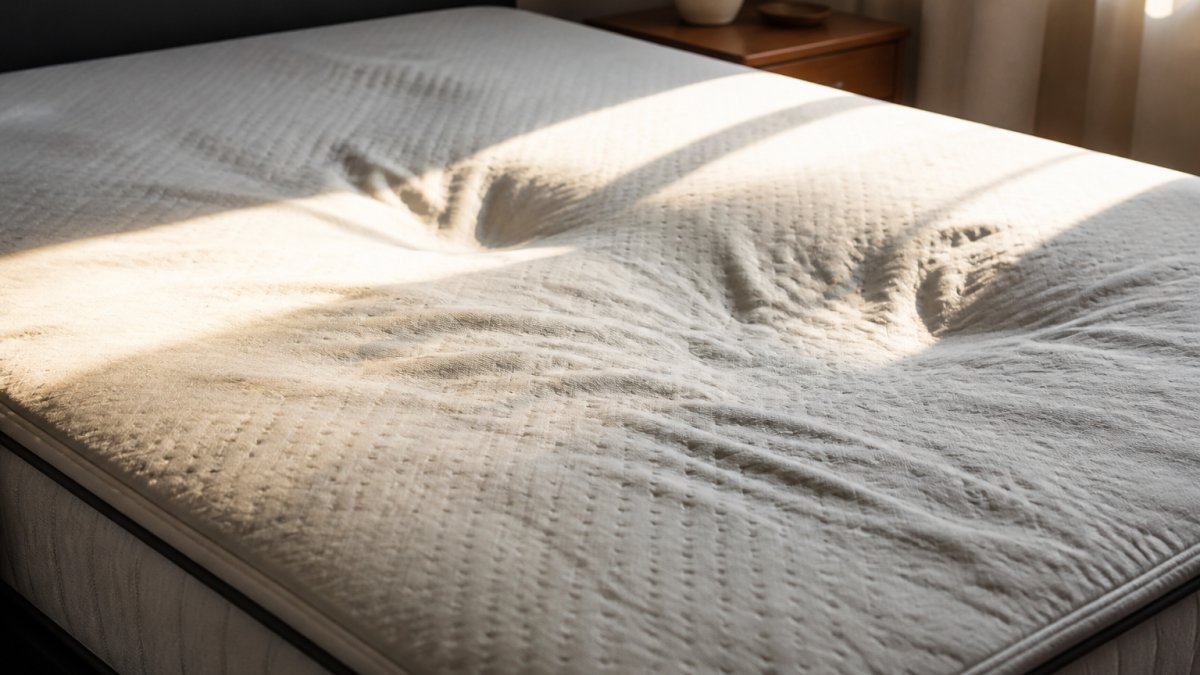
Waking with back or neck pain often signals mattress failure. As foam compresses and coils weaken, support diminishes and pressure points develop. If pain improves elsewhere, your mattress is likely the cause.
Excessive motion transfer indicates coil degradation. If you feel your partner moving throughout the night more than you used to, the coils may no longer be isolating motion properly.
Lumps, bunching, or uneven surfaces mean the internal structure has shifted. Foam layers may have separated, or coils may have broken. These issues worsen over time and cannot be repaired. Replacement becomes necessary.
Mattress Maintenance Tips to Extend Durability
Rotate your mattress every 3 months if not flippable. This distributes wear across different areas and prevents concentrated compression.
Use a mattress protector from day one. A quality protector shields the mattress from sweat, spills, and dust mites, preventing foam degradation and coil rust.
Support your mattress properly. A weak foundation accelerates wear on coils and foam. Use a sturdy box spring, platform bed, or slatted frame with proper spacing.
Keep your bedroom cool and dry (65-70°F, 30-50% humidity). Heat and humidity degrade foam and encourage mold growth.
Avoid jumping on your mattress or sitting on the edge repeatedly, as these actions concentrate stress and accelerate wear.
Best Mattress for Long Term: Support Levels Matter
The best mattress for long term matches your sleep position and body weight. Side sleepers need medium firmness; back sleepers prefer medium-firm; stomach sleepers need firmer support. A properly matched firmness level reduces stress on specific areas and extends lifespan. Durable Mattress offers medium, firm, and soft options to match your needs.
Choosing firmness based solely on brand reputation or online reviews is a common mistake. A mattress that's popular overall may be wrong for your body type, causing poor sleep and accelerated wear in pressure point areas.
Long-Term Value: Investment That Pays Off
True long-term value requires comparing purchase price, expected lifespan, warranty coverage, and total cost of ownership, not just the sticker price.
Cost Per Year of Use
Calculate cost per year by dividing purchase price by expected lifespan. A $1,200 mattress lasting 12 years costs $100/year; a $600 mattress lasting 5 years costs $120/year. A moderately priced hybrid lasting 12 years may offer better value than a budget mattress replaced every 5 years.
Warranty Coverage: What's Actually Included
Mattress warranties vary dramatically in scope, and most consumers misunderstand what they cover.
Sagging thresholds are the most important warranty detail. Most warranties cover 1.5 inches or more; some cover 1 inch; a few cover 0.75 inches.
Warranty duration ranges from 5-20 years. A 10-year warranty is standard for mid-range mattresses; budget mattresses often have 5-year warranties.
What's covered vs. excluded varies: Most cover manufacturing defects (broken coils, foam separation). Many exclude sagging from inadequate foundation support or normal wear.
Repair vs. replacement is critical. Some warranties cover repair only; others cover full replacement; a few cover only partial refunds. Always clarify what your warranty covers.
Prorated vs. non-prorated warranties differ significantly. Non-prorated warranties cover full repair or replacement for the entire period.
Hidden Ownership Costs
Beyond the purchase price and warranty, several costs affect long-term value:
Mattress protectors ($50-$200) extend lifespan by preventing moisture damage, dust mites, and stains. A waterproof protector prevents sweat and spills from degrading foam and corroding coils.
Foundation replacement may be necessary. A weak or damaged bed frame accelerates mattress wear. A sturdy platform bed or slatted frame costs $200-$800. Poor foundation support causes premature failure and warranty denial.
Warranty Claim Reality: Common Denial Reasons
Many mattress owners file warranty claims only to have them denied. Understanding common denial reasons helps you avoid them:
-
Inadequate foundation support: The most common denial reason. If your mattress is on a weak box spring, floor, or frame with gaps, the warranty is void. Verify your foundation meets the manufacturer's requirements before purchasing.
-
Sagging below the threshold: If your mattress sags 0.8 inches but the warranty covers 1.5 inches or more, the claim is denied. Measure sagging accurately before filing.
-
Missing proof of purchase: Keep your receipt and proof of purchase. Some manufacturers require this for warranty claims, even years later.
-
Normal wear and tear: Mattresses naturally soften over time. If the manufacturer determines your sagging is normal wear rather than a defect, the claim is denied.
-
Damage from misuse: Jumping on the mattress, sitting on the edge repeatedly, or allowing liquid damage voids the warranty. Document how you've used the mattress.
-
Stains or odors: These are almost never covered, even if they don't affect support.
Comparing True Ownership Cost
To compare two mattresses fairly, calculate total cost of ownership over 10 years:
Mattress A: $800 purchase price, 5-year lifespan, no warranty coverage for sagging under 1.5 inches.
- Year 0-5: $800 + $100 (protector) + $200 (foundation upgrade) = $1,100
- Year 5-10: $800 (replacement) + $100 (protector) = $900
- Total 10-year cost: $2,000
Mattress B: $1,400 purchase price, 12-year lifespan, 10-year non-prorated warranty covering sagging above 1 inch.
- Year 0-12: $1,400 + $150 (protector) + $200 (foundation) = $1,750
- Total 10-year cost: $1,750 (with 2 years of warranty remaining)
Mattress B costs $250 more over 10 years but provides better support for longer and includes warranty protection. This is better long-term value despite the higher initial price.
Don't assume a longer warranty means better durability. A 20-year prorated warranty that covers only 25% of replacement cost after year 10 may offer worse value than a 10-year non-prorated warranty. Always read the fine print.
Frequently Asked Questions
How long does a mattress last before it needs replacing?
Most quality mattresses last 7 to 10 years with proper care, though this varies based on construction, materials, and how often you flip or rotate it. Hybrid mattresses with flippable designs can extend durability by 2 to 3 years because you're distributing wear evenly across both sides. Budget-tier mattresses may show signs of wear within 5 to 7 years, while premium construction can reach 10 to 15 years. Track visible sagging, reduced support, and morning stiffness as signals to evaluate replacement.
What mattress materials are most durable for long-term use?
Hybrid mattresses combine memory foam, latex, and innerspring coils to distribute weight and reduce localized wear. Latex is naturally resilient and resists body impressions better than foam alone. High-density memory foam (5+ pounds per cubic foot) holds its shape longer than low-density alternatives. Flippable designs maximize durability by allowing you to alternate between sides, preventing premature sagging on one surface. Innerspring coils with reinforced edges resist edge collapse, a common durability issue in single-sided mattresses.
Does flipping a mattress really make it last longer?
Yes, flipping a mattress extends its lifespan by distributing body weight and pressure across both sides instead of concentrating wear on one surface. This prevents uneven sagging and body impressions that typically develop after 3 to 5 years. Flippable mattresses are engineered with consistent comfort on both sides, so each flip resets the wear cycle. Rotating (head to foot) also helps, but full flipping is more effective for long-term durability. Most manufacturers recommend flipping every 3 to 6 months for optimal results.
What's your return policy if the mattress doesn't work for my back pain?
Visit our website or contact our customer service team for current return policy details, trial periods, and warranty information. We offer options designed to give you confidence in your purchase and ensure you find the right firmness level for your specific needs. Our support team can answer questions about medium, firm, and soft options to help match your back pain requirements before you order.
Choosing a mattress that lasts requires understanding construction, materials, and maintenance. Durable Mattress builds mattresses engineered for longevity with 2-sided flippable design, hybrid construction, and available firmness levels that match your body's needs. Our mattresses prevent premature wear and extend your investment's lifespan. Shop Mattresses today and experience the difference quality construction makes for your long-term comfort.
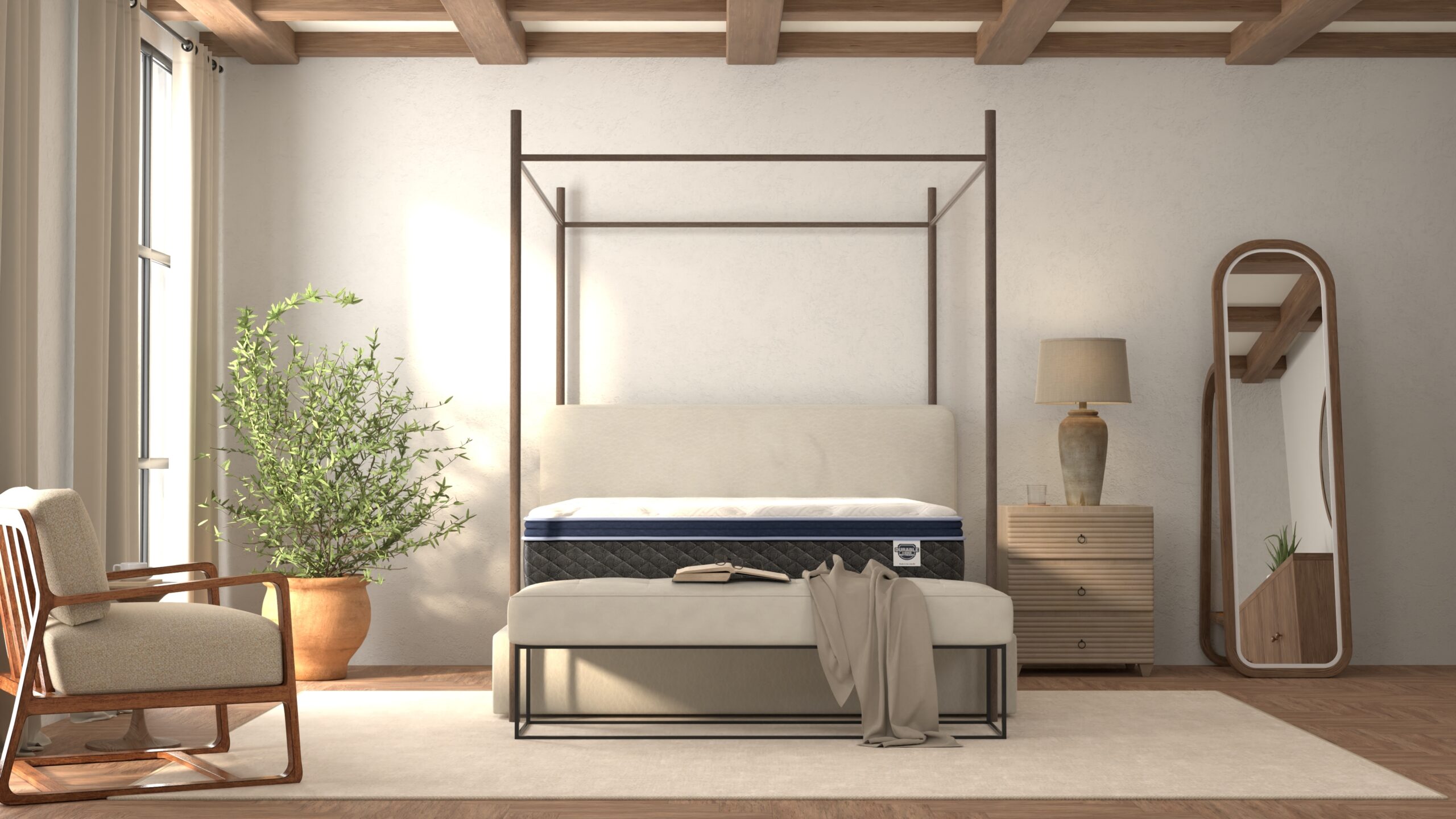
Double the life of your mattress today
Our mattresses will help you get the sleep you need. Not sure which one’s right for you? Check out our firmness guide below.