
Last Updated: November 21, 2026
Quick Summary
The best sleeping position for side sleepers with back pain is on your side with your spine kept in a neutral line, knees slightly bent, and a firm pillow between the knees. Side sleeping works best when your mattress and head pillow support the spine so the hips and shoulders stay stacked and the lower back is not twisted overnight.
- Keep head, shoulders, hips and knees stacked in a roughly straight line.
- Place a firm pillow between your knees to stop the top leg twisting your lower back.
- Set the head pillow so your nose points in line with your body, not up or down.
- Use a medium-firm to firm mattress so your hips do not sink below your shoulders.
- Avoid stomach sleeping, which is the position most likely to aggravate lower back pain.
Table of Contents
- Why Side Sleeping Often Works Best for Back Pain
- Best Sleeping Position for Spine Alignment on Your Side
- Best Position to Sleep for Lower Back Pain
- Sleeping Positions for Upper Back Pain and Neck Alignment
- Worst Sleeping Position for Lower Back Pain and Positions to Avoid
- Troubleshooting Back Pain That Persists Overnight
- Choosing a Mattress and Pillow for Your Side Sleeping Setup
- Frequently Asked Questions
Why Side Sleeping Often Works Best for Back Pain
Side sleeping is the position most people with back pain can tolerate, and for many it is the one that eases pressure on the spine overnight. Done right, it keeps the spine in a neutral line and takes strain off the lower back. Done wrong, it twists the hips and shoulders and makes morning soreness worse.
The trick is that side sleeping only helps when the setup supports your body. Your mattress, pillow and leg position all matter. The sections below walk through the adjustments that make the position work for back pain.
Best Sleeping Position for Spine Alignment on Your Side
The goal of side sleeping is a neutral spine: your head, shoulders, hips and knees stacked in a roughly straight line. Lie on your side with your knees bent slightly toward your chest, which keeps the hips level and reduces rotation through the lower back.

A common mistake is sinking into the mattress so far that the hips drop lower than the shoulders. That curves the spine and loads the lower back. A medium-firm to firm surface is generally a reasonable starting point for many side sleepers.
Setting Up Your Pillow Height and Placement
Your head pillow should fill the gap between your ear and the mattress so your neck stays in line with your spine. If the pillow is too high, your head tilts down and strains the neck. If it is too low, your head drops toward the bed and the neck bends the other way.
Most side sleepers do best with a firm pillow that holds its shape through the night. Check the height by lying on your side and looking straight ahead. Your nose should point roughly in line with your body, not toward the floor or the ceiling.
Pillow Between the Knees and Leg Positioning
Placing a pillow between your knees stops the top leg from pulling the hips forward and twisting the lower back. Use a firm pillow or a body pillow long enough to rest your upper leg on without it sliding off.
Keep both knees bent slightly rather than locked straight. This small change reduces tension through the hips and the lower back, which is where side sleepers with back pain often feel the most strain.
Best Position to Sleep for Lower Back Pain
For lower back pain, a pillow between the knees can help, and the order you build the position in matters as well. A practical sequence looks like this:
- Start on your side with the bottom leg straight or nearly straight. A fully bent bottom leg tucks the pelvis under and flattens the lumbar curve.
- Bend the top knee to roughly 90 degrees and rest it on a firm knee pillow. The pillow should be thick enough that the top knee sits level with the bottom knee, not higher and not lower.
- Slide a thin pillow or folded towel under the waist if you feel a gap. A small lumbar roll fills the space between the mattress and the lower back and stops the spine from sagging into the bed.
- Stack the head pillow so the ear, shoulder and hip line up. If the head pillow is too tall, the neck side-bends and the lower back compensates.
- Point the top foot slightly down and forward, not up toward the ceiling. A dropped top foot keeps the hip from rolling open.
Watch out: a knee pillow that is too soft collapses by mid-night, and the top hip rolls forward again, the exact twist that loads the lower back. Firmness matters more than thickness here.
Lower back vs. radiating leg pain. Not all lower back pain behaves the same overnight. If the pain stays in the low back and feels like stiffness or a dull ache, the stacked-hip setup above is usually enough. If pain or numbness travels down the buttock and into the leg, that pattern warrants a conversation with a healthcare provider rather than self-treatment with positioning alone (Sciatica: MedlinePlus Medical Encyclopedia).
Back sleeping as the fallback. Sleeping on your back with a pillow under the knees is an alternative some people with lower back pain find comfortable, though it can aggravate certain conditions, particularly if the mattress lets the lower back arch. Try both positions for several nights each and notice which one leaves you stiffer in the morning; that feedback is more useful than any general rule. If neither position consistently eases morning stiffness, tracking how your posture and symptoms change can help you find a steadier way to sleep with chronic pain.
Sleeping Positions for Upper Back Pain and Neck Alignment
Upper back and neck pain often come from the head and shoulders drifting out of line during the night. Keep the head pillow at a height that supports the neck, and avoid letting the top shoulder roll forward and collapse the chest.
Hugging a pillow in front of you can help keep the shoulders stacked and the arms from pulling the upper back into a curve. Some people also find that sleeping with the arms bent in front of the body, rather than tucked under the head, reduces pressure on the shoulder and neck.
Worst Sleeping Position for Lower Back Pain and Positions to Avoid
Sleeping on your stomach is the position most likely to aggravate lower back pain (pubmed.ncbi.nlm.nih.gov). It forces the spine into an arched position and often twists the neck to one side for hours. If you naturally roll onto your stomach, a body pillow can help keep you on your side.
Sleeping fully curled up in the fetal position can also strain the lower back if the curl is too tight. Keep the knees bent but not pulled hard toward the chest, and make sure the spine stays as straight as the bend allows.
Troubleshooting Back Pain That Persists Overnight
If pain gets worse during the night or lingers every morning, the setup is usually the problem, but changing five things at once makes it impossible to know which one helped. Work through this checklist one adjustment at a time, giving each change three to five nights before judging it.
1. Check the mattress sink first. Lie on your side and have someone look at your spine from behind, or take a photo with your phone. If the hips drop noticeably below the shoulders, the mattress is too soft for side sleeping and the lower back is curving. A medium-firm to firm surface usually holds the hips up. If the mattress is new, give it a few weeks before deciding, many foams and hybrids soften slightly in the first month.
2. Re-measure the head pillow. The most common overnight complaint is neck and upper-back stiffness that builds by morning. Lie on your side and look straight ahead: your nose should point in line with your body. If your head tilts down toward the bed, the pillow is too low; if your chin tucks toward your chest, it is too high. Shoulder width matters, broader shoulders need a taller pillow, and a pillow that worked on a softer mattress may be too tall on a firmer one.
3. Test the knee pillow height. The top knee should rest level with the bottom knee. If the top knee sits higher, the top hip rolls forward and twists the lower back; if it sits lower, the top leg drops and pulls on the hip. A folded towel under a too-thin knee pillow is a quick way to test the right height before buying a firmer one.
4. Add a small lumbar roll if there is a gap at the waist. A thin pillow or rolled towel tucked into the curve of the lower back stops the spine from sagging. Remove it if it pushes the hips forward instead of filling the gap.
5. Watch the top shoulder and arm. If the top shoulder rolls forward and collapses the chest, hug a pillow in front of you or bend the top arm in front of the body rather than tucking it under the head. Shoulder pressure that turns into numbness or tingling by morning is worth raising with a doctor or physical therapist.
6. Give a new position time. Adjusting to a new sleeping position takes one to three weeks for most people. Expect to roll back into your old habit for the first several nights; a body pillow behind your back can keep you from rolling onto your stomach.
When to stop adjusting and get help. If pain is sharp rather than achy, spreads down a leg, comes with numbness, tingling or weakness, or does not improve after a few weeks of consistent adjustments, speak with a doctor or physical therapist. The same is true if pain wakes you repeatedly or is worse in the morning than when you went to bed despite a supported setup. Sleep position advice supports good habits, but it does not replace a medical evaluation, and persistent or worsening symptoms deserve one.
Choosing a Mattress and Pillow for Your Side Sleeping Setup
Your mattress needs to support the hips and shoulders without letting them sink. Durable Mattress offers its hybrid mattresses in Medium, Firm and Soft firmness levels, and its 2-sided flippable design means you can flip the mattress over its life.
Pair the mattress with a firm pillow sized for your shoulder width, and consider keeping a dedicated knee pillow in the bed. Shop Mattresses at Durable Mattress to compare firmness options for your sleep position and back pain.
Frequently Asked Questions
Where do I put my arms when sleeping on my side?
Place the bottom arm forward in front of you, with the elbow slightly bent and the hand resting near the pillow, so the shoulder does not roll under the body. The top arm can rest along the side or on a body pillow for support. Avoid tucking the arm under the head or pillow, since that can tilt the neck and compress the shoulder. Keeping both arms in a relaxed, supported position helps the upper body stay stacked over the hips and reduces morning stiffness.
Should side sleepers with back pain put a pillow between their knees?
Yes, for most side sleepers a pillow between the knees helps keep the top hip from dropping forward and rotating the pelvis, which can pull on the lower back. Use a firm pillow thick enough to fill the gap between the knees, with the legs slightly bent. Some people report more comfort with this setup. If pain persists with a knee pillow, adjust the thickness or try placing a small pillow under the waist for extra support.
Is it better to sleep on your left or right side for back pain?
There is no single side that works best for everyone with back pain. Choose the side that feels more comfortable and keeps your spine most neutral, and alternate if one side causes morning stiffness. Some people with heartburn or certain conditions have side-specific preferences, so pay attention to how each side affects your symptoms over several nights. If pain is consistently worse on one side, a healthcare provider can help identify the cause.
When should back pain that affects sleep be checked by a doctor?
See a doctor if back pain wakes you repeatedly, lasts more than a few weeks, spreads down one or both legs, causes numbness or weakness, or follows an injury. Sudden loss of bladder or bowel control, fever, or unexplained weight loss also require prompt medical attention. Sleep position changes can ease mild discomfort, but persistent or worsening pain needs a professional evaluation to rule out underlying conditions.

Last Updated: November 15, 2026
Quick Summary
A mattress investment is worth the cost when it lasts long enough to spread its price across many years of sleep and its construction resists the wear that ends most mattresses early. Most mattresses give usable support for roughly seven to ten years, so compare options by cost per night rather than sticker price.
- Expect a mattress to give usable support for roughly seven to ten years in most cases.
- Calculate cost per night by dividing the price by expected years of use, then by 365.
- Ask for the foam density in PCF and the coil specifications before trusting durability claims.
- Check return fees and who pays return shipping, since they change the effective cost.
- Flippable mattresses justify their price only if you will actually rotate them regularly.
Table of Contents
- How Long Should a Mattress Last?
- How Much Should You Spend on a Mattress?
- Signs You Need a New Mattress
- How to Make a Mattress Last Longer, Including Flipping It
- Does a Flippable Mattress Justify the Price?
- Checking Trial Periods, Warranties, and Returns Before You Buy
- Choosing Your Next Mattress With Durability in Mind
- Frequently Asked Questions
A mattress is one of the few home purchases you use for eight hours every night, yet most people replace theirs on a guess, which is why a careful mattress investment deserves the same scrutiny you'd give a car or a roof. A mattress investment is worth the cost when it lasts long enough to spread its price across many years of sleep, and when its construction actually resists the wear that ends most mattresses early. The sections below show how to test that claim against the numbers rather than against marketing.
We tested nothing in a lab for this article, and we have no survey data of our own to offer. What follows is practical guidance on how to judge mattress value, drawn from the way durability and cost work, with the brand's own design choices explained where they bear on the decision.
How Long Should a Mattress Last?
A mattress should give you usable support for roughly seven to ten years in most cases. For a full guide on mattress lifespan and durability, see Mattress Lifespan and Durability: A Complete Guide. That range is a planning figure, not a guarantee. Replacement timing depends on materials, use, body weight, and care, so two mattresses bought the same day can age very differently.
Support usually fades before the mattress looks worn. The surface may appear fine while the core softens, and that loss of support is what affects your sleep. This is why the age of a mattress tells you less than how it feels under you and how its layers are holding up.
What Makes a Mattress Durable
Durability comes down to construction and materials. The checks below are the ones that separate a mattress built to last from one that only looks substantial in a showroom.
- Foam density. In polyurethane foam, density is measured in pounds per cubic foot (PCF). Higher-density foam generally resists compression better than low-density foam of the same type. Ask for the density of the support layers, not just the comfort layers.
- Support core quality. An innerspring unit's coil count, wire gauge, and edge support determine how evenly load is carried. A pocketed-coil core with reinforced edges tends to hold shape better than a low-gauge unit that sags at the perimeter.
- Layer thickness and order. Thick comfort layers over a thin support core compress faster. A mattress with a substantial support layer under a moderate comfort layer usually holds up longer than one that is mostly soft foam.
- Even wear. A mattress that compresses unevenly develops body impressions, and those dips are the first sign of sagging. Rotating the mattress spreads load across the surface.
- Cover and stitching. A durable cover resists pilling and seam failure; a weak cover can fail before the core does.
Watch out: "high-density" and "premium foam" are marketing terms without a number attached. Ask for the actual PCF figure and the coil specifications in writing before you treat a durability claim as fact.
How Support Actually Fails
Most mattresses do not fail suddenly. The comfort layers soften first, then the support core follows.
Flipping is one way to address uneven wear: rotating a mattress lets each side take its turn, which spreads compression more evenly across the surface. Flipping does not fix a weak core, but it can slow the uneven wear that ends many mattresses early.
How Much Should You Spend on a Mattress?
A higher price does not automatically mean a longer-lasting mattress. What matters is the cost spread over the years you actually use it. A mattress that costs more but lasts twice as long can cost less per year.
Before comparing prices, compare the lifespan you expect from each option. A cheaper mattress that needs replacing in three years can cost more in total than a sturdier one kept for a decade.
Cost Per Year and Cost Per Night: A Simple Calculator
Use this simple method to compare any two mattresses:
- Take the purchase price.
- Divide it by the expected years of use.
- Divide that annual figure by 365 to get the cost per night.
For example, a mattress that costs $1,200 and lasts 10 years costs $120 per year, or about 33 cents per night. A $600 mattress that lasts 4 years costs $150 per year, or about 41 cents per night. The more expensive option is the better value in that case.
Plug in your own price and realistic lifespan. The result depends heavily on the lifespan you assume, so be conservative when estimating it.
Signs You Need a New Mattress
Several signs suggest a mattress has lost its support:

- Visible sagging or a dip where you usually sleep
- Waking with aches in your back, neck or hips that ease during the day
- Feeling like you sink or roll toward the middle
- Trouble falling asleep or staying asleep on the mattress
- Lumps, springs you can feel, or uneven surfaces
A homeowner in their 40s who wakes with lower back stiffness may simply need a firmer or better-supported surface, not a complete replacement. If the stiffness persists after a few weeks on a supportive mattress, see a doctor for persistent pain.
How to Make a Mattress Last Longer, Including Flipping It
Good habits extend the life of any mattress:
- Use a mattress protector to guard against spills and dust.
- Rotate the mattress regularly, and flip it if the design allows.
- Use a sturdy, supportive base or foundation.
- Keep the surface clean and air it out periodically.
- Avoid jumping on the bed or sitting repeatedly on one edge.
Flipping works only on mattresses built for it. Flipping a one-sided mattress can damage it, so check the manufacturer's instructions before you turn it over.
Does a Flippable Mattress Justify the Price?
A flippable mattress justifies its price when you will actually use both sides. Flipping spreads wear across two surfaces, which can slow the loss of support.
Durable Mattress offers a 2-sided flippable design built to be flipped for longer life.
Compare the two options with the cost-per-night method above. A flippable model that lasts longer than a one-sided alternative can come out ahead even at a higher price.
The article's comparison of a flippable mattress against a one-sided model comes down to how much each costs and how often you will flip it:
| Factor | What to check | Why it matters |
|---|---|---|
| Flipping habit | Do you rotate it regularly? | Unused flip features add cost without benefit |
| Expected lifespan | Estimate years of use | Cost per year drives the value |
| Price difference | Compare sticker prices | Premium must be recovered over time |
| Cost per night | Price ÷ years ÷ 365 | Lets you compare any two options |
Checking Trial Periods, Warranties, and Returns Before You Buy
The sticker price is not the full cost of a mattress. Trial periods, return fees, and warranty exclusions decide how much of that price you can recover if the mattress does not work out, and they are the part of the purchase most buyers skim. Treat them as part of the cost-per-night math.
Trial Periods and Return Costs
A sleep trial is a window to test the mattress at home, usually measured in nights rather than calendar days. The details that matter:
- Length of the trial. Confirm whether the clock starts at delivery or at order, and whether the trial pauses during a break-in period.
- Return fees. Some sellers charge a flat return or restocking fee; others deduct shipping. A $99 return fee on a $900 mattress is roughly 11% of the purchase price, which changes the effective cost per night.
- Who pays return shipping. On a heavy mattress, return freight can run into the hundreds of dollars. Confirm before ordering.
- Condition requirements. Many trials require the mattress to be used with a protector and in original condition, and some require a minimum number of nights before a return is allowed.
- Refund vs. store credit. A refund returns your money; store credit only returns value if you buy again from the same seller.
Watch out: a long trial period is not a substitute for a good return policy. A 120-night trial with a large restocking fee and buyer-paid freight can cost more to exit than a shorter trial with a free return.
What Warranties Actually Cover
A mattress warranty is a defect policy, not a lifespan guarantee. Most cover manufacturing defects such as broken coils, failed seams, and sagging beyond a stated depth, typically around three-quarters of an inch to one and a half inches. Read the exclusions closely:
- Sagging thresholds. A dip below the stated depth is often not covered, even if it affects comfort.
- Normal wear and body impressions. Softening and impressions within the threshold are usually excluded.
- Stains and improper use. A stain can void coverage, which is why a waterproof protector matters.
- Foundation requirements. Using an unsupported base or the wrong foundation can void the warranty.
- Proration and shipping. Some warranties prorate coverage over time or require you to pay shipping on replacements.
Folding These Terms Into the Cost-Per-Night Figure
Add expected ownership costs to the purchase price before you compare. A simple approach: take the purchase price, add any return fee you might realistically pay, add the cost of a protector and a suitable foundation, then divide by the expected years of use and again by 365.
Check the current return and warranty terms on the Durable Mattress website before ordering, since policies can change.
Choosing Your Next Mattress With Durability in Mind
Decide your budget, then choose the firmness that fits your body and sleep position. Medium, firm and soft options each suit different sleepers, and people with back pain often need a particular level of support. If you are unsure, prioritize a return policy that gives you time to test the mattress at home.
For current prices and a quote, visit the Durable Mattress website. Shop Mattresses and compare the flippable, hybrid options against the cost-per-night figure you calculated above.
Frequently Asked Questions
Is it worth investing in an expensive mattress?
A more expensive mattress is worth it when its extra cost spreads over a longer useful life. Divide the purchase price by the years you expect it to last to get a cost per year, then divide that by 365 for a cost per night. A $2,000 mattress that lasts 10 years costs about $0.55 per night, which can compare favorably with a cheaper mattress that needs replacing after three or four years. Durable Mattress recommends checking current pricing on its website, since prices depend on size, firmness, and promotions.
Does flipping a mattress help it last longer?
Flipping can help a mattress last longer by spreading body weight and wear across both sides, which can slow the depression that forms in one spot over time. Durable Mattress offers a 2-sided flippable design, so you can rotate it to extend its use. Flipping works best when the mattress is built to be flipped, so check the manufacturer's instructions before rotating any mattress that is one-sided.
How can you tell when a mattress needs to be replaced?
Common signs include visible sagging or body impressions, new aches or stiffness after waking, waking up tired even after a full night's sleep, and lumps or uneven support. If the mattress is more than about seven to ten years old, it may be time to replace it even without obvious damage. Trying the mattress against your current one in a store or reviewing the return policy of an online retailer can also help you decide.
How much should you spend on a mattress?
The right amount depends on how long you want the mattress to last, your sleep needs, and whether you have back pain or other support requirements. Focus on construction, materials, and warranty terms rather than the price alone. Durable Mattress recommends checking its website for current prices and considering the cost per year of ownership when comparing options.
Last Updated: November 14, 2026
Quick Summary
To flip mattress safely, first confirm it is double-sided by checking the law tag and manufacturer instructions, then turn it over so the underside faces up, usually every six months alternating with a rotation. Never flip a one-sided mattress, because you would sleep on the support core and may void the warranty.
- Flipping turns the mattress over, while rotating spins it head-to-foot on the same side.
- Rotate most mattresses every three months during months 1-12, then every six months from year 2.
- Memory foam mattresses should be rotated every six months and never flipped unless the maker says the design is two-sided.
- A pillow-top on one side only means rotate only, since flipping puts the pillow-top against the frame.
- Check slats, box spring, frame and foundation type before blaming the mattress for sagging.
Table of Contents
- Flipping vs. Rotating: What's the Difference?
- How to Rotate a Mattress by Yourself
- How Often Should You Rotate a Mattress?
- How Often Should You Rotate a Memory Foam Mattress?
- What Is a Double-Sided Mattress and Can You Flip It?
- How to Tell If Your Mattress Is Designed to Be Flipped
- Preventing Uneven Wear, Indentations, and Sagging
- Check Your Bed Base and Foundation for Support
- Frequently Asked Questions
Flipping vs. Rotating: What's the Difference?
Flipping and rotating are not the same thing, and confusing them is the fastest way to damage a mattress. To flip mattress means turning it over so the top surface becomes the bottom. Rotating means spinning it head-to-foot on the same side.
Here is the short version:
- Rotate = spin the mattress 180 degrees so the foot end moves to the head end.
- Flip = turn the mattress over so the underside faces up.
- Rotate only = the rule for one-sided mattresses.
- Rotate and flip = the rule for two-sided designs.
The goal of flipping a mattress to prevent wear is simple: spread body weight across more surface area. But whether you should flip at all depends on how the mattress is built. Most modern beds are single-sided, meaning they have a comfort layer on top and a support core below.
That single design detail decides everything else in this guide.
How to Rotate a Mattress by Yourself
Rotating a mattress alone is doable with the right technique, but the technique changes with the mattress type, the frame, and the room. The trick is to move the mattress in controlled stages instead of trying to lift and swing it in one motion. A queen mattress is heavy and awkward, and a bad lift is how people hurt their backs.
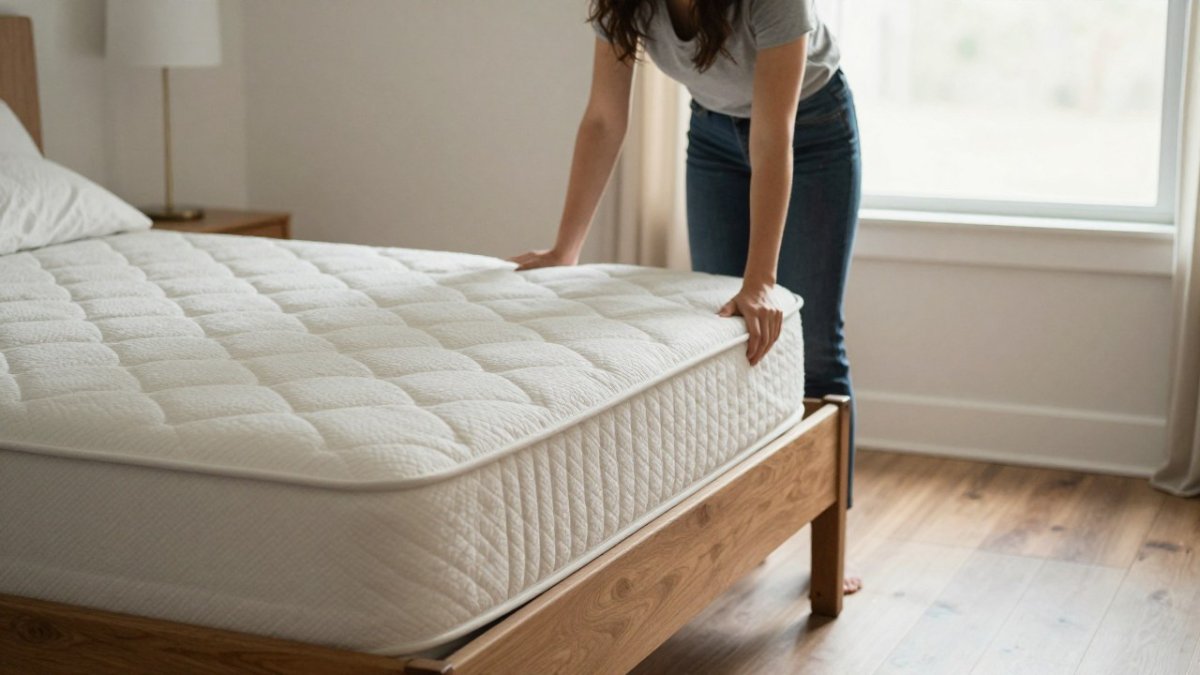
The woman is American.
Before You Start: Clearance, Weight, and Help
Measure the space before you commit. You need at least two feet of clearance on the long sides and enough room at the foot to stand the mattress on its edge.
Know what you are lifting. A queen mattress can be heavy, especially in a coil or hybrid build, and a king is heavier still.
Adjustable beds and platform frames add a step. Lower an adjustable base to flat and unplug it before you move the mattress, and on a platform frame confirm the deck is clear of loose slats.
Step-by-Step Rotation Instructions
- Strip the bed. Remove sheets, blankets, and the mattress pad so nothing bunches underneath.
- Clear the floor. Give yourself room on all sides. Move nightstands if you can.
- Stand at the head of the bed. Grip the top corners with both hands, thumbs under the edge.
- Pull the mattress toward you about a third of the way off the frame.
- Walk around to the side and push the mattress into a vertical position, resting it on its long edge.
- Spin it 180 degrees on the edge so the head becomes the foot.
- Lower it back down onto the frame, guiding it flat.
- Check the alignment and push it flush against the headboard.
Two people make this faster and safer, but the edge-pivot method works alone. Watch out: never drag a mattress across a frame or floor. Friction tears the cover and breaks down the ticking at the corners. If your mattress has handles, use them for positioning only, not for lifting the full weight.
After the Rotation: Verify the Fit
A rotation is only finished when the mattress sits correctly. Walk the perimeter and confirm the mattress is centered on the frame with even overhang on both sides, uneven overhang puts extra load on one edge and can bow the slats. Press down at each corner; a mattress that rocks or lifts at a corner is not seated flat.
If the mattress has a designated head end, many foam beds taper or have a logo at the foot, make sure that end still points where the maker intended after the spin. Rotating a tapered mattress the wrong way can leave a gap at the headboard.
How Often Should You Rotate a Mattress?
Rotating your mattress every six months is the standard advice for most beds. Many manufacturers suggest rotating more often during the first year, then less often after that. The first year matters most because the comfort layers are still settling.
A simple schedule to follow:
- Months 1-12: rotate every three months.
- Year 2 onward: rotate every six months.
- Memory foam or hybrid: stick to the six-month mark unless the maker says otherwise.
Mark your calendar or set a phone reminder. A common mistake is rotating once, feeling good about it, and then forgetting for two years. Consistency is what actually prevents uneven wear.
For a deeper walkthrough of timing and technique, our guide on how often to flip a mattress breaks down the full schedule.
Here is the rotation schedule the article recommends.
| Timeframe | What to do |
|---|---|
| Months 1-12 | Rotate every three months |
| Year 2 onward | Rotate every six months |
| Memory foam or hybrid | Stick to the six-month mark unless maker says otherwise |
How Often Should You Rotate a Memory Foam Mattress?
Memory foam mattresses should be rotated every six months, and never flipped unless the maker explicitly says the design is two-sided. Foam softens where body weight presses hardest. Rotating spreads that load and slows compression.
Memory foam also runs warmer and recovers more slowly than coil-based beds. That means impressions linger longer, and rotating gives the foam time to rebound evenly. If you sleep in the same spot every night, a six-month rotation is the minimum. Every three months is better if you are heavier or sleep hot.
One caveat: some foam beds have a distinct top and bottom. Check the law tag or the manufacturer instructions before you flip anything.
What Is a Double-Sided Mattress and Can You Flip It?
A double-sided mattress is a bed built with a comfort layer on both the top and bottom, so either side can be slept on. These are also called two-sided or flippable mattresses. You can and should flip them, usually every six months, alternating with a rotation.
The construction is the key difference. A one-sided design has a comfort layer on top and a support core underneath. Flip it and you sleep on dense support foam or coils, which is uncomfortable and can damage the layers.
Flippable designs tend to last longer because both surfaces share the wear. If you are weighing whether a two-sided bed is right for you, our comparison of whether two sided mattresses are better lays out the trade-offs. For a closer look at how design affects longevity, see our breakdown of flippable vs non-flippable mattress durability.
Durable Mattress offers 2-sided flippable mattresses designed to be flipped, which is how shared wear can help extend the life of a mattress.
How to Tell If Your Mattress Is Designed to Be Flipped
Check three things before you flip: the law tag, the manufacturer instructions, and the physical build. The law tag lists the materials and often notes whether the mattress is two-sided. Manufacturer instructions will say plainly if flipping is allowed.
Quick checks:
- Law tag says "two-sided" or "flip": you can flip it.
- Law tag says "one-sided" or lists a distinct top: rotate only.
- No tag and no paperwork: look for a finished cover on both faces. A bare support core on the bottom means do not flip.
- Pillow-top on one side only: rotate only. Flipping puts the pillow-top against the frame.
Watch out: flipping a one-sided mattress can void the warranty. Most warranties cover sagging and defects only when the bed is used as designed.
Preventing Uneven Wear, Indentations, and Sagging
Knowing when to flip mattress and rotate slows wear, but neither fixes a support problem. The first job is to tell the difference between a mattress that is settling normally and one that is failing.
Run this quick assessment before you schedule another rotation:
- Measure the dip. Lay a straight edge across the impression and measure the gap at the deepest point. A shallow impression that stays stable over time is usually normal; a deeper or growing one is worth attention.
- Press with your palm. A spot that stays compressed after you lift your hand points to foam breakdown, not surface settling.
- Check for a ridge. A raised hump down the center often means the foundation is bowing, not that the mattress is worn.
- Note the timeline. Impressions that appear in the first few months and then stop are settling; new dips after year three usually mean the comfort layer is fatigued.
What actually helps:
- Rotate or flip on schedule so weight spreads evenly.
- Use a mattress protector to keep moisture and oils out of the foam.
- Keep the bed on a supportive frame with proper slats or a solid base.
- Air the mattress out occasionally to let foam recover.
- Address the foundation if the sag keeps coming back.
Watch out: rotating a mattress with a genuine support failure can make the problem feel worse, because you move the soft spot to a new sleeping position without fixing the cause. If a dip exceeds the normal range and returns within weeks of a rotation, the mattress or the foundation needs attention, not another spin.
For a step-by-step plan beyond flipping, our guide on how to prevent mattress sagging covers the fixes that work.
Check Your Bed Base and Foundation for Support
A weak foundation is the most overlooked cause of premature mattress wear. If the base sags, the mattress sags with it, no matter how often you flip. Check the frame, slats, and box spring before you blame the mattress.
Run through this checklist:
- Slats: evenly spaced, no cracks, no bowing.
- Box spring: no squeaks, no soft spots, no visible sag.
- Frame: all legs on the floor, no wobble, center support in place for queen and king sizes.
- Foundation type: matches what the mattress maker requires. Some foam and hybrid beds need a solid platform.
If your base is the weak link, a sturdy durable adjustable base gives the mattress proper support and lets you adjust position for comfort. Fix the foundation first, then set your rotation schedule. That order matters more than most people realize.
A mattress only lasts as long as the care you give it. Rotate on schedule, flip only when the design allows, and check the base before anything else.
Frequently Asked Questions
Does flipping a mattress help prevent wear?
Flipping a double-sided mattress can help spread your body weight across both sleep surfaces, reducing compression on any one side. For single-sided mattresses, flipping is not possible, but rotating the mattress 180 degrees every six months can still help prevent uneven wear and indentations. Always check your manufacturer's instructions and warranty before flipping or rotating.
How often should you rotate a mattress?
Most manufacturers recommend rotating your mattress every six months. If you sleep alone or the mattress shows early signs of body impressions, rotate it every three to four months. Set a reminder on your phone and pair the task with a seasonal chore like changing smoke detector batteries. Regular rotation helps prevent sagging and extends mattress lifespan.
Can you flip every mattress?
No, you cannot flip every mattress. Only double-sided mattresses with identical comfort layers on both sides are designed to be flipped. Single-sided mattresses, including most memory foam and hybrid models, have a designated sleep surface and a support core on the bottom. Flipping a one-sided mattress can damage the comfort layer and void your warranty. Check the tag or manufacturer instructions to confirm.
Should you rotate or flip a memory foam mattress?
Most memory foam mattresses are single-sided, so you should rotate them 180 degrees rather than flip them. Rotating a memory foam mattress every six months helps prevent uneven wear and body impressions. If you own a double-sided memory foam mattress, you can flip it, but follow the manufacturer's instructions. Never flip a one-sided foam mattress, as the support layer is not designed for sleeping.
Last Updated: November 12, 2026
Quick Summary
Mattress construction for heavy sleepers must use higher-density comfort foam, thicker coil wire and a full transition layer so every layer carries more load for more years. Ask for foam density in writing, 13-15 gauge pocketed coils and a profile of at least 12 inches.
- Low-density comfort foam under 1.5 lb/ft³ compresses permanently under concentrated load.
- Lower coil gauge numbers mean thicker wire that resists bending under load.
- Sleepers over 250 lb need 2.5 lb/ft³ or higher foam and 13-14 gauge coils.
- Measure sleep surface dips monthly for the first year, then quarterly, and log each reading.
- High-density foam and latex hybrids typically hold their shape for 7-10 years.
Table of Contents
- Why Mattress Construction Matters More for Heavy Sleepers
- A Layer-by-Layer Guide to Mattress Construction
- Mattress Firmness for Heavy Sleepers: Finding the Right Level
- Mattress Construction for Heavy Sleepers With Back Pain
- The Best Mattress for Heavy Side Sleepers: What to Look For
- The Best Mattress for an Overweight Couple: Combined Weight and Motion Isolation
- Sagging, Lifespan, and How to Vet Durability Claims
- Your Buying Checklist Before You Order a Mattress
- Frequently Asked Questions
Why Mattress Construction Matters More for Heavy Sleepers
Mattress construction for heavy sleepers comes down to one principle: every layer has to carry more load, for more hours, for more years. A mattress that feels fine at 150 pounds can break down quickly at 250, and the difference is almost never the cover or the marketing.
Most mattress failures are structural, not cosmetic. The top layer softens, the support core compresses, and the sleep surface starts to dip where the most weight sits.
Where Standard Mattresses Fail Higher-Weight Sleepers
Standard mattresses are usually engineered around an average sleeper, and that average is lighter than many buyers assume. Three failures show up again and again:
- Low-density comfort foam collapses under concentrated load, creating body impressions within the first year or two.
- Thin coil gauges bend rather than push back, so the support core loses its resilience.
- Thin profiles leave no room for a proper transition layer, so weight transfers straight into the base.
A common mistake is blaming the mattress when the real issue is a foundation with too much flex. We will cover that in the checklist.
A Layer-by-Layer Guide to Mattress Construction
Think of a mattress as four jobs stacked in order: cushion the body, bridge the gap between soft and firm, carry the load, and hold everything stable. When one layer is undersized for the sleeper's body weight, the layers above it wear out faster. The table below gives commonly cited construction targets for a mattress built for a heavier sleeper, followed by what each number means.
| Layer | What It Does | Specification to Ask For | Why It Matters for Higher-Weight Sleepers |
|---|---|---|---|
| Comfort foam | Cushions pressure points | 1.8-2.5 lb/ft³ density for polyfoam; 4-5 lb/ft³ for memory foam | Low-density foam (under 1.5 lb/ft³) compresses permanently under concentrated load |
| Latex comfort layer | Pressure relief with resilience | Dunlop or Talalay, 2-3 inches thick | Latex holds its shape and sleeps cooler than memory foam |
| Transition layer | Bridges soft comfort and firm support | 1-2 inches of high-density foam or a micro-coil layer | Without it, weight transfers straight into the coil core and the comfort layer bottoms out |
| Pocketed coil core | Carries load and contours | 13-15 gauge wire; 800-1,000 coils in a queen | Lower gauge numbers mean thicker wire that resists bending |
| Reinforced perimeter | Protects edge support | Extra or firmer coils around the perimeter | Prevents edge collapse when you sit or sleep near the side |
| Base foam | Stabilizes the core | 1.5-2.0 lb/ft³ high-density foam | A dense base keeps the coils from shifting and spreading |
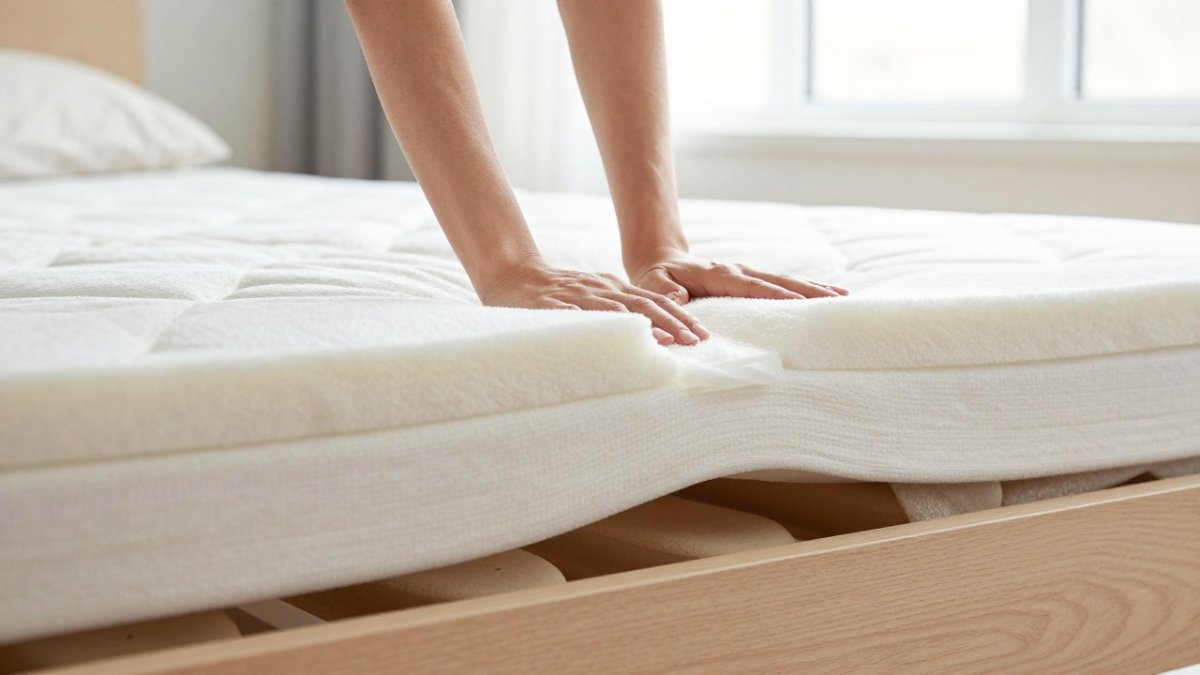
Comfort Layer: Foam Density and Latex
Foam density is the weight of foam per cubic foot, and it is the single best predictor of how long a comfort layer will last. Higher-density foam resists compression; low-density foam feels plush in the showroom and flattens in the bedroom.
Latex is a strong alternative because it is elastic rather than viscoelastic: it pushes back instead of slowly conforming, so it resists bottoming out and sleeps cooler. For a deeper walkthrough of judging materials, see our guide on how to identify mattress quality.
Transition and Support Layers: Coil Gauge and Reinforced Coils
The support core does the heavy lifting. In a hybrid mattress, pocketed coils move independently, which helps with motion isolation and contouring. Coil gauge is the wire thickness, and lower numbers mean thicker wire that resists bending under load.
Reinforced coils around the perimeter protect edge support, which matters if you sit on the edge of the bed or sleep near it.
Matching Construction to Body Weight and Sleep Position
The same construction feels different depending on how much weight it carries and where that weight sits. A practical framework:
- Under 200 lb: standard 1.8 lb/ft³ foam and 15-gauge coils are usually adequate.
- 200-250 lb: step up to 2.0-2.5 lb/ft³ comfort foam and 14-gauge coils, with a transition layer of at least 1 inch.
- Over 250 lb: look for 2.5 lb/ft³ or higher foam, 13-14 gauge coils, a reinforced perimeter, and a total profile of at least 12 inches so the comfort layer does not bottom out.
This is why the same mattress can feel supportive to one sleeper and soft to another, the construction has a load limit, and body weight determines how close you are to it.
Mattress Firmness for Heavy Sleepers: Finding the Right Level
Firmness is only one part of choosing a mattress for a higher body weight. A mattress can feel firm on top and still lack support underneath, which is why construction and firmness have to be judged together.
Here is how sleep position usually maps to firmness:
| Sleep Position | Typical Firmness | Why |
|---|---|---|
| Back sleeping | Medium-firm to firm | Keeps the spine neutral without over-cradling the hips |
| Stomach sleeping | Firm to extra-firm | Prevents the hips from sinking and arching the lower back |
| Side sleeping | Medium-firm | Relieves shoulder and hip pressure while supporting the torso |
| Combination | Medium-firm | Balances pressure relief with consistent support |
If you are unsure between two levels, our breakdown of firmness rules for choosing a mattress walks through the trade-offs in more detail.
Mattress Construction for Heavy Sleepers With Back Pain
Back pain changes the priority order. Pressure relief matters, but spinal alignment matters more, and alignment is a construction problem before it is a comfort problem. A mattress that lets the hips sink lower than the shoulders forces the lower back into an arch all night.
Look for a support layer that stays level under load, a transition layer that eases the shift from soft to firm, and enough thickness that you never feel the core through the comfort layer. Sleepers with specific back issues should read our full guide to the best mattress for back pain before choosing a firmness level.
The Best Mattress for Heavy Side Sleepers: What to Look For
Side sleepers concentrate weight on the shoulders and hips, so the best mattress for heavy side sleepers combines deep pressure relief with a support core that does not collapse under those two points.
Watch out: a mattress that is too firm for side sleeping creates numb shoulders and aching hips, while one that is too soft lets the spine curve. Our side sleeper mattress guide covers this in depth.
The Best Mattress for an Overweight Couple: Combined Weight and Motion Isolation
Couples add a second variable: combined weight. Two heavier sleepers put far more load on the core than one, and the mattress has to support both without creating a ridge in the middle or a shared dip over time.
Motion isolation matters just as much. Check the total weight capacity against your combined weight, and give priority to edge support if either of you sleeps near the perimeter.
Sagging, Lifespan, and How to Vet Durability Claims
Sagging is a common concern among higher-weight sleepers, and it is often linked to materials rather than user error. Body impressions form when foam loses its ability to recover, and no amount of rotating fixes collapsed foam. What most buyers lack is a repeatable way to tell the difference between normal softening and premature failure, and a realistic sense of how long a given construction should last.
A Repeatable Wear Test You Can Run at Home
Do this once a month for the first year, then quarterly:
- Lay a straight edge across the sleep surface, a yardstick or a long level, and measure the gap at the deepest point. Note the number and the date.
- Press the heel of your hand into the center and each quadrant and compare how quickly the foam recovers. Slow recovery that worsens month over month is a sign of foam fatigue.
- Check the perimeter by sitting on each edge and feeling for collapse; edge breakdown often precedes center sagging.
- Log the measurements. A dip that grows from 1/4 inch to 3/4 inch in six months is a different problem from one that appears after three years.
Warranties typically define a defect by a visible indentation above a stated depth, measured without weight on the mattress. Read the warranty terms for the specific threshold. That threshold is why your own measurements matter: you need to know whether the dip is approaching the warranty limit before you file a claim.
Realistic Lifespan by Construction
Lifespan is not a single number; it depends on the materials and the load they carry. A common pattern practitioners report:
- Low-density foam mattresses often show meaningful softening within 2-4 years, faster for sleepers over 250 lb.
- High-density foam and latex hybrids typically hold their shape for 7-10 years with proper support underneath.
- Pocketed-coil hybrids with reinforced perimeters tend to last longest for heavier sleepers, provided the coil gauge and base foam are matched to the load.
Treat any "20-year" or "lifetime" claim with skepticism unless the warranty terms and the foam densities support it. A long warranty on low-density foam is a marketing number, not a durability guarantee.
How to Vet Durability Claims Before You Buy
Separate what is measurable from what is marketing:
-
Ask for foam density numbers. A density figure is verifiable; "premium foam" is not.
-
Ask for coil gauge and coil count. These tell you how the core will behave under load.
-
Read the warranty exclusions. Most warranties cover visible indentations above a stated depth and exclude normal softening, stains, and damage from an inadequate foundation.
-
Ask how the mattress resists one-sided wear. The 2-sided flippable design lets you flip the mattress to help spread wear across both sides.
Our guide on how to prevent mattress sagging lists the maintenance steps that actually extend lifespan, and our mattress warranty guide explains how indentation thresholds are measured.
Your Buying Checklist Before You Order a Mattress
Run through this before you commit:
- Comfort layer uses high-density foam or latex, with density stated
- Support core uses reinforced pocketed coils sized for your body weight
- Mattress thickness is at least 12 inches for a full transition layer
Heavy sleepers should not have to replace a mattress every few years because the foam gave out. At Durable Mattress, we build hybrid mattresses with a 2-sided flippable design, so you can flip the sleep surface and spread wear across both sides instead of watching one side dip. Our collection comes in Medium, Firm, and Soft, so you can match support to your sleep position and body weight.
Frequently Asked Questions
Do heavier people need a firmer mattress?
Most higher-weight sleepers do better on a firm or medium-firm mattress, because softer foam lets hips and shoulders sink too far and throws the spine out of alignment. That said, firmness alone is not the answer. Overall construction matters as much as firmness for keeping you supported. Side sleepers often want a little more cushioning at the shoulder than back or stomach sleepers, so match firmness to sleep position, not body weight alone.
What mattress features help prevent sagging for heavier sleepers?
Sagging comes from low-density foam and weak coil systems, so check the specs before you buy. Look for dense comfort and support layers and reinforced edges, and check the specifications before you buy. The 2-sided flippable design lets you flip the mattress to help spread wear across both sides.
Is a hybrid mattress a good choice for heavy sleepers?
A hybrid can be a good option for many higher-weight sleepers. The pocketed coil support core carries weight without collapsing, while the foam layers above it handle pressure relief at the shoulders and hips. Check the coil gauge, the foam density, and the total weight capacity before you commit, and confirm the foundation can handle the load too.
What kind of mattress should a 300-pound person use?
At around 300 pounds, prioritize support layer strength over plushness. An extra-firm or firm mattress with a supportive core may suit a sleeper at this weight, so confirm its specifications and weight rating. Confirm the mattress lists a per-side weight limit that covers you, and pair it with a sturdy foundation rated for the load. The 2-sided flippable design may be worth considering, since flipping the mattress can help spread wear.
Last Updated: November 10, 2026
Quick Summary
A mattress return policy is a written promise from the seller that lets you send back a mattress you bought and get your money back or swap it for another. You file a return request within the return period, the seller inspects the mattress, then issues a refund or an exchange.
- Most policies include a trial period, return window, condition rules, fees, and a refund method.
- Many policies set a minimum trial period so your body has time to adjust.
- Stains, tears, missing law tags, or damage from misuse typically disqualify a return.
- Shipping the mattress back before you have a written return authorization is the most common way buyers lose their refund.
- A return policy covers a change of mind, while the manufacturer warranty covers defects.
Table of Contents
- How Mattress Return Policies Work
- The Mattress Sleep Trial Period and Break-In Rules
- Return Eligibility and Condition Requirements
- Step-by-Step: Requesting a Return and Getting Your Refund
- Mattress Restocking Fees, Return Fees and Shipping Costs
- Mattress Warranty vs Return Policy: What Each One Covers
- What Happens to Returned Mattresses: Donation, Disposal and Resale
- Checking the Return Policy Before You Buy Your Next Mattress
- Frequently Asked Questions
How Mattress Return Policies Work
A mattress return policy explained in plain terms is a written promise from the seller. It lets you send back a mattress you bought and get your money back or swap it for another. This guide walks through how these policies work, what usually disqualifies a return, and how to get your refund without a fight.
Most policies follow the same basic shape. You buy the mattress, sleep on it for a set number of days, and decide. If it doesn't work, you file a return request within the return period. The seller inspects the mattress, then issues a refund or an exchange.
The details vary a lot between sellers. Trial lengths and fees differ from seller to seller. That's why reading the fine print before you buy matters more than any review.
Here's the core structure almost every policy uses:
- Trial period: the window to test the mattress
- Return window: the deadline to file your request
- Condition rules: how clean and undamaged the mattress must be
- Fees: restocking, return shipping, or pickup charges
- Refund method: how and when you get paid back
Get these five items straight and you'll know exactly what you're signing up for.
The Mattress Sleep Trial Period and Break-In Rules
A mattress sleep trial period is the window a seller gives you to sleep on the mattress and decide whether to keep it. Trial lengths vary by seller, so check the exact number of nights in the policy.
Here's the part most buyers miss. Many policies include a minimum trial days rule. You can't return the mattress on night three just because it feels different. Some sellers set a minimum trial period so your body has time to adjust.
That adjustment is real. New mattresses need a break-in period. Foam softens, fibers settle, and your body adapts to a new sleep surface. A mattress that feels too firm in week one often feels right by week four.
So if you're mid-trial and unsure, wait it out. Judge the mattress after the break-in period, not on the first night. Understanding how long a mattress should last also helps you tell normal settling apart from a genuine defect.
Return Eligibility and Condition Requirements
Return eligibility comes down to two things: timing and condition. You must file within the return period, and the mattress must be in acceptable shape.
Many sellers require the mattress to be in original condition, free of stains, tears, and damage you caused.
Here's what typically disqualifies a return:
- Stains of any kind, including sweat and spills
- Tears, burns, or cuts in the fabric
- Missing law tags or proof of purchase
- Damage from misuse or an unsupported base
Keep your receipt and proof of purchase date. Check whether the seller requires a return authorization before you ship anything back.
If you suspect your mattress is failing rather than just feeling wrong, check the warning signs of a failing mattress before you file. It helps you describe the problem clearly and back up your claim.
Step-by-Step: Requesting a Return and Getting Your Refund
Requesting a return is straightforward if you follow the seller's process in order. Skip a step and you risk delays or a denied claim. The checklist below turns scattered policy language into a sequence you can actually execute.

Here's the checklist we'd use:
- Confirm you're inside the return window and past any minimum trial days
- Find your receipt and note the purchase date and order number
- Contact customer service to start the return request, phone, chat, or the seller's online portal
- Get a return authorization (RA) number in writing, usually by email
- Photograph the mattress on all sides, including the law tag, to document its condition
- Follow the seller's instructions for pickup or shipping; do not schedule pickup on your own
- Keep tracking numbers, confirmation emails, and the RA number until the refund lands
When you contact the seller, have these details ready: order number, purchase date, the name on the account, the mattress model and size, and a short description of why you're returning it. Sellers use that information to confirm eligibility before they issue an RA. Missing details are a common cause of back-and-forth delays.
Watch out: shipping the mattress back before you have a written return authorization is the most common way buyers lose their refund. Wait for written approval first, and keep that approval email.
How refunds are initiated and processed
Refunds are typically initiated after the returned mattress is received and inspected, so confirm the refund timeline in the policy you are given.
Processing time then depends on your payment method. Refund speed can depend on the payment method, so ask about timing for yours. Ask the seller two questions before you ship: when will the refund be initiated, and how long does processing take for your payment method. Get the answer in writing so you have a reference point if the refund is late. Having the refund timeline in writing also underscores why it helps to check return terms before buying, so The BLVCK BOX Collective can be part of that early comparison.
If your refund is delayed
A refund that hasn't posted within the seller's stated window is usually a processing issue, not a denial. Start by checking the confirmation email for the stated timeline, then contact customer support with your RA number and the date the mattress was received. Ask for the refund initiation date and a transaction reference. If support can't resolve it, escalate in writing and keep a record of every communication.
Mattress Restocking Fees, Return Fees and Shipping Costs
Mattress restocking fees are charges some sellers subtract from your refund to cover processing a returned mattress. Not every seller charges them, and the amount varies widely.
Fees to check for before you buy:
- Restocking fee: a percentage or flat charge taken from your refund
- Return shipping: who pays to send the mattress back
- Pickup fee: a charge for hauling the mattress away
- Mattress removal: some sellers remove the old mattress for a fee
Many online sellers cover return shipping and pickup as part of the deal. Others pass the cost to you. Ask directly: "Who pays for return shipping, and is there a restocking fee?" Get the answer in writing.
The fee structure matters most when you're comparing sellers. A free return with no fees is worth more than a lower sticker price with a steep restocking charge hidden in the fine print.
Mattress Warranty vs Return Policy: What Each One Covers
A mattress warranty and a return policy are two different things, and buyers mix them up constantly. The return policy covers a change of mind. The manufacturer warranty covers defects.
Here's the split:
| Feature | Return Policy | Manufacturer Warranty |
|---|---|---|
| Covers | Comfort issues, wrong firmness | Defects like sagging, broken springs |
| Timeframe | Days to months after purchase | Years after purchase |
| Your cost | Possible fees | Usually repair or replacement |
| Trigger | You don't like it | The mattress fails |
A warranty won't help if the mattress is simply too firm. That's a comfort issue, and it belongs to the return policy. A return policy won't help a year later when a seam splits. That's a defect, and it's the warranty's job.
Know which one applies before you call. It saves time and gets you the right outcome faster.
What Happens to Returned Mattresses: Donation, Disposal and Resale
Most returned mattresses don't go back on a shelf. Sellers can't resell a used mattress as new, so they route it elsewhere. What happens next depends on the mattress's condition, the seller's logistics, and local sanitation and waste rules.
Common outcomes for returned mattresses in the industry include donation, recycling, and disposal. Ask the seller how they handle returns.
Sanitation rules matter here. Stained or damaged mattresses may not be accepted for donation or resale, which is one reason condition requirements apply.
Pickup, removal, and who handles the mattress
How the mattress leaves your home is part of the return process, not an afterthought. Pickup and removal arrangements differ between sellers, so ask how the return will be collected.
Ask the seller three questions before you file: who schedules the pickup, whether the carrier will enter your home or only take the mattress from the curb, and whether removal of your old mattress is included or costs extra. The answers affect both your out-of-pocket cost and how quickly the return is completed.
If you're replacing a mattress, ask about removal service during the return. It saves you the hassle of hauling it yourself, and it keeps the old mattress out of a landfill when the seller recycles or donates it. And if your mattress is two-sided, learn how often to flip a mattress so your next one lasts longer.
Checking the Return Policy Before You Buy Your Next Mattress
Read the return policy before you check out, not after the mattress disappoints you. Five minutes of reading now saves weeks of hassle later.
Pull up the policy and confirm these points:
- Trial length and any minimum trial days
- The exact return window and how to file
- Condition rules and what voids a return
- All fees: restocking, shipping, pickup
- Refund method and expected timing
- Whether the warranty is separate
Then compare that policy against the mattress itself. A clear return policy is useful, but a mattress built for longevity is the best way to avoid needing one. That's the idea behind our flippable mattresses: a two-sided design you can flip to spread wear and extend life. Before you commit, read what real customers say about how our mattresses and service hold up.
Return policies only matter when a mattress lets you down. The better move is picking one built to last. At Durable Mattress, our two-sided flippable design lets you flip the mattress to spread wear, and our hybrid construction comes in medium, firm, and soft so you get the support you need. Get started with Durable Mattress and invest in a mattress engineered to go the distance.
Frequently Asked Questions
Are mattress returns usually free?
Most retailers do not charge a fee to start a return, but many deduct shipping or a restocking fee from the refund. Some online brands cover pickup at no cost, while others pass the delivery charge back to you. Read the fee section of the policy before you order, and confirm whether a return fee applies to your ZIP code. A free return is the exception, not the default.
Do I need the original packaging to return a mattress?
Most policies do not require the original box, since a mattress is hard to repack once expanded. Retailers typically arrange a pickup and ask you to have the mattress clean and ready for the crew. Keep your proof of purchase, receipt and order number, because a return authorization usually depends on them. Check the policy for any packaging or inspection requirement before you schedule pickup.
How long is the typical mattress sleep trial?
Sleep trial lengths vary by seller, so check the exact number of nights in the policy and any minimum break-in period it requires. Count the days from delivery, not from the order date, and note the deadline on your calendar. Confirm the exact window in the mattress sleep trial period section of the policy.
Can you return a mattress if it has a stain?
Stains and damage can affect eligibility for a return, so check the condition requirements in the policy. Use a mattress protector from day one, and report any defect to customer service before the trial ends. If the stain came from a manufacturing flaw, ask whether the mattress warranty vs return policy distinction applies to your case.
Quick Summary
Choose a mattress for side sleeping couples by agreeing on a firmness target band, testing pressure relief and motion isolation together, and confirming size and trial terms before buying. A medium or medium-firm surface suits many side sleepers, but the right choice depends on each partner's pressure points and body weight.
- Each partner rates preferred firmness from 1 to 10 and explains the reason behind the number.
- Agree on a two-point firmness band, such as 5 to 6, rather than a single number.
- Lie on your sides for at least 10 to 15 minutes each during the firmness test.
- Test motion isolation by having one partner sit up or roll over while the other stays still.
- Queen gives two side sleepers roughly 30 inches each, while king adds about 16 inches of width.
Table of Contents
- Why Two Side Sleepers Need a Different Buying Process
- Mattress Firmness for Side Sleepers: Pressure Relief and Spinal Alignment
- Mattress for Couples with Different Firmness Preferences
- Mattress Motion Isolation for Couples: Testing for Partner Disturbance
- Hybrid Mattress Pros and Cons for Side Sleeping Couples
- Sizing, Usable Sleep Space and Trial Periods
- Booking Your Shared Mattress Decision with Durable Mattress
- Frequently Asked Questions
Why Two Side Sleepers Need a Different Buying Process
Last Updated: November 8, 2026
Choosing a mattress for side sleeping couples is harder than choosing one for a single person. Two bodies, two sets of pressure points, and two different ideas of "comfortable" all share the same surface.
Side sleepers put most of their body weight on the shoulder and hip. That concentrated pressure is why a mattress that feels fine in a 10-minute store test can leave one partner waking up sore after a few weeks.
Two side sleepers also disturb each other in ways a single sleeper never does. A partner who shifts often, or who sits up in the night, can break the other person's sleep. So the buying process has to cover your individual comfort and how the bed behaves when you both use it.
Here's the process we recommend:
- Agree on firmness goals before you shop
- Check each person's pressure relief needs
- Test motion isolation together, not separately
- Confirm sizing and trial terms before you order
Each step below covers one of these points in more detail.
Mattress Firmness for Side Sleepers: Pressure Relief and Spinal Alignment
Many side sleepers find a medium or medium-firm mattress comfortable. A softer surface lets the shoulder and hip sink in, which reduces pressure. A surface that is too soft lets the hips drop too far, which can strain the lower back.
Look for these signs of a good fit:
- The shoulder and hip sink in enough to cushion the joint
- The spine stays roughly straight from the neck to the lower back
- You don't feel a hard ridge under the hip or waist
- You can change position without feeling stuck
The right firmness also depends on body weight. A heavier side sleeper usually needs more support to keep the spine aligned, while a lighter sleeper may find a firm surface too hard.
Mattress for Couples with Different Firmness Preferences
When two side sleepers want different firmness levels, the goal is not to split the difference on a number. It is to find a surface where both partners get enough shoulder and hip pressure relief and enough spinal support to wake up without soreness. That requires translating each person's preference into the underlying needs it represents.
Start by separating preference from need. A partner who says "I want something soft" is usually asking for pressure relief at the shoulder and hip. See whether a two-sided mattress is a practical solution for mismatched preferences.
A practical decision process for two side sleepers:
- Rate firmness and identify the reason. Each partner rates the desired feel from 1 (very soft) to 10 (very firm) and writes one sentence about why. "I want a 4 because my shoulder goes numb" is more useful than a bare number.
- Weigh body size against the rating. A heavier side sleeper generally needs more support to keep the spine aligned, so their preferred number may need to move up one step on a shared bed. A lighter partner may need the surface to stay softer so the shoulder and hip can sink in.
- Set a target band, not a point. Agree on a two-point range (for example, 5-6) rather than a single number. This gives you room to test and adjust without reopening the whole debate.
- Test the band together, in your normal sleep positions. Lie on your sides for at least 10-15 minutes each, not just a quick sit. Check the shoulder and hip for pressure and the lower back for a hard ridge or a deep sag.
- Revisit after two to three weeks of real use. Short store tests favor firmer surfaces because they feel supportive; longer home tests reveal whether pressure points build up overnight.
When a single firmness will not work, the realistic options are:
- Dual-firmness or flippable designs. A mattress with two distinct firmness sides lets you choose the side that suits the partner with the stronger need and rotate it as preferences change.
- Split-firmness mattresses. These put a different firmness level on each half of the bed, which is the most direct solution when partners are far apart on the scale. They typically cost more and narrow your selection, so confirm the return terms before ordering.
- A firmness topper on one side. A topper can soften one half of a shared bed without replacing the mattress. It is a lower-cost experiment, but it can shift and may reduce the benefit of the mattress's own comfort layer.
- Separate mattresses or a split king setup. When preferences, body weights, or sleep schedules diverge sharply, two mattresses on a split king base can be the lowest-conflict answer. It costs more and takes more room, but it removes the compromise problem entirely.
Watch out: partners often anchor on the number they picked in the store and resist changing it after the first uncomfortable week. Treat the initial rating as a starting hypothesis, not a commitment, and use the trial period to test whether the target band actually holds up overnight.
Mattress Motion Isolation for Couples: Testing for Partner Disturbance
Motion transfer is one of the most common complaints from couples. One partner rolls over, gets up, or changes position, and the other feels it right away.

Test motion isolation before you buy:
- Lie down together and have one partner sit up or roll over
- Notice how much movement reaches the other side
- Repeat the test on both sides of the bed
- Pay attention to how quickly the surface settles after movement
A mattress that absorbs motion well keeps the other partner's sleep steady. Keep in mind that in-store tests are short, so a longer test at home during a trial period gives you a more accurate result.
Hybrid Mattress Pros and Cons for Side Sleeping Couples
Hybrid mattresses combine a coil support core with foam or other comfort layers. For side sleepers, that mix often works well, but it has trade-offs.
Pros:
- Coils support the spine and keep the body from sinking too far
- Comfort layers help cushion the shoulder and hip
- Airflow through the coils can help with temperature regulation
- Many hybrids offer more bounce for easier position changes
Cons:
- Heavier than all-foam designs, which can make rotating or flipping harder
- Motion isolation varies by construction, so test it before you commit
- Prices vary by size, configuration, and retailer, so check Durable Mattress directly for current pricing
Still, the right choice depends on your individual needs, so use the testing steps above to decide.
Sizing, Usable Sleep Space and Trial Periods
Sizing matters more for two side sleepers than for a single sleeper because both partners need room to turn, settle, and change position without rolling into each other. The key distinction is between total mattress dimensions and usable sleep space, the area each partner can actually occupy without feeling the other's movement or hitting the edge.
Common mattress sizes and what they mean for two adults:
- Full (double): about 54 inches wide by 75 inches long. Workable for one adult; tight for two side sleepers, especially if either partner is tall or moves a lot.
- Queen: about 60 inches wide by 80 inches long. The most common couple size, but two side sleepers share roughly 30 inches each, which leaves little buffer for movement.
- King: about 76 inches wide by 80 inches long. Adds about 16 inches of width over a queen, which is often the difference between feeling a partner's movement and sleeping through it.
- California king: about 72 inches wide by 84 inches long. Trades four inches of width for four inches of length, which suits taller partners better than it suits movers.
Edge support changes the math. A mattress with weak edges loses several inches of usable sleep space on each side because neither partner can sleep near the perimeter without feeling like they will roll off.
Before you order, run through this buying checklist:
- Trial length and start date. Confirm how many nights the trial runs and when it begins, some policies start at delivery, others at the first night of sleep.
- Return fees and conditions. Check for restocking fees, return shipping costs, and requirements such as a minimum number of nights or a law tag still attached.
- Delivery and setup. Confirm whether delivery is to the door or inside the home, whether old-mattress removal is included, and whether setup is part of the price.
- Warranty exclusions. Read what voids coverage, improper foundation, stains, or using the mattress without a protector are common exclusions.
- Foundation and frame requirements. A mattress that needs a specific base or box spring adds cost and can affect the warranty if you use the wrong one.
Trial periods are your safety net for a shared purchase. Compare the specific trial terms offered before you commit.
Watch out: couples often assume a larger size will solve disturbance problems, but if the mattress has poor motion isolation or weak edge support, extra width alone will not fix it.
The article gives standard dimensions for common mattress sizes, which can be summarised for quick scanning:
| Size | Dimensions (W × L) | Note for two adults |
|---|---|---|
| Full (double) | 54 in × 75 in | Tight for two side sleepers |
| Queen | 60 in × 80 in | Most common couple size, about 30 in each |
| King | 76 in × 80 in | Adds about 16 in of width over queen |
| California king | 72 in × 84 in | Four more inches of length, less width |
Standard mattress dimensions for two adults
Booking Your Shared Mattress Decision with Durable Mattress
Choosing a mattress for two side sleepers takes planning, but the process is manageable when you focus on firmness, pressure relief, motion isolation, and sizing. Work through each step together, and you're more likely to end up with a bed that suits both of you.
If you're ready to start, explore Durable Mattress's firm, medium-firm, and soft options to see which feel fits your shared goals. The flippable design is intended to help the mattress last.
Frequently Asked Questions
Do side sleepers need a soft or medium-firm mattress?
Most side sleepers do best on a medium-firm to medium surface because it cushions the shoulders and hips while keeping the spine level. Softer mattresses can let the hips sink too far, which pulls the spine out of line. Firmer mattresses can leave pressure points unrelieved. Body weight matters too: heavier side sleepers often need a firmer feel than lighter ones. Durable Mattress offers Medium, Firm and Soft options, so you can compare them against your own sleep position and pressure points before deciding.
Is a hybrid mattress better for a side sleeper?
A hybrid mattress often suits side sleepers because it combines a supportive coil base with comfort layers that contour to the shoulders and hips. The coils add responsiveness, which helps you change position without feeling stuck. Foam-only mattresses can offer more contouring but may trap heat and feel slower to move on. Hybrid designs vary in thickness and layer makeup, so check the construction details rather than assuming all hybrids feel the same.
How can couples choose a mattress when they prefer different firmness levels?
Start by listing each partner's body weight, sleep position and pressure concerns, then identify where you overlap. Couples with different firmness preferences often settle on a medium-firm option that is comfortable enough for the softer sleeper and supportive enough for the firmer one. Try lying on the mattress together, and if you can't test in person, rely on the return window to confirm the choice works for both of you.
What mattress features help keep couples from feeling each other move?
Motion isolation depends on how the mattress absorbs movement. Pocketed coils and dense foam layers typically reduce motion transfer better than open innerspring systems. Lie down together and have one partner shift position while the other notes how much movement they feel. Edge support also affects how easily you can get in and out of bed without disturbing your partner.
Table of Contents
- How to Check Your Mattress for Failure at Home
- Visible Sagging, Dips, and Body Impressions
- Waking With Back, Neck, Shoulder, or Joint Pain
- Poor Sleep, Waking Tired, and Overheating
- Mattress Age and Expected Lifespan
- Rule Out Other Causes Before You Replace
- Repair, Rotate, Warranty, or Replace: Choosing Your Next Step
- Booking a Replacement That Lasts: Choosing Your Next Mattress
- Frequently Asked Questions
How to Check Your Mattress for Failure at Home
You can check most mattress problems in about 15 minutes, using nothing more than your bedroom and a flashlight, and this quick check is the best way to start spotting a mattress failing before it gets worse. The goal is to separate real wear from normal settling, so you know whether to repair, rotate, or replace. Most people wait too long because the decline is gradual and easy to rationalize.
Run a Simple Four-Step Mattress Assessment
Work through these four checks in order. Write down what you find, because it is easy to forget small changes over a few weeks.
- Step 1: Look for dips. Turn off the lights, then shine a flashlight across the surface at a low angle. Shadows show dips clearly.
- Step 2: Lie down and map pressure. Lie on your usual side for 10 minutes. Note any spot where you feel pressure in your hips or shoulders.
- Step 3: Check edge support. Sit on the edge. A failing edge feels like you could roll off.
- Step 4: Compare to your first week. Think back to how the bed felt when it was new. If the change is clear, the mattress is likely wearing out.
Watch out: a single bad night does not prove anything. Repeat the test over several days before you decide.
Use this quick reference to see which checks to run and what each one tells you.
| Step | What to check | What it tells you |
|---|---|---|
| Step 1 | Dips, using a low-angle flashlight | Shadows reveal dips clearly |
| Step 2 | Pressure, after 10 minutes on your usual side | Spots of pressure in hips or shoulders |
| Step 3 | Edge support, sitting on the edge | Collapsed edges feel like you could roll off |
| Step 4 | Comparison to your first week | Clear change suggests wear |
Visible Sagging, Dips, and Body Impressions
Sagging is the most reliable visible sign of a mattress failing, but it is also the most misread. Learn why mattresses sag early and how to fix it to tell real damage from normal settling. A deep dip usually means the support layers have compressed, yet many people either miss a shallow dip or overreact to normal body impressions. The difference matters because it determines whether you rotate, file a warranty claim, or replace.

Measure the dip instead of eyeballing it
A repeatable measurement beats a subjective impression. Lay a straight edge, such as a yardstick or a long level, across the mattress surface spanning the dip. Measure the gap between the bottom of the straight edge and the lowest point of the dip with a ruler. Record the depth and the location. Do this in the spots where you sleep most, not just the center of the bed.
Qualifying sag depth and how it is measured vary by brand and warranty. Read your warranty before you measure so you use the same method the claim process requires.
Watch out: body impressions of less than about an inch are common in foam and hybrid mattresses and are usually normal settling, not a defect.
Match the wear pattern to your mattress type
Signs of failure look different across materials, and knowing yours helps you judge what you are seeing:
- Memory foam and polyurethane foam: Softening and permanent body impressions under the hips and shoulders are the first signs. The foam may feel mushy rather than springy, and the dip may not recover after you get up.
- Innerspring: Sagging often starts at the edges or between coils. You may feel coils through the top layer, hear a creak when you shift, or notice the surface no longer returns to flat.
- Hybrid: Wear can show as a foam layer that has compressed over a still-sound coil core, producing a soft hollow with firm edges, or as a coil unit that has weakened on one side.
- Latex: Latex tends to hold its shape longer, so failure usually appears as surface cracking, crumbling at the edges, or a loss of resilience rather than a deep dip.
Read the secondary clues
Sagging rarely travels alone. Look for these supporting signs:
- A visible hollow where your hips or shoulders rest, with ridges or lumps you can feel through the top layer
- Sheets that slide toward the center of the bed because the surface is no longer level
- A mattress that feels flatter on the side you sleep on than on the side you do not
- Edge support that has collapsed, so sitting on the edge feels like you could roll off
Slow the wear before it becomes failure
Rotating a one-sided mattress periodically spreads wear across the surface. Follow these seven steps to prevent further sagging and slow the damage. Keep the foundation flat and supportive, and use a foundation the manufacturer approves, since a mismatched base can create dips even on a sound mattress. If you own a flippable design, flipping is one of the easiest ways to spread wear across both sides.
If the dip is deeper than the warranty threshold and the mattress is otherwise young, document the measurement and start a warranty claim before you shop for a replacement.
Waking With Back, Neck, Shoulder, or Joint Pain
Pain that eases after you get up and move around is a common pattern tied to mattress support. If the pain returns each night, the bed may not be keeping your spine aligned.
Ask yourself these questions:
- Do you feel better on the couch or in a hotel bed?
- Is the stiffness worst in the first 30 minutes after waking?
- Does the pain come from one side of your body?
If the answer is yes to most of these, the mattress is a likely cause. A medical professional can help rule out other conditions, so talk to one if the pain lasts for weeks.
Poor Sleep, Waking Tired, and Overheating
Some mattresses trap heat or push you into an awkward position. Both can break up your sleep without you noticing. You may wake several times a night, or simply feel less rested than you should.
Common signs include:
- Waking up hot or sweaty more than a few nights a week
- Taking longer to fall asleep on the bed
- Feeling tired even after a full night in bed
Changing your bedding can help a little, but if the sleep problems continue, the mattress itself may need replacing.
Mattress Age and Expected Lifespan
Age sets an expectation, not a verdict. Mattress life varies with build quality, materials, care, and your body weight and sleep position. Compare durability features in this long-term buying guide to see which designs last. A well-built mattress that has been rotated and kept on a proper foundation can outlast a cheaper one that has not, and a mattress can fail early without being old.
What actually drives lifespan
Lifespan is a function of materials and use, not the calendar alone: read the complete mattress lifespan and durability guide for a full breakdown.
- Materials: High-density foams and quality coil units hold up longer than low-density foams, which soften and compress faster. Latex generally resists compression better than polyurethane foam.
- Body weight and sleep position: Higher body weight and side sleeping concentrate load on the hips and shoulders, which speeds compression in those zones.
- Foundation and frame: A flat, supportive foundation and closely spaced slats prevent the uneven loading that creates dips. A sagging box spring or wide slats shorten life.
- Rotation and care: Regular rotation spreads wear. A mattress protector keeps moisture and dust out of the layers.
Weigh age against measured wear
Use age as one input, not the deciding one, alongside measured wear, persistent morning pain, and clear loss of support. That combination is a strong candidate for replacement. A younger mattress with a clear dip may still be a warranty matter rather than a replacement purchase, so check coverage before you buy.
Watch out: replacing a mattress on age alone can waste money if the real cause is a worn foundation, an old pillow, or a room that is too warm.
A simple decision path
- Measure the dip and note its location.
- Compare the measurement to your warranty threshold.
- If the dip qualifies, start a warranty claim with photos and the measurement.
- If it does not qualify, rotate it and reassess after a few weeks.
- If the mattress is old and shows several signs of failure, plan a replacement.
Rule Out Other Causes Before You Replace
Not every bad night comes from the mattress. Before you spend money, check these possibilities:
- Bed frame or slats: Broken or widely spaced slats can create dips even on a good mattress.
- Pillows: An old or flat pillow can strain your neck.
- Room temperature: A warm room can make any bed feel uncomfortable.
- Allergens: Dust mites and mold can cause sneezing, congestion, or waking at night (the EPA). If you suspect allergies, a doctor can help you test for them.
Fix these first when they are the likely cause. Then reassess the mattress after two or three weeks.
Repair, Rotate, Warranty, or Replace: Choosing Your Next Step
Once you know what is wrong, pick the option that fits the damage:
- Rotate or flip: Best for mild, even wear.
- Check the warranty: Many manufacturers cover defects like sagging beyond a set depth. Read the terms, including how the depth is measured and what the claim process requires.
- Replace: Best when you see deep dips or persistent pain.
Booking a Replacement That Lasts: Choosing Your Next Mattress
When it is time to replace, focus on the features that prevent early wear. Look for a sturdy support core, a clear warranty, and a design that lets you rotate or flip the mattress. Consider your body type and sleep position too, since a firm bed suits some sleepers better than a soft one.
Durable Mattress offers 2-sided flippable hybrid mattresses in medium, firm, and soft support levels. Visit our website for current pricing and to find the right fit for your bed.
Last Updated: November 5, 2026
Frequently Asked Questions
What is the average life expectancy of a mattress?
Mattress lifespan depends on materials, build quality, body weight, sleep habits, and how well the mattress is maintained. Mattresses with stronger support cores and regular flipping or rotation, where the design allows it, tend to hold their shape longer. If your mattress is approaching or past this range and you notice sagging, persistent aches, or disrupted sleep, it is a good time to assess its condition using the signs covered in this guide. Keep a note of the purchase date so you know where your mattress sits in its expected lifespan.
What are the signs that my mattress needs replacing?
The clearest signs are visible sagging or body impressions, waking with back, neck, or shoulder pain that eases during the day, morning stiffness, uneven support, and sleep that feels less restful than it used to. Mattresses that are past their expected lifespan, or that show lumps, broken springs, or noticeable odors, also warrant replacement. If several of these signs appear together and rotating or flipping the mattress does not help, the mattress is likely failing and due for replacement.
Can a bad mattress cause body aches?
Yes. A mattress that no longer supports your spine in a neutral alignment can cause pressure points and muscle strain, which often shows up as lower back, neck, shoulder, or hip pain on waking. Because the body is held in an unnatural position for hours, the discomfort may ease during the day and return the next night. If your aches improve when you sleep elsewhere, your mattress is a likely cause. Other conditions can also cause pain, so talk with a healthcare provider if symptoms persist.
How can I tell if my mattress is no longer supporting my body properly?
Lie on your mattress in your usual sleep position and check whether your spine stays roughly straight, with hips and shoulders at a similar level. Slide your hand under your lower back: a large gap suggests the mattress is too soft or worn, while a strong push-back feeling can mean it is too firm. Look for sagging in the sleep area and note whether you wake feeling more rested on a different bed. These checks give you a practical picture of whether the support is still doing its job.
Last Updated: October 28, 2026
Quick Summary
To choose mattress firmness, use the 1-to-10 firmness scale rather than the brand label, then match it to your sleep position: side sleepers need soft to medium, back sleepers medium to medium-firm, and stomach sleepers firm. Adjust for body weight, since heavier sleepers press deeper and need a firmer surface.
- Ignore the label and use the 1-to-10 number, because medium from one brand can feel firm from another.
- Combination sleepers should choose medium to handle more than one posture.
- Lighter sleepers under about 130 lb will still feel supported on a soft or medium surface.
- Firmness is how the surface feels, while support is how well the mattress holds your spine in line.
- Give a new mattress at least 30 nights before deciding, unless it is clearly wrong.
Table of Contents
- Start With the Mattress Firmness Scale, Not the Label
- Match Mattress Firmness by Sleep Position
- Adjust Mattress Firmness by Body Weight and Body Type
- Firmness Is Not Support: Spinal Alignment and Pressure Relief
- How to Test Mattress Firmness Before and After You Buy
- Two Sleepers, One Mattress: Handling Different Firmness Preferences
- How Firmness Changes With Mattress Age, Temperature, and Pain
- Pick Your Firmness Level and Shop Durable Mattress
- Frequently Asked Questions
Start With the Mattress Firmness Scale, Not the Label
Learning how to choose mattress firmness starts with one shift in thinking: ignore the word on the tag and look at the number behind it. Most brands rate firmness on a 1-to-10 scale, where 1 is pillowy soft and 10 is rock hard.
Here is the catch. "Medium" from one brand can feel like "firm" from another. The label is marketing. The number is closer to physics.
At Durable Mattress, our two-sided flippable design gives you a choice of sleep surfaces.
Soft, Medium, and Firm: What Each Comfort Grade Feels Like
Each comfort grade describes how far your body sinks before the mattress pushes back.
- Soft (roughly 3-4): Deep cushioning. Your shoulders and hips settle in. Best for lighter sleepers and side sleepers.
- Medium (roughly 5-6): A balance of give and push-back. Most sleepers land here.
- Firm (roughly 7-8): Little sinkage. Your body stays closer to the surface. Best for heavier sleepers and stomach sleepers.
- Very firm (9-10): Minimal contouring. A niche pick, usually for specific back needs.
Why Firmness Ratings Differ Between Brands
Two mattresses can both say "medium" and feel nothing alike. Materials explain most of it. A soft foam comfort layer sinks more than a latex or hybrid top. Innerspring and hybrid builds push back faster than all-foam.
So compare within a brand's own scale, not across brands. If you switch brands, expect to re-test.
Match Mattress Firmness by Sleep Position
The fastest way to narrow your choice is your sleeping posture. Mattress firmness by sleep position is the single most useful filter you have.
Side, Back, Stomach, and Combination Sleepers
- Side sleepers: Choose soft to medium. Your shoulder and hip need room to sink so your spine stays straight.
- Back sleepers: Choose medium to medium-firm. You want support under the lower back without a hard gap.
- Stomach sleepers: Choose firm. A soft surface lets your hips drop and arches your lower back.
- Combination sleepers: Choose medium. It handles more than one posture without punishing either.
Side sleepers who want a deeper breakdown can read our guide to the best mattress for side sleepers before committing.
Adjust Mattress Firmness by Body Weight and Body Type
Weight changes everything about how a mattress feels, which is why mattress firmness by body weight matters as much as position.
Heavier sleepers press deeper into any surface. A mattress that feels medium to a lighter person can feel soft to someone heavier. The reverse is also true.
- Lighter sleepers (under about 130 lb): A soft or medium surface will still feel supportive.
- Average sleepers: Medium is the safe middle.
- Heavier sleepers (over about 230 lb): Go firmer for support and to avoid bottoming out.
Body shape plays a role too. Broad shoulders and wider hips need more give at those pressure points.
Lighter sleepers who want more cushioning can consider a soft mattress.
Firmness Is Not Support: Spinal Alignment and Pressure Relief
Here is the distinction most shoppers miss: firmness and support are not the same thing.
Firmness is how the surface feels. Support is how well the mattress holds your spine in line. A soft mattress can still support you well. A hard mattress can still leave your lower back unsupported.
The test is simple. Lie down and check three things:
- Does your spine stay roughly straight?
- Do your shoulders and hips sink without bottoming out?
- Do you feel pressure building at the hip or shoulder?
Pressure relief comes from cushioning. Spinal alignment comes from support. You need both, and firmness is just the dial that balances them.
If your check points toward more push-back, consider a firm mattress.
How to Test Mattress Firmness Before and After You Buy
A short test can give you an initial impression of how a mattress feels.
The In-Store Screen
You can rule a mattress out in about ten minutes, but only if you test it the way you actually sleep.
- Lie in your normal position. If you sleep on your side, lie on your side. Testing on your back out of politeness tells you nothing about your shoulder and hip.
- Give it at least five to ten minutes. Foam and hybrid comfort layers need time to warm and contour. A quick press with your hand measures the top inch, not the support beneath it.
- Roll from side to side. You want to feel the surface give under your shoulder and hip without a hard stop underneath.
- Check the edge. Sit on the edge, then lie near it. Weak edge support makes a mattress feel softer than its rating when you sleep near the perimeter.
- Bring your pillow. Your pillow height changes how your neck and spine line up, and a mattress that feels wrong with the store pillow may feel right with yours.
If a mattress fails the screen, move on. If it passes, the real test starts at home.
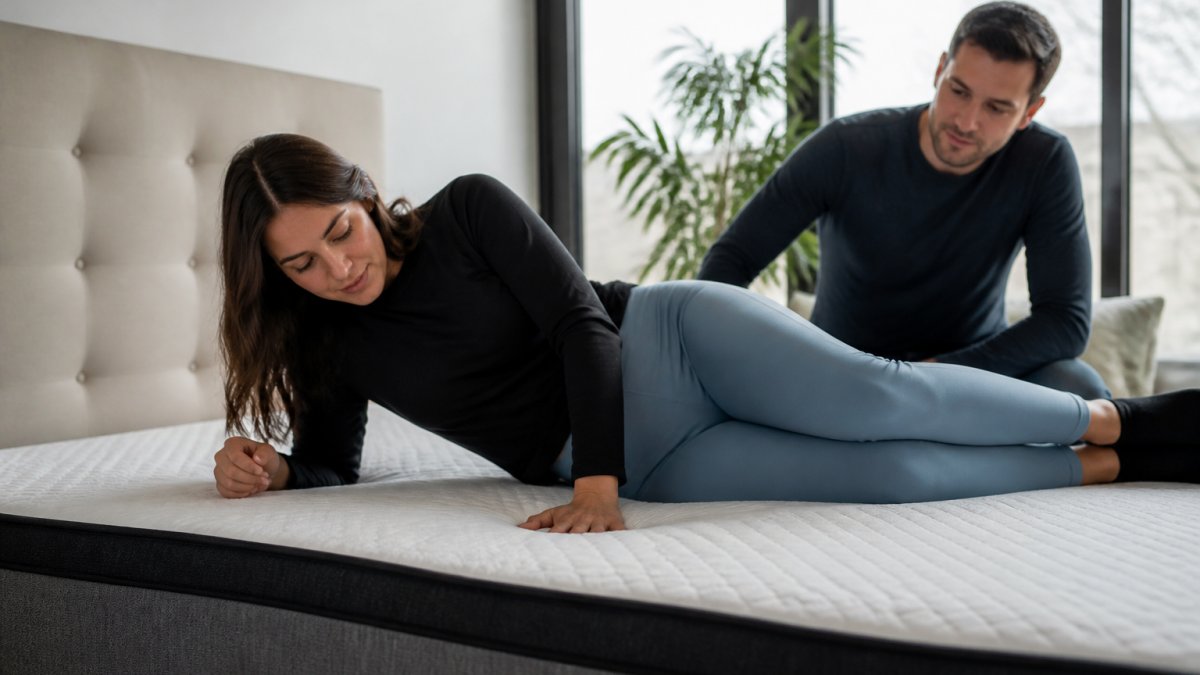
The At-Home Trial: What to Track
Track these signals over the first two to four weeks:
- Morning feel: Do you wake with stiffness, numbness, or pressure at the shoulder or hip? Note which side you slept on.
- Mid-night waking: Do you wake because a limb fell asleep, or because you feel like you are sinking or fighting the surface?
- Spinal position: Have a partner check, or take a photo from the side, to see whether your spine stays roughly straight.
- Sinkage: Are you bottoming out (feeling the layer beneath), or floating on top with a gap at your lower back?
- Temperature: Does the surface feel noticeably harder or softer depending on room temperature?
A simple log works: date, sleep position, morning comfort rating from 1 to 5, and one note about pressure or alignment. Patterns show up fast.
Judge the mattress on your worst nights, not your best. One great night after an exhausting day is not evidence; three consecutive mornings with hip pressure is.
When to Adjust, Exchange, or Return
- Give it at least 30 nights before deciding, unless the mattress is clearly wrong (severe pressure, bottoming out, or a hard gap under your lower back).
- If the feel is close but slightly off, a mattress topper is a cheaper fix than a return. A soft topper adds cushioning; a firm topper adds push-back.
- If the feel is wrong in the same way every night for two weeks, use the exchange or return policy rather than hoping it changes.
- Check the deadline. Put the return-by date on your calendar the day the mattress arrives, and note any restocking fee or return-shipping cost.
Two Sleepers, One Mattress: Handling Different Firmness Preferences
Couples rarely agree on firmness, and the disagreement is usually real: a 130 lb side sleeper and a 220 lb back sleeper genuinely need different surfaces. The goal is not to find a mattress that is perfect for both. It is to find a setup where neither sleeper is uncomfortable.
Start With the Actual Gap
Before shopping, each partner should answer three questions separately:
- What position do you sleep in most of the night?
- What is your body weight range?
- Do you wake with pressure (shoulder, hip) or with stiffness (lower back)?
If both partners land in the same comfort band, a single mattress may suit them. If one prefers soft and the other firm, they may need to consider different arrangements.
The Main Options
Split-firmness mattress. One mattress with two halves built to different firmness levels. Each sleeper gets their own side, and the split is usually available in king and sometimes queen sizes. Eliminating the friction of mismatched comfort preferences remains a foundational step to improve deep sleep throughout the night.
Two-sided (flippable) mattress. One surface leans softer, the other firmer.
Adjustable base with a split. An adjustable base lets each side raise the head or feet independently. It does not change firmness, but it can relieve pressure and alignment issues for one partner without affecting the other.
Mattress topper on one side. The cheapest fix. A soft topper on the firmer sleeper's side, or a firm topper on the softer sleeper's side, narrows the gap without replacing the mattress.
How to Compromise Without Losing
- Do not split the difference on firmness. A medium mattress chosen to satisfy a soft sleeper and a firm sleeper often leaves both mildly unhappy. Pick a split solution instead.
- Prioritize the sleeper with pain. If one partner wakes with back or hip pain, their needs should carry more weight than a preference.
- Test together. Lie on the mattress side by side in the store, in your normal positions, for at least ten minutes. A mattress that feels fine alone can feel different when your partner moves.
- Agree on the trial plan. Decide before purchase who will track comfort and what would trigger an exchange, so the decision is not relitigated every night.
Best for: couples with different preferences, and shoppers who want a longer-lasting bed. A two-sided design is the simplest shared option when the gap is moderate; a split-firmness mattress is the better answer when the gap is wide.
How Firmness Changes With Mattress Age, Temperature, and Pain
Firmness is not fixed. It shifts over time and with conditions.
- Age: Foam softens and compresses with use. A mattress that felt firm in year one often feels softer by year five.
- Temperature: Memory foam softens in a warm room and firms up when cold. A cool bedroom can make a mattress feel harder.
- Pain and mobility: Back pain often calls for medium-firm support. Hip or shoulder pain usually calls for more cushioning. Talk to a doctor about persistent pain rather than self-diagnosing through a mattress.
Pick Your Firmness Level and Shop Durable Mattress
You now have a repeatable process. Use the scale, match your sleep position, adjust for weight, then confirm support and pressure relief with a real test.
Here is the short version:
| Step | What to Check | Quick Rule |
|---|---|---|
| 1. Scale | Find the 1-10 rating | Ignore the label, use the number |
| 2. Position | Side, back, stomach, combo | Side = soft/medium, back = medium, stomach = firm |
| 3. Weight | Lighter or heavier | Lighter = softer, heavier = firmer |
| 4. Support | Spine and pressure points | Straight spine, no pressure build-up |
| 5. Test | In store and at home | Five minutes in position, several nights at home |
A mattress should fit your body, not the other way around. That is the idea behind every Durable Mattress build: a hybrid construction with a two-sided flippable design, available in soft, medium, and firm. Read about the benefits of double sided mattresses for durability and comfort.
Frequently Asked Questions
Is a soft or firm mattress better for back pain?
The best firmness depends on personal preference. Durable Mattress offers soft, medium, and firm options.
How does body weight affect the mattress firmness you need?
Durable Mattress offers soft, medium, and firm options in its two-sided flippable hybrid collection.
How can you test mattress firmness in a store?
Consider your sleep position and personal comfort when choosing a firmness level. Durable Mattress offers soft, medium, and firm options.
How often should you replace a mattress, and does firmness change over time?
Durable Mattress's two-sided flippable design helps prevent premature wear and extends the life of the mattress.
The hardest part of choosing firmness is trusting your own test over a label. We built Durable Mattress to make that easier, with a two-sided hybrid design you can flip to a firmer or softer surface and a build made to resist premature wear. Get started with Durable Mattress and choose the firmness that fits how you actually sleep.
Last Updated: October 25, 2026
Quick Summary
Mattresses sag early when the materials inside lose their ability to bounce back, or when the support underneath gives way. Most premature sagging traces to foam breakdown, weakened coils, or uneven wear. A quality mattress should not develop a measurable dip over 1.5 inches in the first year.
- Low-density foam can flatten in months, while high-density foam holds its shape for years.
- A broken coil shows up as a sharp, localized dip, often near the middle or edge.
- Measure the dip with a straight edge and ruler in the morning, then recheck in two weeks.
- On queen and king beds, confirm there is a center rail or center leg touching the floor.
- Rotating or flipping a flippable mattress is the single most effective free fix.
Table of Contents
- Why Do Mattresses Sag Early? The Real Causes
- How Much Mattress Sagging Is Normal
- Mattress Sagging After 3 Months: What It Signals
- How to Diagnose the Source of Your Middle Sag
- How to Fix a Sagging Mattress: Temporary and Durable Repairs
- How to Prevent Mattress Sagging Before It Starts
- Documenting a Warranty Claim for Early Sagging
- Choosing a Mattress Built to Resist Early Sagging
- Frequently Asked Questions
Why Do Mattresses Sag Early? The Real Causes
Mattresses sag early when the materials inside lose their ability to bounce back, or when the support underneath gives way.
A sagging mattress has lost height and resilience where you lie. Real sagging is a measurable dip that appears long before a mattress should be replaced.
Below, we break down what causes early sagging, how to tell failure from settling in, and the fixes that work.
Foam Breakdown and Material Fatigue
Foam breakdown is the slow collapse of your mattress's comfort layers.
Cheaper foams have lower density, more air, less material, so they break down faster.
Memory foam softens in warm rooms and under constant pressure; latex holds up better because it rebounds more completely.
Watch out: a soft foam layer that feels great in the store can be the first thing to fail.
Weakened or Broken Innerspring Coils
Innerspring mattresses rely on steel coils to carry your weight. When coils weaken or break, the surface above them dips.
Coils fail in a few ways:
- Fatigue: repeated pressure slowly reduces a coil's spring.
- Bending: low-gauge wire bends instead of pushing back.
- Breakage: a coil snaps and creates a dead spot.
A broken coil shows up as a sharp, localized dip, often near the middle or where you sit on the edge.
Coils with poor surrounding support flex more than they should, and flexing wears them out faster.
Uneven Wear and Repeated Pressure
Sleeping in the same spot every night concentrates pressure there. That spot compresses more, recovers less, and slowly sinks, which is why the middle, where most body weight settles, sags first.
Uneven wear worsens when you never rotate the mattress: one side takes all the load. Shared beds add two pressure zones and a valley forming between them.
Body weight matters too: heavier sleepers stress the core more, so a mattress that lasts one person a decade may wear faster for another. For rotation timing, see how often to flip a mattress.
How Much Mattress Sagging Is Normal
Some settling is normal: a new mattress shows shallow body impressions within the first few weeks as comfort layers compress. That is normal break-in, not a defect. Here is a measurable way to tell break-in from failure.
Define early sagging by age, not just depth
A dip is only "early" relative to how old the mattress is. Use this timeline as a benchmark:
| Mattress age | What is normal | What signals early failure |
|---|---|---|
| 0-90 days | Impressions up to about 1 inch that stop deepening | Any dip still growing after week 6, or a dip over 1 inch |
| 3-12 months | Stable impressions under 1 inch | A measurable dip over 1.5 inches, or a dip that returns after rotation |
| 1-3 years | Gradual, even softening | A localized dip over 1.5 inches, a sharp spot, or a dip that keeps deepening |
| 3-7 years | Moderate softening consistent with use | A dip over 2 inches, or a dip that appears suddenly |
| 7+ years | Expect some loss of resilience | Sagging here is age-related, not early |
A quality mattress should not develop a measurable dip over 1.5 inches in the first year. If it does, treat it as early failure and diagnose the cause before spending.
Measure the dip the same way every time
Inconsistent measurement is why people argue with warranty teams. Use one method every time:
- Lay a straight edge, a yardstick, a level, or a long ruler, across the dip, spanning the highest points on either side.
- Measure from the underside of the straight edge down to the lowest point of the surface with a second ruler.
- Record the number, the date, and the location (for example, "center, 12 inches from the head end").
- Measure in the morning, before body heat and room warmth soften the foam.
- Measure the same spot again in two weeks. A dip that is stable is break-in; a dip that is growing is failure.
Photograph the straight edge and ruler in the same frame so the depth is visible. Warranty teams reject claims that lack a clear measurement.
Separate normal impressions from real sagging
A body impression is a shallow, even depression matching where you lie that stops changing. Real sagging has three markers:
- It is measurable. You can slide a ruler under the straight edge and get a number over about 1.5 inches.
- It is localized. It concentrates in one zone, often the middle, rather than spreading evenly.
- It persists or grows. It does not recover after you rotate the mattress or give it a day to rebound.
If your dip meets all three, it is not break-in. Use the diagnostic steps below to find whether the mattress or its base is at fault.
Why the one-inch rule is not enough
Many warranties use a sag depth threshold, often around 1.5 inches, but depth alone does not tell you whether the mattress is failing early. A 1.5-inch dip at eight years is normal wear; at eight months it is early failure. Pair depth with age and trend: is the dip stable or still deepening?
Mattress Sagging After 3 Months: What It Signals
Mattress sagging after 3 months is a red flag. A quality mattress should not develop a measurable dip that fast. The cause is usually a low-density foam layer, a weak foundation, a manufacturing defect, or a mattress-frame mismatch.
Three months is well inside most warranty periods, so document it and act before the damage spreads.
Ask yourself these questions:
- Did the dip appear suddenly or build slowly?
- Is it in one spot or across the whole middle?
- Does the mattress sit on a proper foundation?
The answers point to the cause. A sudden dip in one spot suggests a coil or a defect. A broad, slow dip across the middle suggests foam fatigue or poor support underneath.
How to Diagnose the Source of Your Middle Sag
Middle sag has two possible sources: the mattress itself or the support system under it. Work through this diagnostic flow in sequence and stop at the first step that explains your dip.
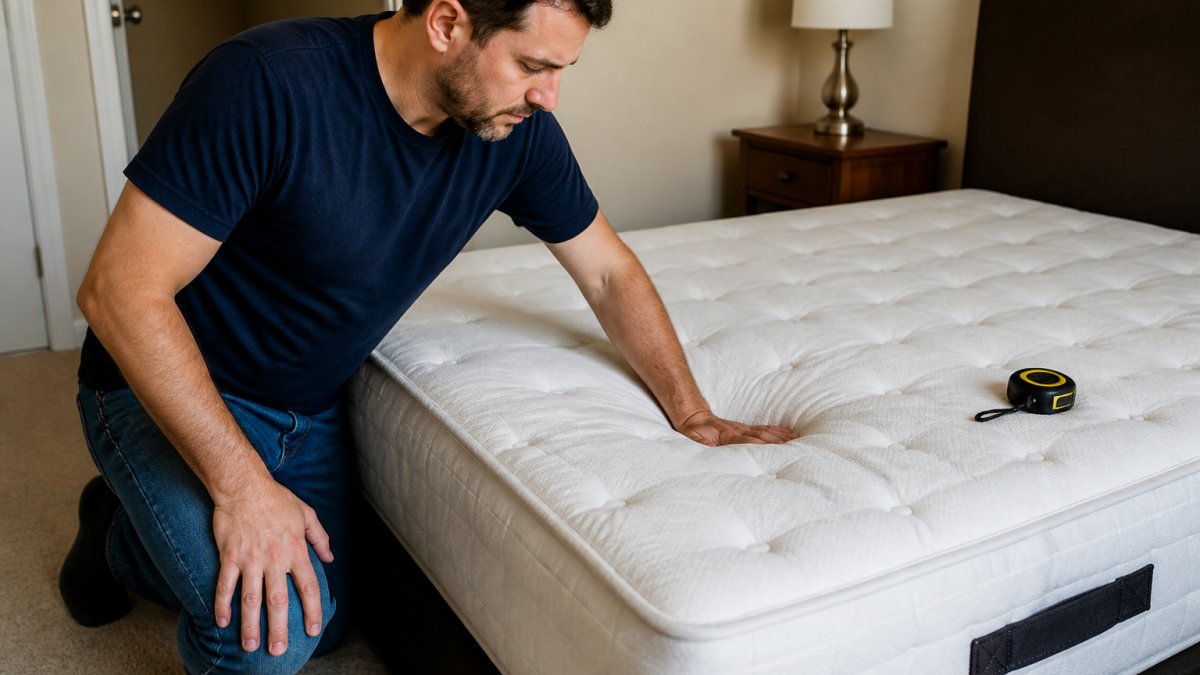
Step 1: Rule out the frame and foundation first
Start underneath, because a sagging middle is often a support problem, not a mattress problem. Check these in order:
- Slats: Look for slats that bow, crack, or sit more than about 3 inches apart. Wide gaps let the mattress sink between them.
- Center support: On queen and king beds, confirm there is a center rail or a center leg touching the floor. Without it, the middle flexes under load.
- Box spring or foundation: Press down firmly in the middle. A worn box spring will give or feel soft compared with the edges. A proper foundation should feel solid and even. For a base that provides proper, even support, see the Durable Adjustable Base.
If any of these fail, fix the support before blaming the mattress. A new foundation is far cheaper than a new mattress and solves the problem when the base is the weak link.
Step 2: Test the mattress on a known-flat surface
If the frame and foundation check out, isolate the mattress. Move it to the floor or another flat, hard surface and lie on it in your normal sleeping position for a few minutes.
- The dip disappears: Your foundation or frame was the cause. Replace or reinforce the support system.
- The dip is still there: The mattress core is failing. Continue to Step 3.
- The dip is worse on the floor: The mattress has lost structural integrity and is likely beyond repair.
This test saves you from replacing the wrong thing: people often buy a new mattress when a new foundation would have fixed it, or replace a foundation when the core is already shot.
Step 3: Match the dip pattern to the likely cause
Once you know the mattress is at fault, the shape and location of the dip narrow down the cause:
| Dip pattern | Likely cause | Next step |
|---|---|---|
| Broad, even dip across the middle | Foam fatigue or soft comfort layers | Check age and warranty; consider replacement |
| Sharp, localized dip in one spot | Broken or bent coil | Check warranty; do not add a topper |
| Dip that returns after rotation | Core material fatigue | Replacement is likely |
| Dip along one edge | Frame or foundation mismatch, or edge breakdown | Reinforce the base; check warranty |
| Two dips with a ridge between them | Shared-bed load concentration | Rotate more often; consider a firmer build |
Step 4: Decide whether to repair, claim, or replace
Use the results to choose a path:
- Support problem only: Replace or reinforce the foundation. No mattress claim needed.
- Mattress under warranty and dip over the threshold: Document the measurement and file a claim before spending on fixes.
- Mattress out of warranty with a localized dip: A topper may buy time, but the core will not recover. Plan for replacement.
Do not skip the floor test. Adding a topper or a board over a failing foundation hides the symptom and lets the real problem worsen.
Test first, then spend, guessing wastes money on the wrong fix.
How to Fix a Sagging Mattress: Temporary and Durable Repairs
Some fixes buy you time. Others solve the problem. Know which is which.
Temporary fixes:
- Add a mattress topper. A thick, firm topper can mask a shallow dip and add comfort. It will not fix a failing core, and it may sag into the same dip over time.
- Rotate or flip the mattress. If your mattress is flippable, flipping it puts a fresh surface up. This is the single most effective free fix.
- Add a rigid board under the mattress. A sheet of plywood over weak slats can restore even support.
- Reinforce the frame. Add a center leg or brace to stop the middle from flexing.
Durable repairs:
- Replace a worn box spring or weak slats.
- Upgrade to a foundation with proper center support.
- Replace the mattress if the core has failed.
Here is the honest truth: a topper on a mattress with a collapsed core is a bandage. It feels better for a while, then the dip returns. If the mattress is still under warranty and the sag is real, pursue the claim before spending on fixes.
How to Prevent Mattress Sagging Before It Starts
Prevention comes down to three habits: spread the load, support the base, and match the mattress to how you sleep. For a step-by-step prevention plan, read how to prevent mattress sagging.
The core habits:
- Rotate regularly. Rotating spreads wear across the surface.
- Use a proper foundation. Even, rigid support stops the middle from flexing.
- Protect the surface. A mattress protector keeps moisture and sweat out of the foam.
Prevention Tailored to Mattress Construction
Different builds fail differently, so prevention should match the construction.
- Memory foam: rotate often and keep the room cool. Heat softens foam.
- Latex foam: holds up well, but still needs even support underneath.
- Flippable: the biggest advantage is that you can flip it to reset the wear pattern. If you are weighing construction types, this flippable vs non-flippable durability comparison breaks down which lasts longer and why.
Documenting a Warranty Claim for Early Sagging
A warranty claim lives or dies on documentation. Most mattress warranties cover sagging beyond a set depth, often around an inch and a half, but only if you can prove it.
Build your case before you call:
- Measure the dip with a straight edge and ruler, and photograph it.
- Note the date you bought the mattress and keep the receipt.
- Confirm the mattress sits on an approved foundation.
Take clear photos with the ruler in frame so the depth is visible. Before you file, review the warranty terms and process so you know exactly what qualifies and what steps to follow.
Watch out: using an unsupported foundation can void a warranty. Many claims fail for that reason alone.
Choosing a Mattress Built to Resist Early Sagging
The best defense against early sagging is a mattress designed to spread wear and hold its shape.
Our hybrid construction pairs supportive coils with comfort layers, and it comes in medium, firm, and soft so you can match support to your body and sleeping position.
If early sagging has already cost you one mattress, the fix is not another one built the same way. It is one built to be flipped.
Frequently Asked Questions
Why is my mattress sagging after only 3 months?
Mattress sagging after 3 months usually points to a support problem rather than normal wear. Check the bed frame first: slats spaced more than 3 inches apart, a missing center rail, or a foundation that flexes under weight can all cause a dip long before the foam or coils fail. Low-quality foam that softens quickly is the other common culprit. If the dip is deeper than 1 inch and the frame checks out, document it and contact the retailer, since a defect this early should fall under warranty.
How much mattress sagging is normal?
A body impression of up to about 1 inch is generally considered normal break-in, especially on memory foam and hybrid mattresses. Anything deeper than 1 to 1.5 inches, measured with a straight edge laid across the dip, is usually treated as abnormal. Most warranties use a threshold in that range, often 1.5 inches. Measure at the deepest point of the middle sag and compare it to the warranty terms before assuming the mattress is defective.
Can a sagging mattress be fixed?
It depends on the cause. If the bed frame or foundation is the problem, a new center support, tighter slats, or a rigid foundation often resolves the dip. For mild surface softening, a firm mattress topper is a temporary fix. Once foam has broken down or coils are bent, though, no repair restores the original support, and replacement is the durable answer. Flippable designs help here because you can rotate the sleep surface before wear becomes permanent.
How can I prevent mattress sagging?
Start with proper support: a rigid frame with slats no more than 3 inches apart and a center rail on queen and king sizes. Rotate the mattress every 3 to 6 months, or flip it if it is two-sided, to spread repeated pressure across the surface. Use a mattress protector to keep moisture and dust out of the foam, and avoid sitting in the same spot every night. Matching the mattress construction to body weight and sleeping position also reduces uneven wear.
Tired of watching the middle of your mattress sink within a year? Durable Mattress builds 2-sided flippable hybrids that spread wear and hold their shape, in medium, firm, and soft. Get started with Durable Mattress and invest in a mattress engineered to last, not one you replace in three years.
Table of Contents
- What to Look for in a Flippable Hybrid Mattress
- Mattress Firmness Levels Explained
- How Often to Flip Mattress for Maximum Lifespan
- Benefits of Double-Sided Mattresses vs. Single-Sided Designs
- Step-by-Step: How to Buy Your Flippable Hybrid Mattress Online
- Comparing Price and Total Cost of Ownership
- Common Mistakes to Avoid When Buying Online
- Frequently Asked Questions
Last Updated: October 19, 2026
What to Look for in a Flippable Hybrid Mattress
When you're ready to buy flippable hybrid mattress online, understanding what makes a mattress genuinely flippable separates a smart investment from a costly mistake. This dual-sided construction differs fundamentally from standard single-sided mattresses, which wear unevenly and often sag within a few years.
The key to evaluating a flippable hybrid mattress lies in three core elements: construction quality, firmness consistency on both sides, and genuine durability engineering. Many buyers assume all flippable mattresses are created equal. They're not.
At Durable Mattress, we design flippable hybrid mattresses with intentional symmetry. Both sides feature hybrid construction combining memory foam comfort layers with a coil support core. This means you're not flipping to a firmer, less comfortable surface; you're rotating to a genuinely engineered sleep surface that mirrors the other side.
When shopping online, look for these specific details in product descriptions: layer-by-layer construction transparency, firmness specifications for each side, and clear statements about whether the mattress is truly flippable or merely reversible. A reversible mattress can be turned end-to-end but not flipped side-to-side. A flippable mattress does both.
Mattress Firmness Levels Explained
Firmness is the most personal variable in mattress selection, and it's where many online buyers struggle without in-person testing. Mattress firmness typically ranges across a spectrum: soft, medium, and firm, with variations in between. Each level serves different body types, sleep positions, and pain profiles.
Soft mattresses compress easily under body weight, creating a cradling sensation that suits side sleepers and lighter individuals. They reduce pressure points but may not provide adequate spinal support for heavier sleepers or those with back pain.
The challenge with buying online is that firmness perception is subjective. A mattress labeled "firm" by one brand might feel medium-firm compared to another. This is why reading detailed customer reviews and understanding your own sleep profile matters enormously.
At Durable Mattress, we offer our flippable hybrid mattresses in medium, firm, and soft options. Each side maintains consistent firmness, so you're not trading comfort for durability when you flip.
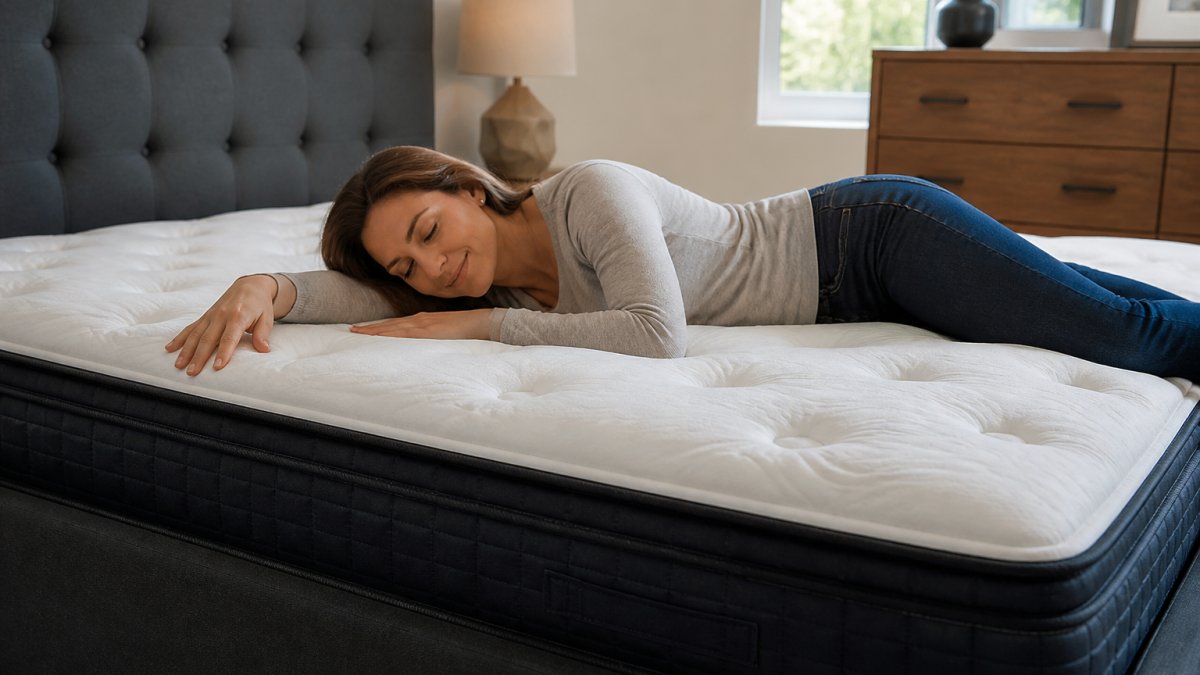
How Often to Flip Mattress for Maximum Lifespan
The frequency of flipping directly impacts how long your mattress lasts. Many people assume they should flip monthly, but the optimal schedule depends on your mattress type and use patterns.
For a flippable hybrid mattress, we recommend flipping every 3 to 6 months. This rotation distributes body weight evenly across both surfaces, preventing the deep body impressions and sagging that occur when one side bears all your weight year-round. Some manufacturers suggest quarterly flipping for the first year, then semi-annual flipping thereafter.
The logic is straightforward: your body compresses the comfort layers and support core nightly. Over time, one side experiences cumulative compression. Flipping redistributes that stress, allowing compressed foam to recover and extending the mattress's effective lifespan by several years.
Set a calendar reminder for your flip schedule. Many people forget after the first few months, which defeats the purpose. Some families make it a seasonal task, flip with the time change or during spring cleaning. The consistency matters more than the exact interval.
Benefits of Double-Sided Mattresses vs. Single-Sided Designs
The practical advantage of a double-sided mattress is durability and cost-per-year of use. A single-sided mattress forces you to replace it sooner because one surface bears all compression stress. A double-sided design extends usable life significantly.
Consider the financial perspective: if a quality single-sided mattress lasts 6-7 years before noticeable sagging, and a flippable double-sided mattress of similar quality lasts 10-12 years with regular flipping, the per-year cost drops substantially. You're spreading your investment across more sleep nights.
Beyond longevity, double-sided mattresses offer flexibility. If one side develops a preference mismatch, you bought firm but realize you prefer medium, flipping to the other side gives you a different feel without replacing the entire mattress. Some families with different firmness preferences can share a flippable mattress more comfortably than a single-sided one.
The trade-off is weight and flipping effort. Flippable mattresses are heavier than single-sided designs because they require strong construction on both surfaces. Flipping a queen or king mattress requires physical effort and ideally a second person. This isn't a dealbreaker, but it's a real consideration for people with mobility limitations.
Step-by-Step: How to Buy Your Flippable Hybrid Mattress Online
Buying a mattress online without lying on it first creates legitimate anxiety. Here's how to navigate that risk systematically.
Step 1: Assess Your Sleep Needs and Body Type
Start by identifying your primary sleep position. Back sleepers typically need firm to medium-firm support. Side sleepers benefit from softer, more contouring surfaces that cushion the hip and shoulder. Stomach sleepers need firm support to prevent lower back strain. Combination sleepers need balanced firmness that doesn't penalize any position too heavily.
Next, consider your body weight. Lighter individuals (under 150 pounds) can sleep comfortably on softer mattresses. People over 200 pounds typically need firmer support to prevent excessive sinking. Average weight (150-200 pounds) has the most flexibility across firmness levels.
Finally, assess any pain patterns. Chronic back pain often improves with firmer support, though some people find medium firmness more comfortable. Neck pain, shoulder pain, and hip pain suggest you need a mattress that cushions pressure points while maintaining spinal alignment.
Document these factors before shopping. This clarity narrows your options significantly.
Step 2: Verify the Mattress Is Genuinely Flippable
Not every mattress marketed as "flippable" is truly dual-sided. Read the product description carefully. Look for these red flags:
- Descriptions that say "reversible" instead of "flippable" (reversible means end-to-end only)
- Asymmetrical construction (one side quilted, one side unquilted)
- Warnings against flipping in the care instructions
- Thin or minimal quilting on the bottom surface
Genuine flippable mattresses describe both sides explicitly. You should see layer-by-layer construction details for each side, not just one side. Hybrid construction on both sides is a strong indicator of true dual-sided design.
Step 3: Check Return Policy and Sleep Trial
Online mattress retailers typically offer 100-120 night sleep trials. This window allows you to test the mattress in your own bed with your own pillows and sleep patterns. Thirty nights is too short; ninety to one hundred twenty nights is standard and reasonable.
Understand the return logistics: Does the company pick up the mattress, or do you arrange shipping? Are there restocking fees? What condition must the mattress be in? Some companies donate returned mattresses; others recycle them. This doesn't affect your decision, but it's good to know.
A strong return policy is your insurance against online purchase risk. If the mattress doesn't work for you, a hassle-free return protects your investment.
Step 4: Review Warranty and Durability Claims
Mattress warranties typically cover manufacturing defects for 10 years. Read the fine print. Some warranties require regular flipping to remain valid, this is actually a good sign because it shows the manufacturer engineered the mattress for flipping.
Check what the warranty covers. Does it address sagging (usually defined as indentations deeper than 1.5 inches)? Does it cover foam degradation or coil breakage? Full-coverage warranties are stronger than limited ones.
Durability claims should be specific. Avoid vague language like "built to last." Look for concrete claims: "engineered for 10+ years of nightly use" or "tested for 20,000 compression cycles" (equivalent to roughly 10 years of use). These specifics suggest the manufacturer tested the design.
Step 5: Confirm Bed Frame Compatibility
Flippable mattresses are heavier than single-sided designs. Confirm your bed frame can support the weight. Most modern bed frames handle this fine, but older frames or lightweight platforms might struggle.
Check mattress dimensions against your bed frame. A queen mattress is 60 inches wide by 80 inches long. Measure your frame's interior to ensure proper fit. Undersized frames can cause edge support issues.
If you're using a platform bed, ensure slats are spaced no more than 3 inches apart. Wider spacing allows the mattress to sag between slats, defeating the durability advantage of a flippable design.
Step 6: Place Your Order and Arrange Delivery
Most online mattress retailers offer free shipping to your bedroom door. Confirm this before ordering. Some charge for white-glove delivery (assembly and old mattress removal), while others include it.
Delivery timing matters. If your current mattress is failing, order early enough that delivery overlaps. If you're replacing a functional mattress, order when you're ready to transition. Many companies deliver within 1-2 weeks of order placement.
Upon delivery, inspect the mattress for damage before signing. Open the packaging fully and check for tears, stains, or structural issues. If you notice problems, document them with photos and contact customer service immediately.
Comparing Price and Total Cost of Ownership
The sticker price of a flippable hybrid mattress often runs higher than single-sided alternatives, but the total cost of ownership, the price divided by years of useful life, often favors flippable designs.
A quality single-sided mattress might cost less upfront but require replacement every 6-8 years. A flippable mattress costs more initially but lasts 10-12 years with proper care. Spread that cost across the lifespan, and the per-year expense becomes competitive or even cheaper.
Factor in the sleep trial period. If you need to return a mattress that doesn't work, you lose the purchase price. A strong return policy and reasonable sleep trial reduce this risk. Some companies offer partial refunds if you return after the trial period, which softens the financial hit of a poor choice.
Consider financing options. Many online retailers offer payment plans, 0% interest over 12-24 months. This spreads the cost without adding interest, making a higher-quality mattress more accessible.
| Factor | Single-Sided Mattress | Flippable Hybrid Mattress |
|---|---|---|
| Typical Lifespan | 6-8 years | 10-12 years |
| Upfront Cost | Lower | Higher |
| Per-Year Cost | Higher when amortized | Lower when amortized |
| Maintenance | Minimal | Flip every 3-6 months |
| Comfort Consistency | Declines over time | Maintained longer |
Common Mistakes to Avoid When Buying Online
The biggest mistake is buying based solely on price or brand name recognition. A cheaper mattress that doesn't match your sleep needs will be uncomfortable for years.
Second mistake: ignoring the sleep trial period. Some people order, receive the mattress, sleep on it for three nights, decide it's not perfect, and return it immediately. This defeats the purpose.
Third mistake: not flipping regularly after purchase. You've invested in a flippable design; the durability benefit only materializes if you actually flip it. Set calendar reminders and commit to the schedule.
Fourth mistake: overlooking bed frame compatibility. A flippable mattress on an incompatible frame won't perform as designed. Verify frame support before ordering.
Fifth mistake: not reading return policy details. Some companies have strict conditions, the mattress must be in pristine condition, or restocking fees apply. Know the rules before you order.
Sixth mistake: confusing "flippable" with "reversible." Reversible mattresses flip end-to-end but not side-to-side. True flippable designs flip both ways.
Buying a flippable hybrid mattress online requires research, but the durability and cost-per-year value justify the effort.
Frequently Asked Questions
How often should you flip a double-sided mattress?
Most manufacturers recommend flipping your flippable hybrid mattress every 3 to 6 months to ensure even wear and extend its lifespan. Some suggest rotating it quarterly in addition to flipping. Check your mattress warranty for specific guidance, as recommendations vary by construction and materials used in the comfort and support layers.
What are the main benefits of double-sided mattresses?
Double-sided mattresses extend durability by distributing wear across both surfaces, preventing sagging in high-pressure zones. They offer flexibility, you can switch sides if one becomes less comfortable over time. Flippable designs maximize your investment's value by effectively doubling the usable surface area, making them ideal for long-term ownership and reducing replacement frequency.
Can I return a flippable hybrid mattress if it doesn't feel right?
Most online retailers offer sleep trials ranging from 30 to 120 nights, allowing you to test the mattress at home before committing. Review the return policy before purchasing, confirm whether returns are free, whether the mattress must be unused, and how pickup or shipping is handled. This protects you if the firmness level or feel doesn't match your needs.
Are flippable hybrid mattresses really more durable than one-sided mattresses?
Flippable designs can extend mattress life when used as intended, since you're distributing body weight across two surfaces rather than wearing down a single side. However, durability depends on overall construction quality, materials, and how often you actually flip it. Hybrid mattresses with quality coil support cores and foam layers generally offer better long-term durability than budget one-sided alternatives.

Double the life of your mattress today
Our mattresses will help you get the sleep you need. Not sure which one’s right for you? Check out our firmness guide below.