
Last Updated: November 19, 2026
Quick Summary
Flippable mattresses can spread wear across both sides, but they only last longer when both faces are built to the same standard and the support core is durable. Flipping slows surface wear and does not reverse coil or core fatigue. Check the test protocol and both-sides results before trusting a flippable mattress durability claim.
- Flipping redistributes wear, but it does not stop materials from aging.
- Flipping helps comfort layers most and support cores least.
- Flip roughly every three to six months and rotate end to end between flips.
- A credible durability test reports cycle count, measurement points and units.
- Both sides of a flippable mattress should show comparable compression and recovery.
Table of Contents
- How Flippable Mattresses Are Built and Why Construction Matters
- How a Flippable Mattress Durability Test Works
- Does Flipping Actually Extend Mattress Lifespan?
- How Often to Flip Mattress for Even Wear
- Durability by Material and Construction: Hybrid, Foam, and Latex
- Signs of Mattress Wear and Tear and When to Replace
- Choosing a Durable Mattress That Fits Your Sleep and Budget
- Frequently Asked Questions
Flippable mattresses promise longer life, but the claim only holds up if the design and the flipping habit both do their part. This article looks at what the durability evidence actually shows. A flippable mattress is a bed built with comparable comfort and support layers on both sides, so you can rotate it or turn it over to spread out wear.
How Flippable Mattresses Are Built and Why Construction Matters
Flippable mattresses are built with comfort and support layers on both surfaces. That symmetry is the whole point. A one-sided mattress concentrates body weight and heat on one face, so one side can soften while the other stays firm.
Construction still sets the ceiling. A flippable design cannot compensate for weak coils or low-density foam, so the materials inside matter as much as the flip itself.
How a Flippable Mattress Durability Test Works
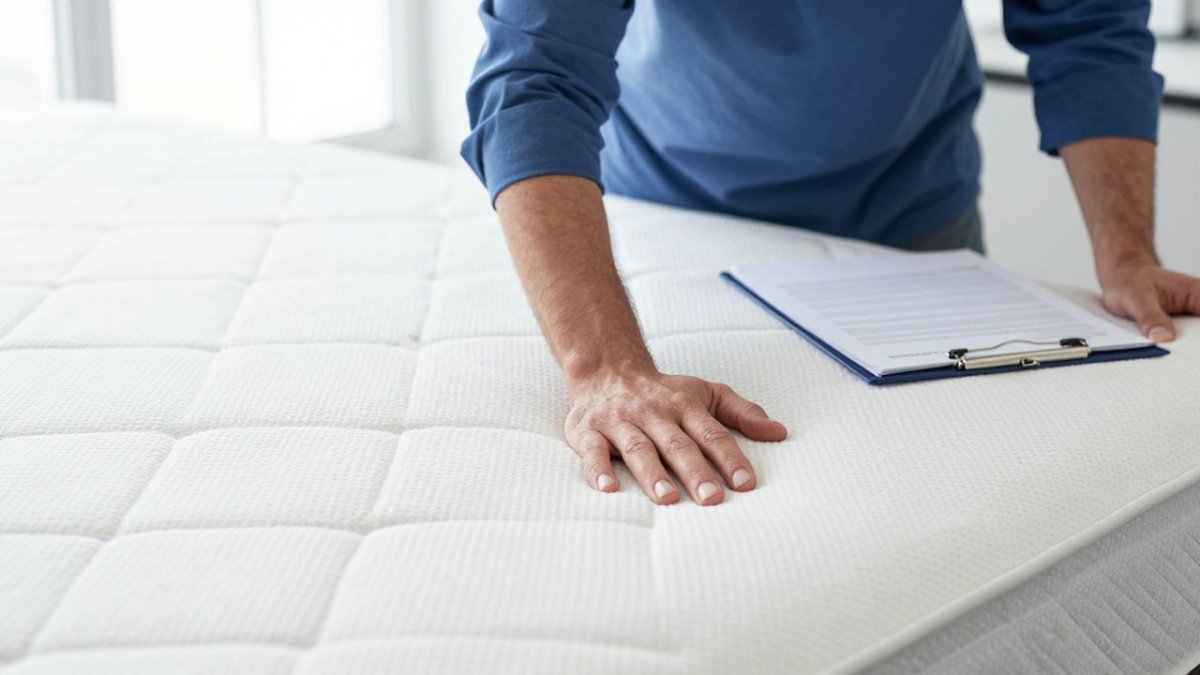
Durability testing simulates years of nightly use in a controlled environment so that wear can be measured instead of guessed. A technician applies repeated loading to the sleep surface, then measures how much the mattress compresses and how well it recovers.
No single public protocol exists for flippable mattresses specifically, so treat any single test result with caution. What you can do is demand that the method be clearly described, repeatable and applied to both sides of the bed.
What a Credible Test Protocol Should Specify
A transparent protocol answers five questions before it reports a single result:
- Load and cycle count. How much weight is applied, in what pattern, and for how many cycles. A common industry approach uses a weighted roller or a hexagonal profile that passes over the surface repeatedly; the cycle count is what stands in for years of sleep. Ask how many cycles were run and what that number is meant to represent.
- Measurement points. Where on the surface height and firmness are recorded, center, shoulder zone, hip zone, edge, and how many readings are averaged. A single center reading can hide a hip-zone dip.
- Measurement units and thresholds. Compression and recovery should be reported in inches or millimeters, and firmness in a repeatable scale such as ILD (indentation load deflection) for foam or a comparable hardness reading. A result without units is not a result.
- Both-sides protocol. Whether each face was tested independently, and whether the mattress was flipped between test phases. This is the step that separates a flippable-specific test from a generic one-sided test.
- Environmental conditions. Temperature and humidity affect foam behavior, so a credible report states the conditions under which readings were taken.
Step-by-Step Testing Methodology
- Baseline measurement. Record the initial height, firmness and surface profile at multiple points on each side. Photograph or map the surface so the same points can be re-measured later.
- Repeated loading. Apply a set cycle of weight and pressure to simulate nightly sleep, using a consistent load pattern so results are comparable across mattresses.
- Intermediate checks. Measure compression and recovery at fixed intervals, for example, after a quarter, half and three-quarters of the total cycles, to see whether wear is linear or accelerates.
- Final measurement. Compare end readings against baseline to calculate sag in inches or millimeters and support loss as a percentage of the original firmness reading.
- Side-by-side review. Confirm that both sides wear at comparable rates before crediting the flip. If one face sags noticeably faster, the design is not delivering the symmetry it promises.
Watch out: a test that reports only a final number without the baseline, the cycle count or the measurement points cannot be checked or repeated, and should not be treated as evidence of durability.
How to Read a Durability Test Result
When you look at a published result, separate what was measured from what was claimed. A measured result tells you the compression in inches at a stated cycle count under stated conditions. A claim tells you the mattress "lasts 10 years" without showing the protocol behind it. The first is evidence; the second is marketing.
A useful pattern to look for is whether the two faces of a flippable mattress converge or diverge over the test. If both faces show similar compression and recovery at the end, the flip is doing what it is supposed to do. If one face is clearly worse, flipping will only postpone the problem, not solve it.
Limitations of Any Lab Test
A controlled test cannot reproduce everything that happens in a bedroom. It typically holds temperature and humidity steady, uses a consistent load pattern, and ignores foundation type, bed frame support, mattress protector use and the way a real sleeper shifts position through the night. It also cannot model the difference between one 200-pound sleeper and two 150-pound sleepers sharing the same surface.
Does Flipping Actually Extend Mattress Lifespan?
Flipping can help redistribute wear that would otherwise concentrate on one side. It does not stop the materials from aging. A mattress that is flipped and rotated still compresses over time, and no flip reverses structural fatigue in the coils or foams. The honest answer is that flipping changes where wear lands, not whether wear happens.
The benefit is real but bounded, and it depends on three conditions being true at once: the two sides are built to match, the mattress is actually flipped on a schedule, and the underlying materials are durable enough to make the redistribution worth the effort. A flippable mattress with mismatched sides gains much less from the habit, because flipping a firm side onto a soft side does not spread load evenly, it just moves the problem.
What Flipping Can and Cannot Change
| Factor | Flipping helps? | Why |
|---|---|---|
| Surface foam softening | Yes, partially | Load shifts to the fresher face, slowing compression on the worn side |
| Body impressions in comfort layers | Yes, if caught early | Redistribution before permanent set can extend usable surface life |
| Coil fatigue and support-core breakdown | No | The core carries load regardless of which face is up |
| Loss of edge support | No | Edge structures age from use, not from which side faces up |
| Heat and moisture buildup | Somewhat | Alternating faces gives each side time to recover and air out |
A common pattern is that flipping buys the most time in the comfort layers and the least time in the support core. That is why a flippable design only pays off when the core is built to last, otherwise you are rotating a surface on top of a foundation that is already failing.
Side-by-Side Wear: Flippable vs. One-Sided
Quantified long-term wear data comparing flippable and one-sided mattresses is scarce in public form, which is exactly why lifespan claims deserve scrutiny. What can be said with confidence is directional: a one-sided mattress concentrates compression, heat and moisture on a single face, so the comfort layer on that face reaches its compression limit sooner.
The core does not get a break from flipping. If the support core is the weak link, the two-sided advantage shrinks toward zero. When you compare designs, compare the core specifications first and the comfort-layer symmetry second.
Objective End-of-Life Criteria
Lifespan estimates are only useful if you know what "end of life" means for your bed. Use measurable signs rather than a calendar:
- Persistent impressions. A body impression deeper than about an inch that does not recover after the mattress has been aired and rotated is a structural sign, not a cosmetic one.
- Measurable support loss. If the surface no longer returns to its baseline height at the hip and shoulder zones, the comfort layer has lost its ability to hold you up.
- Loss of alignment. Waking with new lower-back or hip discomfort that eases during the day is a common signal that the surface is no longer supporting neutral alignment.
When structural signs appear, protection and flipping will not reverse the damage. A protective cover can slow surface wear, and our mattress accessories include options designed for that purpose, but they are preventive, not restorative.
Real-World Factors That Change Lifespan
A single average lifespan figure is close to useless without context. The factors below move the number more than most buyers expect:
- Sleeper weight and occupancy. Higher combined weight loads the center and hip zones faster. A heavier couple should flip and rotate more often than a single lighter sleeper.
- Foundation support. A sagging box spring or a frame with inadequate slats accelerates mattress wear regardless of flipping. Check the foundation before blaming the mattress.
- Humidity and ventilation. Damp environments and poor airflow under the bed trap moisture in foam and fabric, which speeds breakdown. A breathable protector and a ventilated foundation help.
For a fuller picture of expected lifespan by material and construction, our mattress lifespan and durability guide covers the factors that matter most.
How Often to Flip Mattress for Even Wear
A common approach is to flip the mattress every three to six months, and to rotate it end to end in between.
The right frequency depends on how many people sleep on the bed and how heavy they are. A heavier couple will load the center more quickly, so more frequent turns can help.
Need step-by-step instructions for turning your mattress safely? Our guide on how to flip a mattress to prevent wear walks through the process, and our full how often to flip a mattress schedule explains the reasoning behind the timing.
Durability by Material and Construction: Hybrid, Foam, and Latex
Material choice shapes how a mattress ages. Hybrids combine coil support with foam comfort layers, and the coil system often carries most of the long-term load, which is why the support core matters so much.
Whatever the material, a mattress that is flippable only helps if both sides are built to the same standard. Compare the layer specifications rather than assuming symmetry.
For a direct comparison of flippable and non-flippable designs, see our breakdown of flippable vs non-flippable mattress durability.
Signs of Mattress Wear and Tear and When to Replace
Watch for visible body impressions deeper than about an inch, a noticeable dip in support, new morning aches, or a surface that no longer springs back.
Replacement timing varies with materials and use. A protective cover can slow surface wear, and our mattress accessories include options designed for that purpose. When structural signs appear, though, protection will not reverse the damage.
Choosing a Durable Mattress That Fits Your Sleep and Budget
Start with your sleep position and body weight, since both determine the firmness that will hold up for you.
Price should reflect the total cost of ownership, not just the sticker price.
Ready to find a mattress built to last? Shop Mattresses with Durable Mattress and choose a 2-sided hybrid designed to be flipped for longer life and steady comfort.
Frequently Asked Questions
Do double-sided mattresses last longer?
Flipping can help spread body impressions and surface wear across both sides. Lifespan still depends on materials, support core quality, foundation, body weight, and care. Expect the two sides to wear at similar rates only if you rotate and flip on a regular schedule.
How often should you flip a double-sided mattress to maintain support?
Flip and rotate your mattress every three to six months as a general schedule, then adjust based on how the surface feels. If you notice one side sagging or a dip forming in the same spot, flip sooner. Rotating head to foot between flips helps even out wear from pressure points. Always follow the manufacturer's care instructions, since some mattresses are designed to be flipped only in specific ways.
What specific tests determine the durability of a flippable mattress?
Durability testing typically includes repeated compression cycles to simulate years of use, measurement of impression depth before and after testing, and evaluation of support loss under a set load. Testers also check edge collapse and how quickly comfort layers degrade. Ask any brand for its test method, load weights, cycle counts, and pass criteria so you can compare results fairly rather than relying on marketing claims.
What are the primary signs of wear in a flippable mattress?
Common signs include a visible dip or body impression deeper than about one inch, sagging at the edges, squeaking or coil noise, and waking with new aches or stiffness. Uneven firmness across the surface and a noticeable sense of sinking toward the center also point to wear. If these appear within a few months of flipping on schedule, contact the manufacturer to review warranty coverage.

Table of Contents
- Flippable vs Non-Flippable Mattress Durability: What Actually Matters
- How Flippable Mattress Construction Extends Lifespan
- Mattress Sagging Causes and How Flipping Prevents Wear
- How Often to Flip a Mattress for Maximum Durability
- How to Rotate a Mattress and Optimize Wear Distribution
- How to Make a Mattress Last Longer: Practical Maintenance Steps
- Real Durability Expectations: Lifespan Comparison and Value
- Frequently Asked Questions
Last Updated: October 12, 2026
Flippable vs Non-Flippable Mattress Durability: What Actually Matters
Buying a mattress affects your sleep and your wallet for the next decade. Flippable vs non-flippable mattress durability determines how long your investment lasts and whether you face premature sagging.
At Durable Mattress, we've spent years analyzing how construction affects longevity. The core difference: a flippable mattress has two usable sleep surfaces, a non-flippable mattress has one. That design choice changes how wear distributes over time.
Most shoppers assume all mattresses are built the same way. They're not. Construction method, materials, and whether you can flip or rotate all determine how many years of comfortable sleep you get.
How Flippable Mattress Construction Extends Lifespan
A flippable mattress has symmetrical construction with two usable sleep surfaces, both engineered with comfort layers and a support core, so you can flip it periodically to distribute body weight. Non-flippable mattresses are one-sided: the top carries premium comfort materials, the bottom is a firmer base. You can rotate them end-to-end but not flip them, so all your body weight concentrates on the same surface for the mattress's entire life.
The durability difference is not automatic. It depends on how each design's materials fail, which tells you when flipping actually extends life.
Material-specific failure modes
Memory foam softens and takes a permanent set under sustained load, producing body impressions that do not recover. A two-sided memory foam mattress can alternate surfaces, giving each side recovery time, but the foam still degrades. Flipping slows visible sagging; it does not stop the breakdown.
High-density polyfoam (often 1.8 lb/ft³ or higher) resists compression better than low-density foam (1.2-1.5 lb/ft³). In a flippable design, the denser foam holds its shape longer, so the benefit of alternating sides is meaningful.
Latex rebounds quickly, resisting permanent compression better than memory foam. A two-sided latex mattress can last many years with regular flipping because the material recovers between uses. Latex tends to fail by tearing at the edges rather than forming deep body impressions.
Innerspring and hybrid designs rely on a coil unit for support. Pocketed coils distribute load individually, but the comfort layers above them still compress. In a flippable hybrid, both sides have comfort layers, so flipping spreads wear across two sets of foams.
Realistic lifespan ranges
A quality non-flippable mattress typically lasts about 5-7 years, while a comparable flippable mattress lasts 8-12 years. These are ranges, not guarantees: a premium non-flippable with dense foam and a strong coil unit can reach 8-10 years, and a budget flippable with thin foam can fail in 4-6 years. Construction quality and material density matter more than the flip label.
Body weight and sleep position shift the range. A 250-pound sleeper concentrates more load per square inch than a 150-pound sleeper, so foam compresses faster. Back and stomach sleepers spread weight more evenly than side sleepers, who concentrate load at the shoulder and hip.
When flipping actually helps
Flipping helps most when the mattress has two genuine comfort layers of similar quality and the materials recover between uses. It helps least when one side is thin, low-density, or the mattress is past its useful life. Rotating a one-sided mattress distributes wear along its length but cannot rest the top surface. At equal material quality, a flippable design tends to outlast a non-flippable one, not because flipping is magic, but because two surfaces share the load.
Flipping extends life by sharing load across two surfaces. It cannot rescue low-density foam or a worn-out core. Match the design to the material quality, then follow a realistic schedule.
Mattress Sagging Causes and How Flipping Prevents Wear
Sagging happens when comfort layers compress permanently and don't spring back, because body weight applies constant pressure to the same spots night after night. The foam or latex loses its ability to rebound, creating body impressions and reduced support.
Flipping addresses this directly: by rotating which surface bears your weight, compressed areas recover. Like rotating tires on a car, you extend usable life by spreading wear evenly.
Materials matter enormously. Memory foam compresses faster than latex or high-density polyfoam, so a flippable memory foam mattress needs more frequent flipping to prevent sagging. Hybrid designs with coil support resist compression better and hold up longer whether you flip or not.
Fiber padding and lower-density foams break down fastest and are common in budget mattresses. A non-flippable budget mattress using them can sag noticeably within 2-3 years. A flippable mattress with the same materials lasts longer because you can flip it, but it won't solve the underlying material weakness.
How Often to Flip a Mattress for Maximum Durability
The standard recommendation is to flip a mattress every 3-6 months, giving each side adequate time under load before being rested. Flipping seasonally, at the start of spring and fall, can be easy to remember and maintain.
Exact frequency depends on body weight and construction. Heavier individuals should flip more often because their weight creates more concentrated compression: someone 250+ pounds might flip every 2-3 months, while someone 150 pounds could extend to 4-6 months.
A hybrid flippable mattress with pocketed coils can go longer between flips because the coil system resists compression; an all-foam flippable needs more frequent flipping. The firmer the foam density (in pounds per cubic foot), the longer you can wait.
Is flipping worth the effort? It depends on your priorities. If you're keeping the mattress 10+ years, flipping extends durability noticeably. If you replace mattresses every 5-7 years anyway, flipping helps but isn't critical.
How to Rotate a Mattress and Optimize Wear Distribution
Rotation and flipping are different actions, though both help durability. Rotating means turning the mattress 180 degrees end-to-end, so the head becomes the foot. This distributes wear along the length, preventing the head area from sagging faster than the foot area.
For non-flippable mattresses, rotation is your only option. Rotate every 2-3 months to even out wear. It won't extend lifespan as much as flipping, but it prevents head-area sagging while the foot stays firm.
For flippable mattresses, do both: flip every 3-6 months and rotate every 2-3 months. This four-position schedule distributes weight across all areas. A simple system: flip in spring, rotate in summer, flip in fall, rotate in winter.
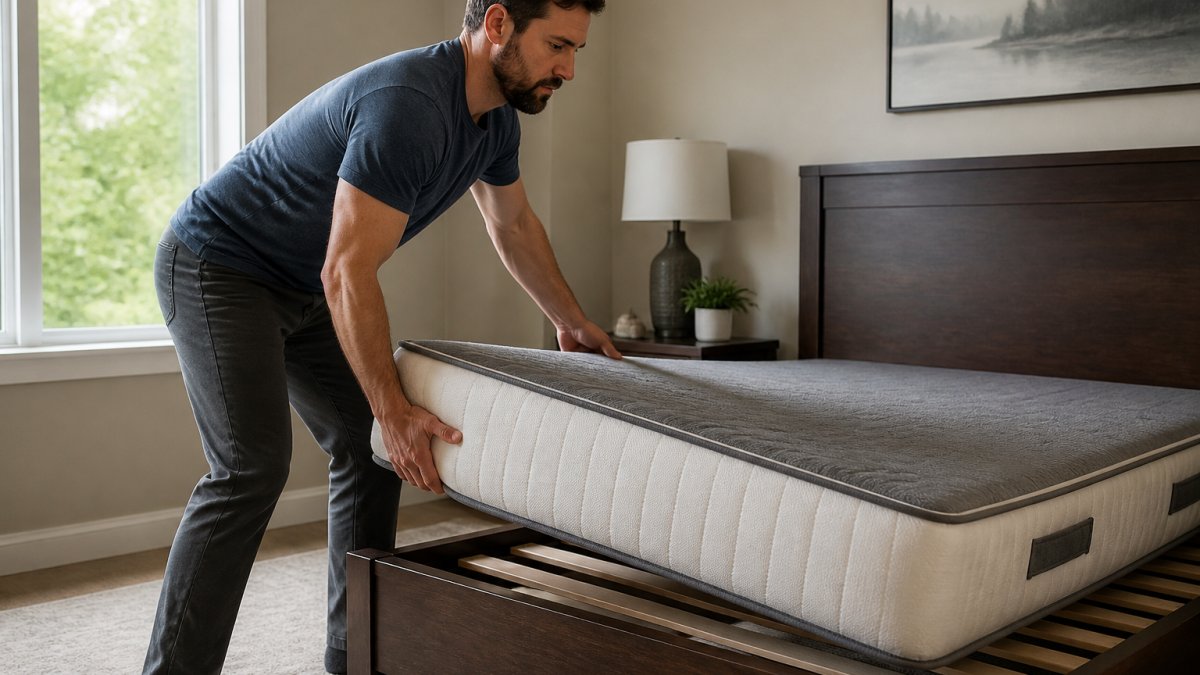
Technique matters for safety and mattress integrity. Flip with a partner if possible, most mattresses are heavy and awkward alone. Grip the sides firmly, keep your back straight, and lift with your legs. Flipping on a sturdy bed frame is easier than on a platform with limited clearance.
How to Make a Mattress Last Longer: Practical Maintenance Steps
Beyond flipping and rotating, several maintenance practices extend mattress lifespan, and some of them protect your warranty as much as your comfort.
Protect the surface
Use a waterproof mattress protector from day one. It blocks sweat, skin cells, and spills from reaching the foam or coils, which can accelerate breakdown and create odor. A quality protector can add years to usable life. Vacuum the top surface monthly with an upholstery attachment to remove dust and allergens. Blot spills immediately rather than rubbing, which pushes liquid deeper into the layers.
Control the environment
Maintain 30-50% relative humidity in the bedroom. Very dry air can make foam brittle; high humidity encourages mold in the core. In dry climates, a humidifier helps. In humid climates, use air circulation or a dehumidifier. Avoid placing the mattress directly on a cold floor or in direct sunlight, both of which stress materials.
Support the mattress correctly
A weak or sagging foundation transfers stress unevenly and accelerates wear. Use a sturdy frame or platform with slats spaced no more than 3 inches apart. A poor foundation can reduce mattress lifespan. Check your mattress manufacturer's foundation requirements, many warranties specify an approved base, and using an unsupported frame can void coverage. Adjustable bases are compatible with many modern mattresses, but confirm the model is approved before purchase.
Follow the warranty terms
Most mattress warranties cover manufacturing defects such as sagging beyond a stated threshold (often 1-1.5 inches), not normal softening or wear. Warranties typically require:
- A mattress protector to keep the surface clean
- An approved foundation or bed frame
- Rotation or flipping according to the manufacturer's schedule
- Proof of purchase and sometimes registration within a set window
Flipping a mattress that is not designed to be flipped can damage it and void the warranty. Always check the law tag or manufacturer instructions before flipping. If the tag says "no flip" or "rotate only," follow that guidance.
Reduce concentrated stress
Avoid sitting on the mattress edge regularly. That concentrates weight on the perimeter and causes edge sagging faster than the center. If you have a partner who sits on the edge every morning, that area will wear first. A mattress pad or topper can protect high-stress areas, but it does not replace proper support underneath.
Calculate cost per year
Durability is a value question, not just a lifespan question. Divide the purchase price by the expected usable years to compare options:
- A $1,000 non-flippable mattress lasting 6 years costs about $167 per year.
- A $1,200 flippable mattress lasting 10 years costs about $120 per year.
A flippable model can cost more upfront and still be cheaper over time. But if a premium non-flippable mattress outlasts a budget flippable one, the cheaper option may win. Compare at similar quality levels, then factor in the effort of flipping and the cost of a protector and foundation.
Set a seasonal reminder to flip or rotate. Pair it with a quick inspection of the foundation and a vacuum of the surface. Small habits protect both comfort and warranty coverage.
Real Durability Expectations: Lifespan Comparison and Value
A non-flippable mattress typically lasts 5-7 years with normal use, assuming quality construction with dense foam or hybrid support. Budget models last 3-5 years; premium models can reach 8-10 years.
A flippable mattress typically lasts 8-12 years. The dual-sided design and regular flipping distribute wear so effectively that support lasts longer. A quality flippable hybrid with proper maintenance often reaches the 10-year mark.
The flippable option can become cheaper over time despite a potentially higher upfront price.
Material quality matters more than flippability. A premium non-flippable mattress with high-density foam and strong coil support might outlast a budget flippable with thin foam and weak coils.
Consider your situation: if you have chronic back pain and need a specific firmness, a non-flippable mattress with that firmness might be right, you can't flip to a different firmness anyway.
When you invest in a mattress, you're not just buying comfort, you're buying years of sleep quality. The difference between flippable and non-flippable construction determines whether you'll enjoy that mattress for a decade or replace it in five years.
| Feature | Flippable Mattress | Non-Flippable Mattress |
|---|---|---|
| Sleep Surfaces | Two usable sides | One usable side |
| Typical Lifespan | 8-12 years | 5-7 years |
| Wear Distribution | Spreads across both sides | Concentrates on top |
| Flipping Schedule | Every 3-6 months | Not applicable |
| Rotation Benefit | High | Moderate |
| Cost Per Year | Lower over time | Higher |
| Best For | Long-term value seekers | Those with specific firmness needs |
Frequently Asked Questions
Do flippable mattresses really last longer than non-flippable mattresses?
Flippable mattress construction distributes body weight and compression across two sleep surfaces instead of one, which slows foam cell breakdown and extends overall lifespan. Non-flippable mattresses concentrate wear on a single surface, causing faster sagging and support loss. The durability advantage depends on consistent flipping, if you never flip, both types wear similarly. Hybrid mattresses with symmetrical construction on both sides maximize this benefit.
How often should you flip a flippable mattress?
Flip your mattress every 3 to 6 months for the first year, then every 6 months after that. More frequent flipping in the first year helps break in the mattress evenly and prevents early body impressions. Mark your calendar or set a phone reminder to stay consistent. If you weigh over 200 pounds, flip every 3 months to better distribute compression across both sides.
What causes a mattress to sag, and can flipping prevent it?
Mattress sagging results from foam cell breakdown, pocketed coil compression, and uneven weight distribution. Flipping distributes your body weight across both sleep surfaces, slowing compression on any single side. Rotating the mattress head-to-foot also helps. However, sagging eventually occurs in all mattresses, flipping just delays it significantly. Quality materials like high-density foam and individually wrapped coils resist sagging longer than budget construction.
How can I make my mattress last longer?
Flip or rotate every 3 to 6 months, use a supportive bed frame or foundation, add a mattress protector to prevent stains and moisture, keep the bedroom cool and dry, and avoid jumping on the mattress. Flippable designs extend lifespan when maintained properly. Investing in a hybrid mattress with pocketed coils and quality comfort layers also resists wear better than all-foam or budget innerspring options over time.
Double the life of your mattress today
Our mattresses will help you get the sleep you need. Not sure which one’s right for you? Check out our firmness guide below.