Last Updated: November 4, 2026
Quick Summary
The best flippable mattress for couples gives you two firmness options in one bed, and Durable Mattress is our top pick with a 2-sided flippable design in Soft, Medium, or Firm. A flippable mattress suits couples whose firmness preferences are close, since both partners sleep on the same surface at once.
- Engineered Sleep Classic Hybrid starts at $720 and is the value pick for budget-conscious couples.
- Original Mattress Factory Two-Sided offers 13 comfort levels starting at $443.
- Zenhaven by Saatva costs $2,395 and pairs a Luxury Plush side with a Gentle Firm side.
- Flip a two-sided mattress every three to six months and rotate head-to-foot on the same schedule.
- Couples more than one firmness step apart should consider split-firmness instead of a flippable bed.
Table of Contents
- Why a Flippable Mattress Makes Sense for Couples in 2026
- Quick Comparison: Best Flippable Mattresses for Couples
- The 6 Best Flippable Mattresses for Couples
- Mattress for Couples With Different Firmness Preferences
- Best Flippable Mattress for Side Sleepers
- Flippable Mattress Motion Isolation: What Partners Should Know
- How Often to Flip a Mattress (And How to Handle It)
- Shop the Durable Mattress Collection
- Frequently Asked Questions
Why a Flippable Mattress Makes Sense for Couples in 2026
A flippable mattress is a two-sided bed built so both surfaces can serve as the sleep surface, which doubles the usable life of the mattress and gives couples two firmness options in one purchase. At Durable Mattress, we build every bed around that idea: a 2-sided flippable design that prevents premature wear instead of hiding it under a pillow top.
Here is the problem many couples run into. One partner wants a soft landing for their shoulders, the other wants a firm deck under their lower back.
That is the real case for a flippable mattress for couples: not a gimmick, but a way to reset the sleep surface and split the firmness difference without buying two beds.
Quick Comparison: Best Flippable Mattresses for Couples
| Mattress | Starting Price | Firmness Options | Best For |
|---|---|---|---|
| Durable Mattress | See site for pricing | Soft, Medium, Firm | Longevity and firmness choice |
| Engineered Sleep Classic Hybrid | $720 | Multiple profiles | Budget-conscious couples |
| Original Mattress Factory Two-Sided | $443 | 13 varieties | Traditional innerspring feel |
| Zenhaven by Saatva | $2,395 | Plush and Firm | Latex and natural materials |
| Plank Firm | $849 | Firm and Ultra-Firm | Very firm support |
| DLX Classic | $1,099 | Limited options | Classic hybrid feel |
The 6 Best Flippable Mattresses for Couples
Durable Mattress: Best Overall for Longevity
Our top pick is our own Durable Mattress, and the reason is simple: the 2-sided flippable design is the whole point of the bed, not an add-on.
The hybrid construction pairs support with comfort, and you choose your firmness level: Soft, Medium, or Firm.
See the soft version, the firm version, or the medium version to match your sleep style.
Best for: couples who want one bed, two firmness options, and a longer replacement cycle.
Engineered Sleep Classic Hybrid: Best Value
At $720, the Engineered Sleep Classic Hybrid is the value play on this list. The two-sided construction and coil-and-foam hybrid give couples balanced support without the premium price. The catch is availability: you will not find it in most showrooms, so you are buying mostly on spec.
Best for: budget-conscious couples who want a durable hybrid.
Skip if: you want to lie on it before you buy.
Original Mattress Factory Two-Sided: Best Firmness Variety
With 13 comfort levels from very firm to very soft, Original Mattress Factory offers the widest firmness range here, starting at $443. The traditional innerspring build suits couples who like a bouncier, more responsive feel. What most guides miss: that traditional feel is exactly what some sleepers want and others cannot stand, so test the feel before committing.
Best for: shoppers who want a traditional innerspring mattress with options.
Skip if: you prefer modern foam or hybrid comfort.
Zenhaven by Saatva: Best Latex Option
Zenhaven is the premium latex pick at $2,395, with a Luxury Plush side and a Gentle Firm side in 100% natural Talalay latex. Latex sleeps cooler and responds faster than foam, which helps couples who run hot. The trade-off is the price, and latex feels firmer than its label suggests.
Best for: couples who want natural materials and a responsive surface.
Skip if: budget is the deciding factor.
Plank Firm Mattress: Best for Very Firm Support
Plank is built for one preference: firm. Both sides are firm or ultra-firm, which makes it a strong match for back and stomach sleepers who want a flat, supportive deck. Side sleepers should look elsewhere, since the surface offers little give at the shoulder and hip.
Best for: couples who both want very firm support.
Skip if: either partner sleeps on their side.
DLX Classic: Best Traditional Feel
The DLX Classic at $1,099 delivers a classic mattress feel with a two-sided design, a supportive coil system, and breathable construction that helps with temperature regulation. Firmness options are fewer than some rivals, so couples with very different preferences may find it limiting.
Best for: couples who want a familiar feel with flip-friendly durability.
Skip if: you need a wide firmness spread.
Mattress for Couples With Different Firmness Preferences
A flippable mattress solves a firmness disagreement only when both partners can live with one of the two surfaces. That is the honest starting point most roundups skip. A two-sided bed gives you two feels, not two independent feels, both partners sleep on the same side at the same time, so the question is whether one surface is acceptable to both people, not whether each person gets their ideal.
Here is how to tell whether a flippable mattress will actually work for your pairing:
- Small preference gap (one step apart): a medium side and a firm side, or a soft side and a medium side, usually covers both partners. This is the scenario where flipping genuinely ends the compromise.
- Large preference gap (two or more steps apart): one partner wants plush, the other wants ultra-firm. A single flippable mattress rarely satisfies both at once, because whichever side is up is the side both people sleep on. Flipping helps over time, not within a single night.
- Weight difference between partners: a lighter partner on a firm surface may feel like they are sleeping on a board, while a heavier partner on a soft surface may bottom out to the support layer. A medium side is usually the safer shared surface when body weights differ by more than roughly 50 pounds.
When a flippable mattress is not enough, couples have three realistic alternatives:
- Split-firmness mattress: each half of the bed is built to a different firmness. This is the only option that gives each partner an independent feel night after night, but it limits you to specific brands and sizes (usually king and sometimes queen), and the seam down the middle is a real comfort variable.
- Split-firmness adjustable air bed: each side inflates to its own firmness setting and can be changed later. The trade-off is more moving parts, a pump, and a feel many couples describe as less plush than foam or latex.
- Two twin XL mattresses on a split king frame: each partner buys their own mattress and firmness. It is the most flexible answer and the most expensive in total, and it requires a frame built for two foundations.
A flippable mattress is the better buy when your preferences are close, when you both want the longevity benefit of two sleep surfaces, or when you want one purchase and one delivery. Split-firmness is the better buy when one of you genuinely cannot sleep on the other's preferred feel. The mistake couples make is buying a flippable bed expecting split-firmness performance, then discovering that the firm side is still the side both of them sleep on.
Watch out: if you and your partner are more than one firmness step apart, test the exact surface you plan to sleep on together before the trial window closes, a flippable mattress cannot be flipped mid-night to satisfy two different preferences.
Best Flippable Mattress for Side Sleepers
The best flippable mattress for side sleepers is one with a softer surface that cushions the shoulder and hip while still supporting the spine. Side sleeping concentrates body weight on a small area, so pressure buildup is the enemy.
For couples where one partner sleeps on their side, look for a model with a soft or medium side rather than an all-firm build. If side sleeping is the priority for both of you, our guide to mattresses for side sleepers breaks down the fit in more detail.
Flippable Mattress Motion Isolation: What Partners Should Know
Motion isolation is how much of one partner's movement reaches the other side of the bed (How We Determine Motion Isolation Ratings).
What drives motion transfer on a flippable mattress
- Support core: pocketed coils isolate motion better than open coils or a continuous wire unit, because each coil moves independently. A traditional innerspring with connected coils transfers movement across the whole surface.
- Comfort layer: memory foam and dense polyfoam absorb movement; latex is responsive and bouncier, so it transfers more motion than memory foam but less than bare coils.
- Surface firmness: firmer surfaces transfer more motion. A soft side dampens movement; a firm side transmits it. This is why the same mattress can feel calm on one side and restless on the other.
How flipping changes the equation
A two-sided mattress has two different comfort builds, so motion isolation is not one number, it is two. The softer side generally isolates motion better. If one partner is a light sleeper and the other is restless, you can consider placing the light sleeper on the softer side, then flip on schedule so wear stays even.
How to test motion transfer as a couple
- Both lie on the mattress in your normal sleep positions, about a foot apart.
- One partner rolls from back to side three times while the other rests a hand flat on the surface and notes how much movement they feel.
- Repeat with the other partner moving.
- Switch sides and repeat, so you test both surfaces.
- Note whether the movement is a quick ripple (acceptable) or a sustained bounce that would wake you.
A common pattern is that couples notice motion most in the first 20 minutes of the night, when both are settling in, and again during position changes.
Watch out: very firm surfaces, including the firm side of a flippable bed, transfer noticeably more motion, so couples who both want ultra-firm support should test motion transfer together rather than assuming a hybrid will be quiet.
How Often to Flip a Mattress (And How to Handle It)
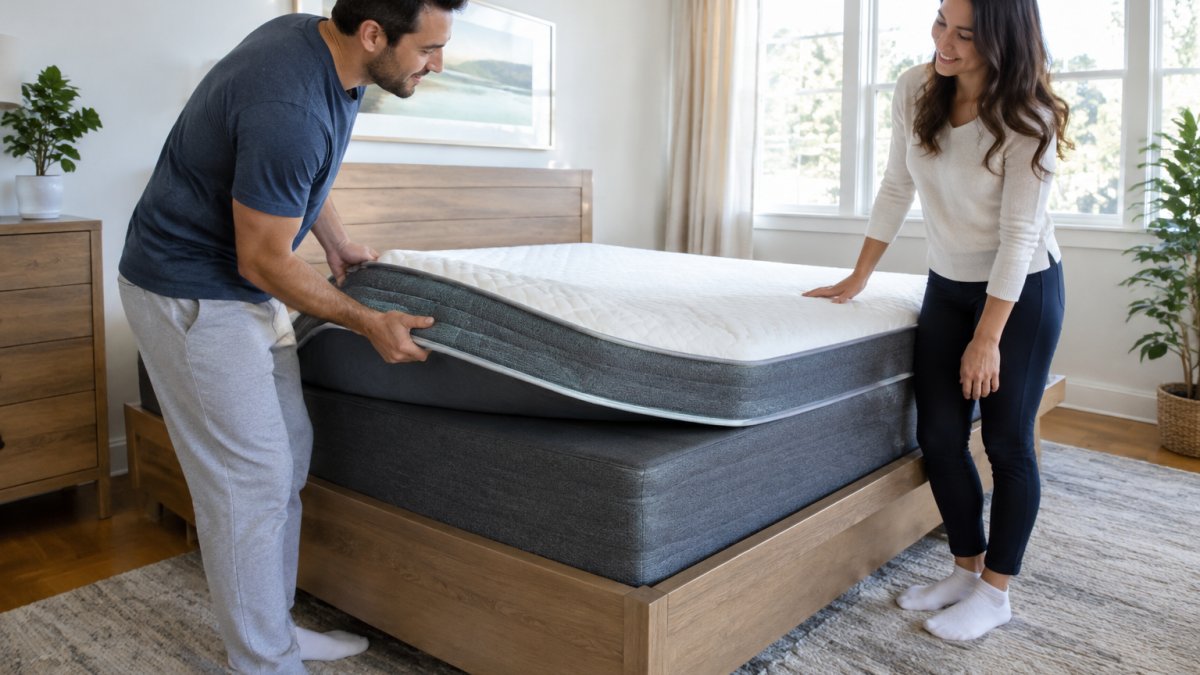
Most two-sided mattresses are commonly flipped every three to six months, and rotated head-to-foot on the same schedule to even out wear. Flipping is the maintenance step that can help a double-sided mattress last longer.
Handling a queen mattress alone is awkward, so flip with two people and clear the floor first. Rotate first, then flip, and keep a calendar reminder so it actually happens. For a step-by-step schedule and technique, read our complete guide to how often to flip a mattress.
Shop the Durable Mattress Collection
The right flippable mattress for couples comes down to two things: a surface each partner can live with, and a build that rewards flipping instead of fighting it. Durable Mattress is built around a 2-sided flippable design, hybrid construction, and Soft, Medium, and Firm options, so couples can choose a firmness level that fits how they both sleep.
Ready to choose your firmness level? Browse the collection and pick the side that fits how you both sleep.
Frequently Asked Questions
Do flippable mattresses last longer than one-sided mattresses?
A flippable mattress typically lasts longer because you rotate the wear across two sleeping surfaces instead of one. With a one-sided mattress, the top comfort layer compresses in the same spots night after night. Flipping spreads that load, which slows sagging and body impressions. How much extra life you get depends on construction, foam density, and how consistently you flip. For couples, the payoff is bigger because two bodies create more concentrated wear.
Can couples with different firmness preferences use the same flippable mattress?
Yes, and this is where a flippable mattress shines. Two-sided mattresses can offer distinct comfort levels on each side, so a couple can agree on one mattress and still get different feels. The catch: you both sleep on the same side at any given time, so you have to pick the side that works for both of you, or flip periodically if preferences shift. If one partner needs soft and the other needs extra-firm, a two-sided mattress with a wide firmness gap is the practical compromise. Talk through firmness before you buy.
How often should you flip a flippable mattress?
Most manufacturers recommend flipping a two-sided mattress every three to six months, and rotating it head-to-foot in between. That schedule keeps wear even and protects the comfort layers from settling in one spot. Couples should lean toward the three-month end because two sleepers concentrate weight in the same zones. Set a calendar reminder, and pair each flip with a quick vacuum of the surface. If you notice body impressions starting to form, flip sooner rather than waiting for the next scheduled date.
Is a flippable mattress good for side sleepers?
It can be, as long as you choose the right firmness side. Side sleepers need pressure relief at the shoulders and hips, so a medium or soft side usually works better than a firm one. A flippable hybrid with a responsive coil core and a cushioned top layer supports the spine while easing pressure points. Very firm surfaces are often a poor fit for side sleepers. Look for a two-sided mattress with at least one medium or plush option, and check the return policy before committing.
How does motion isolation work on a flippable mattress?
Motion isolation depends on the core and comfort layers, not on whether the mattress flips. Foam-heavy two-sided mattresses absorb movement well, while traditional innerspring models transfer more motion across the surface. Hybrids with pocketed coils and dense foam fall in the middle. For couples, test the mattress with a partner if you can, or read reviews from co-sleepers. If one partner is a light sleeper, prioritize models with high-density foam and individually wrapped coils, and avoid open-coil innerspring designs.
Your next step is simple: decide your firmness, then let the flip do the rest. Durable Mattress gives you a 2-sided flippable design built to be flipped, hybrid construction for balanced support, and three firmness levels to match each partner. Get started with Durable Mattress and choose the mattress that lasts longer and sleeps better for both of you.

Table of Contents
- Flippable vs Non-Flippable Mattress Durability: What Actually Matters
- How Flippable Mattress Construction Extends Lifespan
- Mattress Sagging Causes and How Flipping Prevents Wear
- How Often to Flip a Mattress for Maximum Durability
- How to Rotate a Mattress and Optimize Wear Distribution
- How to Make a Mattress Last Longer: Practical Maintenance Steps
- Real Durability Expectations: Lifespan Comparison and Value
- Frequently Asked Questions
Last Updated: October 12, 2026
Flippable vs Non-Flippable Mattress Durability: What Actually Matters
Buying a mattress affects your sleep and your wallet for the next decade. Flippable vs non-flippable mattress durability determines how long your investment lasts and whether you face premature sagging.
At Durable Mattress, we've spent years analyzing how construction affects longevity. The core difference: a flippable mattress has two usable sleep surfaces, a non-flippable mattress has one. That design choice changes how wear distributes over time.
Most shoppers assume all mattresses are built the same way. They're not. Construction method, materials, and whether you can flip or rotate all determine how many years of comfortable sleep you get.
How Flippable Mattress Construction Extends Lifespan
A flippable mattress has symmetrical construction with two usable sleep surfaces, both engineered with comfort layers and a support core, so you can flip it periodically to distribute body weight. Non-flippable mattresses are one-sided: the top carries premium comfort materials, the bottom is a firmer base. You can rotate them end-to-end but not flip them, so all your body weight concentrates on the same surface for the mattress's entire life.
The durability difference is not automatic. It depends on how each design's materials fail, which tells you when flipping actually extends life.
Material-specific failure modes
Memory foam softens and takes a permanent set under sustained load, producing body impressions that do not recover. A two-sided memory foam mattress can alternate surfaces, giving each side recovery time, but the foam still degrades. Flipping slows visible sagging; it does not stop the breakdown.
High-density polyfoam (often 1.8 lb/ft³ or higher) resists compression better than low-density foam (1.2-1.5 lb/ft³). In a flippable design, the denser foam holds its shape longer, so the benefit of alternating sides is meaningful.
Latex rebounds quickly, resisting permanent compression better than memory foam. A two-sided latex mattress can last many years with regular flipping because the material recovers between uses. Latex tends to fail by tearing at the edges rather than forming deep body impressions.
Innerspring and hybrid designs rely on a coil unit for support. Pocketed coils distribute load individually, but the comfort layers above them still compress. In a flippable hybrid, both sides have comfort layers, so flipping spreads wear across two sets of foams.
Realistic lifespan ranges
A quality non-flippable mattress typically lasts about 5-7 years, while a comparable flippable mattress lasts 8-12 years. These are ranges, not guarantees: a premium non-flippable with dense foam and a strong coil unit can reach 8-10 years, and a budget flippable with thin foam can fail in 4-6 years. Construction quality and material density matter more than the flip label.
Body weight and sleep position shift the range. A 250-pound sleeper concentrates more load per square inch than a 150-pound sleeper, so foam compresses faster. Back and stomach sleepers spread weight more evenly than side sleepers, who concentrate load at the shoulder and hip.
When flipping actually helps
Flipping helps most when the mattress has two genuine comfort layers of similar quality and the materials recover between uses. It helps least when one side is thin, low-density, or the mattress is past its useful life. Rotating a one-sided mattress distributes wear along its length but cannot rest the top surface. At equal material quality, a flippable design tends to outlast a non-flippable one, not because flipping is magic, but because two surfaces share the load.
Flipping extends life by sharing load across two surfaces. It cannot rescue low-density foam or a worn-out core. Match the design to the material quality, then follow a realistic schedule.
Mattress Sagging Causes and How Flipping Prevents Wear
Sagging happens when comfort layers compress permanently and don't spring back, because body weight applies constant pressure to the same spots night after night. The foam or latex loses its ability to rebound, creating body impressions and reduced support.
Flipping addresses this directly: by rotating which surface bears your weight, compressed areas recover. Like rotating tires on a car, you extend usable life by spreading wear evenly.
Materials matter enormously. Memory foam compresses faster than latex or high-density polyfoam, so a flippable memory foam mattress needs more frequent flipping to prevent sagging. Hybrid designs with coil support resist compression better and hold up longer whether you flip or not.
Fiber padding and lower-density foams break down fastest and are common in budget mattresses. A non-flippable budget mattress using them can sag noticeably within 2-3 years. A flippable mattress with the same materials lasts longer because you can flip it, but it won't solve the underlying material weakness.
How Often to Flip a Mattress for Maximum Durability
The standard recommendation is to flip a mattress every 3-6 months, giving each side adequate time under load before being rested. Flipping seasonally, at the start of spring and fall, can be easy to remember and maintain.
Exact frequency depends on body weight and construction. Heavier individuals should flip more often because their weight creates more concentrated compression: someone 250+ pounds might flip every 2-3 months, while someone 150 pounds could extend to 4-6 months.
A hybrid flippable mattress with pocketed coils can go longer between flips because the coil system resists compression; an all-foam flippable needs more frequent flipping. The firmer the foam density (in pounds per cubic foot), the longer you can wait.
Is flipping worth the effort? It depends on your priorities. If you're keeping the mattress 10+ years, flipping extends durability noticeably. If you replace mattresses every 5-7 years anyway, flipping helps but isn't critical.
How to Rotate a Mattress and Optimize Wear Distribution
Rotation and flipping are different actions, though both help durability. Rotating means turning the mattress 180 degrees end-to-end, so the head becomes the foot. This distributes wear along the length, preventing the head area from sagging faster than the foot area.
For non-flippable mattresses, rotation is your only option. Rotate every 2-3 months to even out wear. It won't extend lifespan as much as flipping, but it prevents head-area sagging while the foot stays firm.
For flippable mattresses, do both: flip every 3-6 months and rotate every 2-3 months. This four-position schedule distributes weight across all areas. A simple system: flip in spring, rotate in summer, flip in fall, rotate in winter.
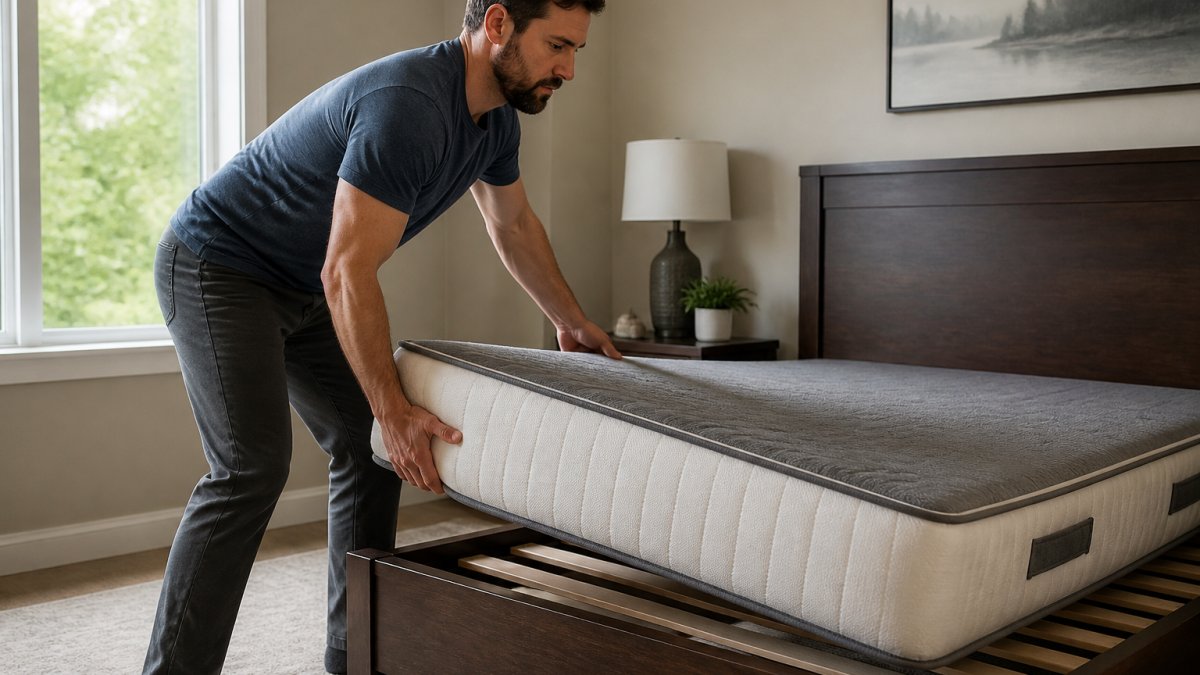
Technique matters for safety and mattress integrity. Flip with a partner if possible, most mattresses are heavy and awkward alone. Grip the sides firmly, keep your back straight, and lift with your legs. Flipping on a sturdy bed frame is easier than on a platform with limited clearance.
How to Make a Mattress Last Longer: Practical Maintenance Steps
Beyond flipping and rotating, several maintenance practices extend mattress lifespan, and some of them protect your warranty as much as your comfort.
Protect the surface
Use a waterproof mattress protector from day one. It blocks sweat, skin cells, and spills from reaching the foam or coils, which can accelerate breakdown and create odor. A quality protector can add years to usable life. Vacuum the top surface monthly with an upholstery attachment to remove dust and allergens. Blot spills immediately rather than rubbing, which pushes liquid deeper into the layers.
Control the environment
Maintain 30-50% relative humidity in the bedroom. Very dry air can make foam brittle; high humidity encourages mold in the core. In dry climates, a humidifier helps. In humid climates, use air circulation or a dehumidifier. Avoid placing the mattress directly on a cold floor or in direct sunlight, both of which stress materials.
Support the mattress correctly
A weak or sagging foundation transfers stress unevenly and accelerates wear. Use a sturdy frame or platform with slats spaced no more than 3 inches apart. A poor foundation can reduce mattress lifespan. Check your mattress manufacturer's foundation requirements, many warranties specify an approved base, and using an unsupported frame can void coverage. Adjustable bases are compatible with many modern mattresses, but confirm the model is approved before purchase.
Follow the warranty terms
Most mattress warranties cover manufacturing defects such as sagging beyond a stated threshold (often 1-1.5 inches), not normal softening or wear. Warranties typically require:
- A mattress protector to keep the surface clean
- An approved foundation or bed frame
- Rotation or flipping according to the manufacturer's schedule
- Proof of purchase and sometimes registration within a set window
Flipping a mattress that is not designed to be flipped can damage it and void the warranty. Always check the law tag or manufacturer instructions before flipping. If the tag says "no flip" or "rotate only," follow that guidance.
Reduce concentrated stress
Avoid sitting on the mattress edge regularly. That concentrates weight on the perimeter and causes edge sagging faster than the center. If you have a partner who sits on the edge every morning, that area will wear first. A mattress pad or topper can protect high-stress areas, but it does not replace proper support underneath.
Calculate cost per year
Durability is a value question, not just a lifespan question. Divide the purchase price by the expected usable years to compare options:
- A $1,000 non-flippable mattress lasting 6 years costs about $167 per year.
- A $1,200 flippable mattress lasting 10 years costs about $120 per year.
A flippable model can cost more upfront and still be cheaper over time. But if a premium non-flippable mattress outlasts a budget flippable one, the cheaper option may win. Compare at similar quality levels, then factor in the effort of flipping and the cost of a protector and foundation.
Set a seasonal reminder to flip or rotate. Pair it with a quick inspection of the foundation and a vacuum of the surface. Small habits protect both comfort and warranty coverage.
Real Durability Expectations: Lifespan Comparison and Value
A non-flippable mattress typically lasts 5-7 years with normal use, assuming quality construction with dense foam or hybrid support. Budget models last 3-5 years; premium models can reach 8-10 years.
A flippable mattress typically lasts 8-12 years. The dual-sided design and regular flipping distribute wear so effectively that support lasts longer. A quality flippable hybrid with proper maintenance often reaches the 10-year mark.
The flippable option can become cheaper over time despite a potentially higher upfront price.
Material quality matters more than flippability. A premium non-flippable mattress with high-density foam and strong coil support might outlast a budget flippable with thin foam and weak coils.
Consider your situation: if you have chronic back pain and need a specific firmness, a non-flippable mattress with that firmness might be right, you can't flip to a different firmness anyway.
When you invest in a mattress, you're not just buying comfort, you're buying years of sleep quality. The difference between flippable and non-flippable construction determines whether you'll enjoy that mattress for a decade or replace it in five years.
| Feature | Flippable Mattress | Non-Flippable Mattress |
|---|---|---|
| Sleep Surfaces | Two usable sides | One usable side |
| Typical Lifespan | 8-12 years | 5-7 years |
| Wear Distribution | Spreads across both sides | Concentrates on top |
| Flipping Schedule | Every 3-6 months | Not applicable |
| Rotation Benefit | High | Moderate |
| Cost Per Year | Lower over time | Higher |
| Best For | Long-term value seekers | Those with specific firmness needs |
Frequently Asked Questions
Do flippable mattresses really last longer than non-flippable mattresses?
Flippable mattress construction distributes body weight and compression across two sleep surfaces instead of one, which slows foam cell breakdown and extends overall lifespan. Non-flippable mattresses concentrate wear on a single surface, causing faster sagging and support loss. The durability advantage depends on consistent flipping, if you never flip, both types wear similarly. Hybrid mattresses with symmetrical construction on both sides maximize this benefit.
How often should you flip a flippable mattress?
Flip your mattress every 3 to 6 months for the first year, then every 6 months after that. More frequent flipping in the first year helps break in the mattress evenly and prevents early body impressions. Mark your calendar or set a phone reminder to stay consistent. If you weigh over 200 pounds, flip every 3 months to better distribute compression across both sides.
What causes a mattress to sag, and can flipping prevent it?
Mattress sagging results from foam cell breakdown, pocketed coil compression, and uneven weight distribution. Flipping distributes your body weight across both sleep surfaces, slowing compression on any single side. Rotating the mattress head-to-foot also helps. However, sagging eventually occurs in all mattresses, flipping just delays it significantly. Quality materials like high-density foam and individually wrapped coils resist sagging longer than budget construction.
How can I make my mattress last longer?
Flip or rotate every 3 to 6 months, use a supportive bed frame or foundation, add a mattress protector to prevent stains and moisture, keep the bedroom cool and dry, and avoid jumping on the mattress. Flippable designs extend lifespan when maintained properly. Investing in a hybrid mattress with pocketed coils and quality comfort layers also resists wear better than all-foam or budget innerspring options over time.
Double the life of your mattress today
Our mattresses will help you get the sleep you need. Not sure which one’s right for you? Check out our firmness guide below.