
Table of Contents
- How to Check Your Mattress for Failure at Home
- Visible Sagging, Dips, and Body Impressions
- Waking With Back, Neck, Shoulder, or Joint Pain
- Poor Sleep, Waking Tired, and Overheating
- Mattress Age and Expected Lifespan
- Rule Out Other Causes Before You Replace
- Repair, Rotate, Warranty, or Replace: Choosing Your Next Step
- Booking a Replacement That Lasts: Choosing Your Next Mattress
- Frequently Asked Questions
How to Check Your Mattress for Failure at Home
You can check most mattress problems in about 15 minutes, using nothing more than your bedroom and a flashlight, and this quick check is the best way to start spotting a mattress failing before it gets worse. The goal is to separate real wear from normal settling, so you know whether to repair, rotate, or replace. Most people wait too long because the decline is gradual and easy to rationalize.
Run a Simple Four-Step Mattress Assessment
Work through these four checks in order. Write down what you find, because it is easy to forget small changes over a few weeks.
- Step 1: Look for dips. Turn off the lights, then shine a flashlight across the surface at a low angle. Shadows show dips clearly.
- Step 2: Lie down and map pressure. Lie on your usual side for 10 minutes. Note any spot where you feel pressure in your hips or shoulders.
- Step 3: Check edge support. Sit on the edge. A failing edge feels like you could roll off.
- Step 4: Compare to your first week. Think back to how the bed felt when it was new. If the change is clear, the mattress is likely wearing out.
Watch out: a single bad night does not prove anything. Repeat the test over several days before you decide.
Use this quick reference to see which checks to run and what each one tells you.
| Step | What to check | What it tells you |
|---|---|---|
| Step 1 | Dips, using a low-angle flashlight | Shadows reveal dips clearly |
| Step 2 | Pressure, after 10 minutes on your usual side | Spots of pressure in hips or shoulders |
| Step 3 | Edge support, sitting on the edge | Collapsed edges feel like you could roll off |
| Step 4 | Comparison to your first week | Clear change suggests wear |
Visible Sagging, Dips, and Body Impressions
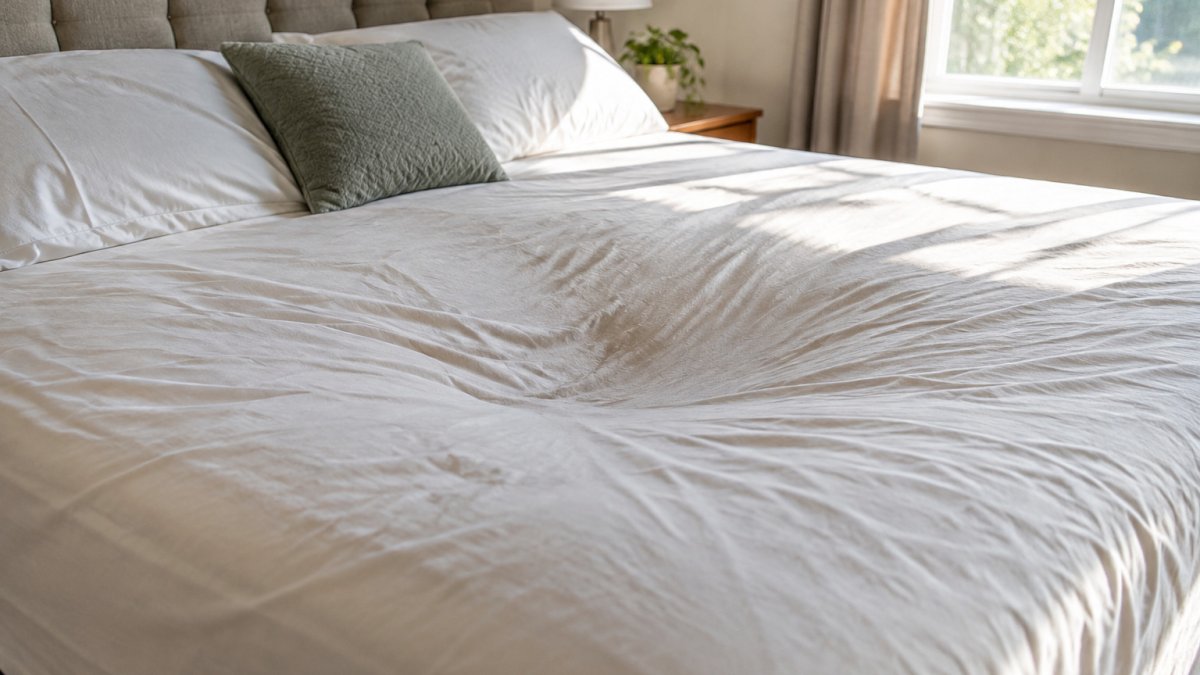
Sagging is the most reliable visible sign of a mattress failing, but it is also the most misread. Learn why mattresses sag early and how to fix it to tell real damage from normal settling. A deep dip usually means the support layers have compressed, yet many people either miss a shallow dip or overreact to normal body impressions. The difference matters because it determines whether you rotate, file a warranty claim, or replace.
Measure the dip instead of eyeballing it
A repeatable measurement beats a subjective impression. Lay a straight edge, such as a yardstick or a long level, across the mattress surface spanning the dip. Measure the gap between the bottom of the straight edge and the lowest point of the dip with a ruler. Record the depth and the location. Do this in the spots where you sleep most, not just the center of the bed.
Qualifying sag depth and how it is measured vary by brand and warranty. Read your warranty before you measure so you use the same method the claim process requires.
Watch out: body impressions of less than about an inch are common in foam and hybrid mattresses and are usually normal settling, not a defect.
Match the wear pattern to your mattress type
Signs of failure look different across materials, and knowing yours helps you judge what you are seeing:
- Memory foam and polyurethane foam: Softening and permanent body impressions under the hips and shoulders are the first signs. The foam may feel mushy rather than springy, and the dip may not recover after you get up.
- Innerspring: Sagging often starts at the edges or between coils. You may feel coils through the top layer, hear a creak when you shift, or notice the surface no longer returns to flat.
- Hybrid: Wear can show as a foam layer that has compressed over a still-sound coil core, producing a soft hollow with firm edges, or as a coil unit that has weakened on one side.
- Latex: Latex tends to hold its shape longer, so failure usually appears as surface cracking, crumbling at the edges, or a loss of resilience rather than a deep dip.
Read the secondary clues
Sagging rarely travels alone. Look for these supporting signs:
- A visible hollow where your hips or shoulders rest, with ridges or lumps you can feel through the top layer
- Sheets that slide toward the center of the bed because the surface is no longer level
- A mattress that feels flatter on the side you sleep on than on the side you do not
- Edge support that has collapsed, so sitting on the edge feels like you could roll off
Slow the wear before it becomes failure
Rotating a one-sided mattress periodically spreads wear across the surface. Follow these seven steps to prevent further sagging and slow the damage. Keep the foundation flat and supportive, and use a foundation the manufacturer approves, since a mismatched base can create dips even on a sound mattress. If you own a flippable design, flipping is one of the easiest ways to spread wear across both sides.
If the dip is deeper than the warranty threshold and the mattress is otherwise young, document the measurement and start a warranty claim before you shop for a replacement.
Waking With Back, Neck, Shoulder, or Joint Pain
Pain that eases after you get up and move around is a common pattern tied to mattress support. If the pain returns each night, the bed may not be keeping your spine aligned.
Ask yourself these questions:
- Do you feel better on the couch or in a hotel bed?
- Is the stiffness worst in the first 30 minutes after waking?
- Does the pain come from one side of your body?
If the answer is yes to most of these, the mattress is a likely cause. A medical professional can help rule out other conditions, so talk to one if the pain lasts for weeks.
Poor Sleep, Waking Tired, and Overheating
Some mattresses trap heat or push you into an awkward position. Both can break up your sleep without you noticing. You may wake several times a night, or simply feel less rested than you should.
Common signs include:
- Waking up hot or sweaty more than a few nights a week
- Taking longer to fall asleep on the bed
- Feeling tired even after a full night in bed
Changing your bedding can help a little, but if the sleep problems continue, the mattress itself may need replacing.
Mattress Age and Expected Lifespan
Age sets an expectation, not a verdict. Mattress life varies with build quality, materials, care, and your body weight and sleep position. Compare durability features in this long-term buying guide to see which designs last. A well-built mattress that has been rotated and kept on a proper foundation can outlast a cheaper one that has not, and a mattress can fail early without being old.
What actually drives lifespan
Lifespan is a function of materials and use, not the calendar alone: read the complete mattress lifespan and durability guide for a full breakdown.
- Materials: High-density foams and quality coil units hold up longer than low-density foams, which soften and compress faster. Latex generally resists compression better than polyurethane foam.
- Body weight and sleep position: Higher body weight and side sleeping concentrate load on the hips and shoulders, which speeds compression in those zones.
- Foundation and frame: A flat, supportive foundation and closely spaced slats prevent the uneven loading that creates dips. A sagging box spring or wide slats shorten life.
- Rotation and care: Regular rotation spreads wear. A mattress protector keeps moisture and dust out of the layers.
Weigh age against measured wear
Use age as one input, not the deciding one, alongside measured wear, persistent morning pain, and clear loss of support. That combination is a strong candidate for replacement. A younger mattress with a clear dip may still be a warranty matter rather than a replacement purchase, so check coverage before you buy.
Watch out: replacing a mattress on age alone can waste money if the real cause is a worn foundation, an old pillow, or a room that is too warm.
A simple decision path
- Measure the dip and note its location.
- Compare the measurement to your warranty threshold.
- If the dip qualifies, start a warranty claim with photos and the measurement.
- If it does not qualify, rotate it and reassess after a few weeks.
- If the mattress is old and shows several signs of failure, plan a replacement.
Rule Out Other Causes Before You Replace
Not every bad night comes from the mattress. Before you spend money, check these possibilities:
- Bed frame or slats: Broken or widely spaced slats can create dips even on a good mattress.
- Pillows: An old or flat pillow can strain your neck.
- Room temperature: A warm room can make any bed feel uncomfortable.
- Allergens: Dust mites and mold can cause sneezing, congestion, or waking at night (the EPA). If you suspect allergies, a doctor can help you test for them.
Fix these first when they are the likely cause. Then reassess the mattress after two or three weeks.
Repair, Rotate, Warranty, or Replace: Choosing Your Next Step
Once you know what is wrong, pick the option that fits the damage:
- Rotate or flip: Best for mild, even wear.
- Check the warranty: Many manufacturers cover defects like sagging beyond a set depth. Read the terms, including how the depth is measured and what the claim process requires.
- Replace: Best when you see deep dips or persistent pain.
Booking a Replacement That Lasts: Choosing Your Next Mattress
When it is time to replace, focus on the features that prevent early wear. Look for a sturdy support core, a clear warranty, and a design that lets you rotate or flip the mattress. Consider your body type and sleep position too, since a firm bed suits some sleepers better than a soft one.
Durable Mattress offers 2-sided flippable hybrid mattresses in medium, firm, and soft support levels. Visit our website for current pricing and to find the right fit for your bed.
Last Updated: November 5, 2026
Frequently Asked Questions
What is the average life expectancy of a mattress?
Mattress lifespan depends on materials, build quality, body weight, sleep habits, and how well the mattress is maintained. Mattresses with stronger support cores and regular flipping or rotation, where the design allows it, tend to hold their shape longer. If your mattress is approaching or past this range and you notice sagging, persistent aches, or disrupted sleep, it is a good time to assess its condition using the signs covered in this guide. Keep a note of the purchase date so you know where your mattress sits in its expected lifespan.
What are the signs that my mattress needs replacing?
The clearest signs are visible sagging or body impressions, waking with back, neck, or shoulder pain that eases during the day, morning stiffness, uneven support, and sleep that feels less restful than it used to. Mattresses that are past their expected lifespan, or that show lumps, broken springs, or noticeable odors, also warrant replacement. If several of these signs appear together and rotating or flipping the mattress does not help, the mattress is likely failing and due for replacement.
Can a bad mattress cause body aches?
Yes. A mattress that no longer supports your spine in a neutral alignment can cause pressure points and muscle strain, which often shows up as lower back, neck, shoulder, or hip pain on waking. Because the body is held in an unnatural position for hours, the discomfort may ease during the day and return the next night. If your aches improve when you sleep elsewhere, your mattress is a likely cause. Other conditions can also cause pain, so talk with a healthcare provider if symptoms persist.
How can I tell if my mattress is no longer supporting my body properly?
Lie on your mattress in your usual sleep position and check whether your spine stays roughly straight, with hips and shoulders at a similar level. Slide your hand under your lower back: a large gap suggests the mattress is too soft or worn, while a strong push-back feeling can mean it is too firm. Look for sagging in the sleep area and note whether you wake feeling more rested on a different bed. These checks give you a practical picture of whether the support is still doing its job.

Quick Summary
Most mattresses last between 7 and 10 years, but mattress lifespan depends on the materials, construction and how the bed is used. Innerspring models tend to wear out soonest, while foam density and edge support strongly affect how long a mattress keeps its shape.
- Support polyfoam typically ranges from about 1.5 to 2.5 lb/ft³, and low-density foam softens more under load.
- Measure the dip with a straightedge; a depth deeper than about 1.5 inches is a common replacement trigger.
- Slats on a base should be spaced no more than about 3 inches apart to avoid uneven sagging.
- Rotate the mattress every three to six months during the first year, then roughly every six months after that.
- A 10-year warranty does not guarantee 10 years of comfort, so judge the mattress by how it supports you.
Table of Contents
- Innerspring, Memory Foam, Latex and Hybrid Lifespans
- What Determines Mattress Durability
- Signs You Need a New Mattress
- How to Make a Mattress Last Longer
- Mattress Rotation Schedule and Flipping
- Hygiene, Allergens and Repair Versus Replacement
- Choosing a Mattress Built to Last Your Next Decade
- Frequently Asked Questions
How Long Does a Mattress Last by Type?
Most mattresses last between 7 and 10 years, but the exact mattress lifespan depends on what the mattress is made of, how it is built, and how it is used. Our long-term durability guide shows which models hold up best over the years. Knowing the typical range for each type helps you plan replacements instead of waiting until your sleep and back suffer.
Innerspring, Memory Foam, Latex and Hybrid Lifespans
Innerspring mattresses tend to be the shortest-lived of the common types. Their steel coil systems can lose support as the coils fatigue, and the comfort layers above them compress over time.
Memory foam usually holds its shape longer, but foam density matters a great deal. Higher-density foam resists permanent indentations better than low-density foam.
Latex is generally heavier and costs more up front.
Hybrid mattresses combine coils with foam or latex comfort layers.
Why Warranty Length Is Not Usable Lifespan
A 10-year warranty does not mean a mattress will remain comfortable for 10 years. Warranties typically cover manufacturing defects such as broken coils or delaminating layers, and they often set a threshold, like a sag deeper than 1.5 inches, before a claim applies. A mattress can fall well short of its usable life and still be "under warranty." Read the terms for what counts as a covered defect, then judge the mattress by how it supports you.
What Determines Mattress Durability
Lifespan is not fixed by mattress type alone. Two mattresses labeled "hybrid" can differ in useful life because of what is inside them. Our direct comparison of flippable and non-flippable construction explains how these designs differ in durability. The specifications below are the ones that actually predict how a bed ages, and they are the details most lifespan guides skip.
Foam Density: The Number That Predicts Compression Set
Polyfoam and memory foam are graded in pounds per cubic foot (lb/ft³). Higher density materials mitigate this risk, whereas lower quality layers succumb more rapidly to memory foam degradation, a process that similarly affects the structural integrity of pillows.
- Support polyfoam: Common support cores range from roughly 1.5 to 2.5 lb/ft³. Foam at the low end of that range is more prone to softening under sustained load; higher-density support foam holds its shape longer.
- Memory foam comfort layers: Budget memory foam often sits around 2.5 to 3.5 lb/ft³, while denser formulations run 4 lb/ft³ and up. Denser memory foam generally resists indentations better, though it can sleep warmer and feel less responsive.
- Latex: Natural and blended latex is typically sold by firmness (ILD) and thickness rather than density, but latex resists compression set well across formulations. The trade-off is weight and cost, not durability.
A useful rule of thumb: a mattress is only as durable as its softest, lowest-density layer. A dense support core under a low-density comfort layer will still develop impressions where your hips and shoulders land.
Coil Gauge, Coil Count and Edge Support
Innerspring and hybrid cores are described by coil gauge (wire thickness) and coil count. Lower gauge numbers mean thicker wire, which generally resists fatigue better but feels firmer.
Edge support is where many mattresses fail first. Foam-encased or reinforced perimeter coils keep the edges from collapsing, which protects the sleep surface and makes the usable area larger. A mattress with weak edges often shows compression at the perimeter years before the center gives out.
Layer Thickness and Construction Details
Thin comfort layers compress faster than thick ones, and a support core that is too thin for the sleeper's weight will bottom out. Reinforced upholstery layers, dense transition foams and well-glued (rather than spot-glued) layer stacks slow the formation of permanent dips. These are the construction details that separate a mattress built for a decade from one built for a warranty period.
Body Weight, Sleeping Position and Frequency of Use
Body weight puts sustained pressure on the same zones night after night, so heavier sleepers often see faster compression and should favor higher-density foams and stronger coil systems. Sleeping position concentrates load differently: side sleepers press into the shoulders and hips, back sleepers into the lumbar zone, and stomach sleepers into the chest and pelvis. Frequency of use is simple arithmetic, a guest mattress used a few nights a month will outlast a primary bed used every night for years.
When comparing mattresses, ask for foam densities in lb/ft³, coil gauge and edge-support construction. Those three specifications predict useful life far better than the warranty length printed on the tag.
The specifications below are the ones that most predict how long a mattress keeps its shape.
| Factor | Figure from the article | Why it matters |
|---|---|---|
| Support polyfoam density | Roughly 1.5 to 2.5 lb/ft³ | Low-end foam softens more under sustained load |
| Budget memory foam density | Around 2.5 to 3.5 lb/ft³ | Lower density is more prone to body impressions |
| Denser memory foam | 4 lb/ft³ and up | Generally resists indentations better |
| Slat spacing on a base | No more than about 3 inches apart | Wider gaps let the mattress sag unevenly |
| Dip depth warning sign | Deeper than about 1.5 inches | Common warranty threshold and replacement trigger |
Signs You Need a New Mattress
A mattress usually gives warning signs before it fails completely. If you notice sagging, our guide explains why mattresses sag early and how to fix it. The most common include visible sagging or body impressions deeper than about 1.5 inches, waking with stiffness or aches that ease after a few hours out of bed, and sleeping noticeably better in a hotel or a friend's home.
How to Assess Wear Objectively
Memory is unreliable, so measure instead of guessing. A practical routine:
- Measure the dip. Lay a straightedge (a yardstick or a long level) across the mattress surface over the hip and shoulder zones. Measure the gap between the straightedge and the lowest point of the surface. Repeat at the center and both edges. A dip deeper than about 1.5 inches is the common warranty threshold and a reasonable replacement trigger.
- Check the foundation first. Place the mattress on a flat floor and re-measure. If the dip disappears, the foundation, not the mattress, is the problem. Slats spaced more than about 3 inches apart, a bowed box spring, or a sagging platform all cause uneven wear.
- Press-test the edges. Sit on each corner and edge. Collapsing edges mean the perimeter support has failed, even if the center still feels fine.
- Look for uneven wear. Compare the center to the edges and the head to the foot. Localized soft spots suggest the mattress is being loaded unevenly, which rotation can slow but not reverse.
- Log it. Record measurements every six months so you can see the rate of change rather than relying on memory.
Repair, Rotate, Replace the Foundation, or Replace the Mattress?
Age alone should not decide the outcome. Work through the options in order:
- Rotate or flip first. If the mattress is flippable or rotation-friendly and the dip is mild, rotating end to end (or flipping) can redistribute wear. This buys time but does not restore lost foam density.
- Replace the foundation next. If the flat-floor test shows the mattress is fine, a new platform bed or slatted base is far cheaper than a new mattress and often solves the problem.
- Add a topper only as a stopgap. A topper can soften a firm surface, but it cannot restore support that has already failed. Using one to hide a sagging core usually just delays the inevitable.
A warranty claim is not the same as a replacement decision. Many warranties require a dip deeper than a stated threshold (often 1.5 inches) and exclude normal softening, stains and damage from an unsupportive foundation. Read the terms before assuming a claim will be honored.
When to Escalate to a Professional
If you have measured, tested the foundation and rotated the mattress and still wake with pain, the issue may be firmness or support mismatch rather than wear. In that case, a mattress that is technically within its lifespan can still be the wrong bed for your body weight and sleeping position.
How to Make a Mattress Last Longer
Good habits extend a mattress's life considerably, and most of them cost very little.
Protectors, Foundations and Cleaning
A waterproof mattress protector keeps moisture, sweat and spills out of the core, where they can break down foam and encourage mold. Use a supportive foundation, such as a platform bed or a slatted base with slats spaced no more than about 3 inches apart. A sagging or uneven base will wear a mattress unevenly. Vacuum the surface and wash the protector regularly, and let the mattress air out after stripping the bed.
Mattress Rotation Schedule and Flipping
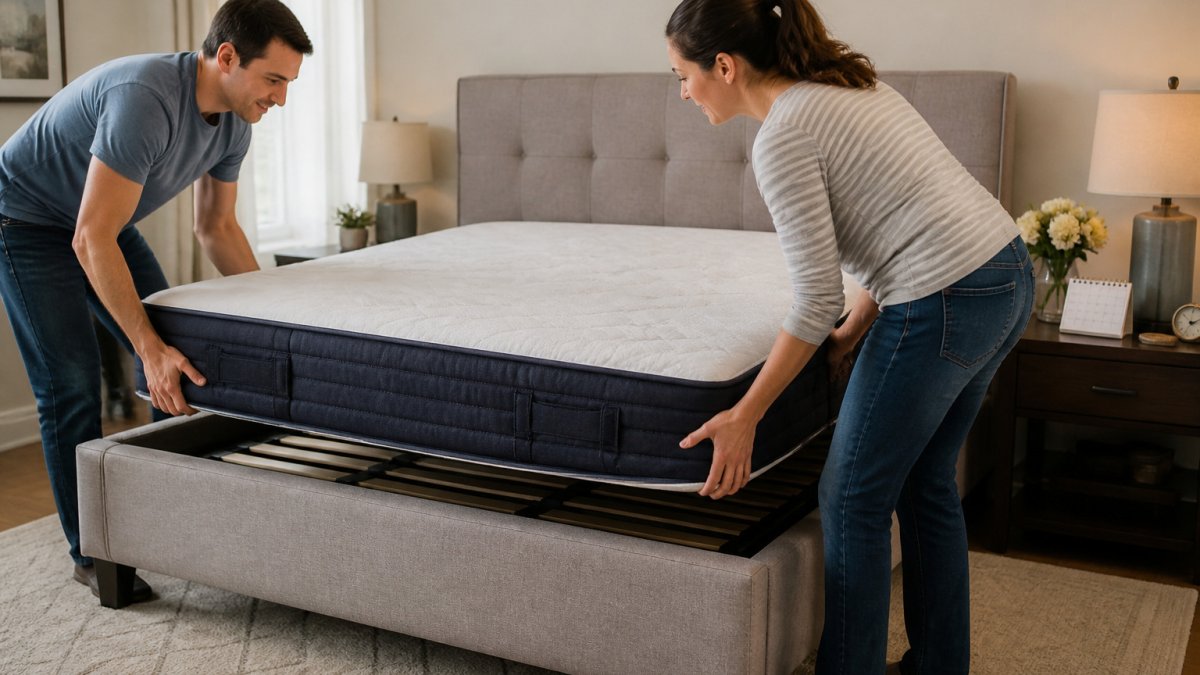
Rotating a mattress end to end, or flipping it if it is designed to be flipped, evens out the wear that comes from one body always landing in the same spot and helps extend the mattress lifespan. Our complete guide on how often to flip a mattress covers timing for each type. Many manufacturers suggest rotating every three to six months for the first year and then roughly every six months after that.
Hygiene, Allergens and Repair Versus Replacement
Mattresses collect dust mites, skin cells and moisture over time. Dust mites thrive in humid bedding, and their waste is a common allergy trigger. Regular washing of bedding, use of a breathable protector and keeping the bedroom dry all help.
Repair is rarely worthwhile. Sagging cores and worn foam cannot be fixed with a topper for long, and a topper usually just hides the problem.
Choosing a Mattress Built to Last Your Next Decade
If you want a mattress to serve you for a decade, prioritize construction over marketing. Follow our step-by-step guide to buying a flippable hybrid online to put these criteria into practice.
Durable Mattress offers 2-sided flippable hybrid mattresses in Medium, Firm, and Soft support, designed so the dual-sided construction helps prevent premature wear. For current pricing and availability, visit the Durable Mattress website and shop mattresses directly.
Frequently Asked Questions
How long does a mattress typically last?
Most mattresses last roughly 7 to 10 years, though the range varies by type and use. Innerspring models often wear out sooner, while well-built hybrids and latex mattresses can last longer when cared for properly. Body weight, sleeping position and how often the bed is used all affect the timeline. Warranty length is not the same as usable lifespan, so check whether support and comfort still hold up before relying on the warranty period as a guide.
What are the signs you need a new mattress?
Common signs include visible sagging or body impressions, waking with aches that ease after you leave the bed, and sleeping noticeably better in a hotel or guest bed. Lumps, broken coils, and a surface that no longer returns to shape are also red flags. Track these over a few weeks before deciding, since temporary discomfort can have other causes.
How can you make a mattress last longer?
Use a breathable mattress protector, place the mattress on a supportive foundation or slatted base, and keep the bed clean and dry. Rotate or flip the mattress on the schedule its manufacturer recommends, avoid jumping on it, and vacuum it periodically to reduce dust and allergens. Spot-clean stains with a mild solution and let the surface dry fully before making the bed.
Does flipping or rotating a mattress extend its lifespan?
Rotating or flipping helps distribute wear more evenly across the surface. Many two-sided designs are built for this, while one-sided models should only be rotated head to foot. The benefit depends on how consistently you do it, so setting a reminder every three to six months is more effective than occasional attempts.
Which type of mattress lasts the longest?
Lifespan depends on materials, construction and care rather than category alone. Memory foam can last a long time when its density is high, while lower-density foams and basic innerspring models tend to soften sooner. Construction quality and materials matter more than the category label alone.
Can a mattress last 20 years?
A mattress can last 20 years in some cases, but most owners will see significant loss of support well before then. Lifespan depends on materials, build quality, body weight and care habits. Expecting a decade or more from a durable, well-maintained mattress is more realistic than planning on two decades.

Double the life of your mattress today
Our mattresses will help you get the sleep you need. Not sure which one’s right for you? Check out our firmness guide below.