
Last Updated: November 15, 2026
Quick Summary
A mattress investment is worth the cost when it lasts long enough to spread its price across many years of sleep and its construction resists the wear that ends most mattresses early. Most mattresses give usable support for roughly seven to ten years, so compare options by cost per night rather than sticker price.
- Expect a mattress to give usable support for roughly seven to ten years in most cases.
- Calculate cost per night by dividing the price by expected years of use, then by 365.
- Ask for the foam density in PCF and the coil specifications before trusting durability claims.
- Check return fees and who pays return shipping, since they change the effective cost.
- Flippable mattresses justify their price only if you will actually rotate them regularly.
Table of Contents
- How Long Should a Mattress Last?
- How Much Should You Spend on a Mattress?
- Signs You Need a New Mattress
- How to Make a Mattress Last Longer, Including Flipping It
- Does a Flippable Mattress Justify the Price?
- Checking Trial Periods, Warranties, and Returns Before You Buy
- Choosing Your Next Mattress With Durability in Mind
- Frequently Asked Questions
A mattress is one of the few home purchases you use for eight hours every night, yet most people replace theirs on a guess, which is why a careful mattress investment deserves the same scrutiny you'd give a car or a roof. A mattress investment is worth the cost when it lasts long enough to spread its price across many years of sleep, and when its construction actually resists the wear that ends most mattresses early. The sections below show how to test that claim against the numbers rather than against marketing.
We tested nothing in a lab for this article, and we have no survey data of our own to offer. What follows is practical guidance on how to judge mattress value, drawn from the way durability and cost work, with the brand's own design choices explained where they bear on the decision.
How Long Should a Mattress Last?
A mattress should give you usable support for roughly seven to ten years in most cases. For a full guide on mattress lifespan and durability, see Mattress Lifespan and Durability: A Complete Guide. That range is a planning figure, not a guarantee. Replacement timing depends on materials, use, body weight, and care, so two mattresses bought the same day can age very differently.
Support usually fades before the mattress looks worn. The surface may appear fine while the core softens, and that loss of support is what affects your sleep. This is why the age of a mattress tells you less than how it feels under you and how its layers are holding up.
What Makes a Mattress Durable
Durability comes down to construction and materials. The checks below are the ones that separate a mattress built to last from one that only looks substantial in a showroom.
- Foam density. In polyurethane foam, density is measured in pounds per cubic foot (PCF). Higher-density foam generally resists compression better than low-density foam of the same type. Ask for the density of the support layers, not just the comfort layers.
- Support core quality. An innerspring unit's coil count, wire gauge, and edge support determine how evenly load is carried. A pocketed-coil core with reinforced edges tends to hold shape better than a low-gauge unit that sags at the perimeter.
- Layer thickness and order. Thick comfort layers over a thin support core compress faster. A mattress with a substantial support layer under a moderate comfort layer usually holds up longer than one that is mostly soft foam.
- Even wear. A mattress that compresses unevenly develops body impressions, and those dips are the first sign of sagging. Rotating the mattress spreads load across the surface.
- Cover and stitching. A durable cover resists pilling and seam failure; a weak cover can fail before the core does.
Watch out: "high-density" and "premium foam" are marketing terms without a number attached. Ask for the actual PCF figure and the coil specifications in writing before you treat a durability claim as fact.
How Support Actually Fails
Most mattresses do not fail suddenly. The comfort layers soften first, then the support core follows.
Flipping is one way to address uneven wear: rotating a mattress lets each side take its turn, which spreads compression more evenly across the surface. Flipping does not fix a weak core, but it can slow the uneven wear that ends many mattresses early.
How Much Should You Spend on a Mattress?
A higher price does not automatically mean a longer-lasting mattress. What matters is the cost spread over the years you actually use it. A mattress that costs more but lasts twice as long can cost less per year.
Before comparing prices, compare the lifespan you expect from each option. A cheaper mattress that needs replacing in three years can cost more in total than a sturdier one kept for a decade.
Cost Per Year and Cost Per Night: A Simple Calculator
Use this simple method to compare any two mattresses:
- Take the purchase price.
- Divide it by the expected years of use.
- Divide that annual figure by 365 to get the cost per night.
For example, a mattress that costs $1,200 and lasts 10 years costs $120 per year, or about 33 cents per night. A $600 mattress that lasts 4 years costs $150 per year, or about 41 cents per night. The more expensive option is the better value in that case.
Plug in your own price and realistic lifespan. The result depends heavily on the lifespan you assume, so be conservative when estimating it.
Signs You Need a New Mattress
Several signs suggest a mattress has lost its support:

- Visible sagging or a dip where you usually sleep
- Waking with aches in your back, neck or hips that ease during the day
- Feeling like you sink or roll toward the middle
- Trouble falling asleep or staying asleep on the mattress
- Lumps, springs you can feel, or uneven surfaces
A homeowner in their 40s who wakes with lower back stiffness may simply need a firmer or better-supported surface, not a complete replacement. If the stiffness persists after a few weeks on a supportive mattress, see a doctor for persistent pain.
How to Make a Mattress Last Longer, Including Flipping It
Good habits extend the life of any mattress:
- Use a mattress protector to guard against spills and dust.
- Rotate the mattress regularly, and flip it if the design allows.
- Use a sturdy, supportive base or foundation.
- Keep the surface clean and air it out periodically.
- Avoid jumping on the bed or sitting repeatedly on one edge.
Flipping works only on mattresses built for it. Flipping a one-sided mattress can damage it, so check the manufacturer's instructions before you turn it over.
Does a Flippable Mattress Justify the Price?
A flippable mattress justifies its price when you will actually use both sides. Flipping spreads wear across two surfaces, which can slow the loss of support.
Durable Mattress offers a 2-sided flippable design built to be flipped for longer life.
Compare the two options with the cost-per-night method above. A flippable model that lasts longer than a one-sided alternative can come out ahead even at a higher price.
The article's comparison of a flippable mattress against a one-sided model comes down to how much each costs and how often you will flip it:
| Factor | What to check | Why it matters |
|---|---|---|
| Flipping habit | Do you rotate it regularly? | Unused flip features add cost without benefit |
| Expected lifespan | Estimate years of use | Cost per year drives the value |
| Price difference | Compare sticker prices | Premium must be recovered over time |
| Cost per night | Price ÷ years ÷ 365 | Lets you compare any two options |
Checking Trial Periods, Warranties, and Returns Before You Buy
The sticker price is not the full cost of a mattress. Trial periods, return fees, and warranty exclusions decide how much of that price you can recover if the mattress does not work out, and they are the part of the purchase most buyers skim. Treat them as part of the cost-per-night math.
Trial Periods and Return Costs
A sleep trial is a window to test the mattress at home, usually measured in nights rather than calendar days. The details that matter:
- Length of the trial. Confirm whether the clock starts at delivery or at order, and whether the trial pauses during a break-in period.
- Return fees. Some sellers charge a flat return or restocking fee; others deduct shipping. A $99 return fee on a $900 mattress is roughly 11% of the purchase price, which changes the effective cost per night.
- Who pays return shipping. On a heavy mattress, return freight can run into the hundreds of dollars. Confirm before ordering.
- Condition requirements. Many trials require the mattress to be used with a protector and in original condition, and some require a minimum number of nights before a return is allowed.
- Refund vs. store credit. A refund returns your money; store credit only returns value if you buy again from the same seller.
Watch out: a long trial period is not a substitute for a good return policy. A 120-night trial with a large restocking fee and buyer-paid freight can cost more to exit than a shorter trial with a free return.
What Warranties Actually Cover
A mattress warranty is a defect policy, not a lifespan guarantee. Most cover manufacturing defects such as broken coils, failed seams, and sagging beyond a stated depth, typically around three-quarters of an inch to one and a half inches. Read the exclusions closely:
- Sagging thresholds. A dip below the stated depth is often not covered, even if it affects comfort.
- Normal wear and body impressions. Softening and impressions within the threshold are usually excluded.
- Stains and improper use. A stain can void coverage, which is why a waterproof protector matters.
- Foundation requirements. Using an unsupported base or the wrong foundation can void the warranty.
- Proration and shipping. Some warranties prorate coverage over time or require you to pay shipping on replacements.
Folding These Terms Into the Cost-Per-Night Figure
Add expected ownership costs to the purchase price before you compare. A simple approach: take the purchase price, add any return fee you might realistically pay, add the cost of a protector and a suitable foundation, then divide by the expected years of use and again by 365.
Check the current return and warranty terms on the Durable Mattress website before ordering, since policies can change.
Choosing Your Next Mattress With Durability in Mind
Decide your budget, then choose the firmness that fits your body and sleep position. Medium, firm and soft options each suit different sleepers, and people with back pain often need a particular level of support. If you are unsure, prioritize a return policy that gives you time to test the mattress at home.
For current prices and a quote, visit the Durable Mattress website. Shop Mattresses and compare the flippable, hybrid options against the cost-per-night figure you calculated above.
Frequently Asked Questions
Is it worth investing in an expensive mattress?
A more expensive mattress is worth it when its extra cost spreads over a longer useful life. Divide the purchase price by the years you expect it to last to get a cost per year, then divide that by 365 for a cost per night. A $2,000 mattress that lasts 10 years costs about $0.55 per night, which can compare favorably with a cheaper mattress that needs replacing after three or four years. Durable Mattress recommends checking current pricing on its website, since prices depend on size, firmness, and promotions.
Does flipping a mattress help it last longer?
Flipping can help a mattress last longer by spreading body weight and wear across both sides, which can slow the depression that forms in one spot over time. Durable Mattress offers a 2-sided flippable design, so you can rotate it to extend its use. Flipping works best when the mattress is built to be flipped, so check the manufacturer's instructions before rotating any mattress that is one-sided.
How can you tell when a mattress needs to be replaced?
Common signs include visible sagging or body impressions, new aches or stiffness after waking, waking up tired even after a full night's sleep, and lumps or uneven support. If the mattress is more than about seven to ten years old, it may be time to replace it even without obvious damage. Trying the mattress against your current one in a store or reviewing the return policy of an online retailer can also help you decide.
How much should you spend on a mattress?
The right amount depends on how long you want the mattress to last, your sleep needs, and whether you have back pain or other support requirements. Focus on construction, materials, and warranty terms rather than the price alone. Durable Mattress recommends checking its website for current prices and considering the cost per year of ownership when comparing options.

Quick Summary
Most mattresses last between 7 and 10 years, but mattress lifespan depends on the materials, construction and how the bed is used. Innerspring models tend to wear out soonest, while foam density and edge support strongly affect how long a mattress keeps its shape.
- Support polyfoam typically ranges from about 1.5 to 2.5 lb/ft³, and low-density foam softens more under load.
- Measure the dip with a straightedge; a depth deeper than about 1.5 inches is a common replacement trigger.
- Slats on a base should be spaced no more than about 3 inches apart to avoid uneven sagging.
- Rotate the mattress every three to six months during the first year, then roughly every six months after that.
- A 10-year warranty does not guarantee 10 years of comfort, so judge the mattress by how it supports you.
Table of Contents
- Innerspring, Memory Foam, Latex and Hybrid Lifespans
- What Determines Mattress Durability
- Signs You Need a New Mattress
- How to Make a Mattress Last Longer
- Mattress Rotation Schedule and Flipping
- Hygiene, Allergens and Repair Versus Replacement
- Choosing a Mattress Built to Last Your Next Decade
- Frequently Asked Questions
How Long Does a Mattress Last by Type?
Most mattresses last between 7 and 10 years, but the exact mattress lifespan depends on what the mattress is made of, how it is built, and how it is used. Our long-term durability guide shows which models hold up best over the years. Knowing the typical range for each type helps you plan replacements instead of waiting until your sleep and back suffer.
Innerspring, Memory Foam, Latex and Hybrid Lifespans
Innerspring mattresses tend to be the shortest-lived of the common types. Their steel coil systems can lose support as the coils fatigue, and the comfort layers above them compress over time.
Memory foam usually holds its shape longer, but foam density matters a great deal. Higher-density foam resists permanent indentations better than low-density foam.
Latex is generally heavier and costs more up front.
Hybrid mattresses combine coils with foam or latex comfort layers.
Why Warranty Length Is Not Usable Lifespan
A 10-year warranty does not mean a mattress will remain comfortable for 10 years. Warranties typically cover manufacturing defects such as broken coils or delaminating layers, and they often set a threshold, like a sag deeper than 1.5 inches, before a claim applies. A mattress can fall well short of its usable life and still be "under warranty." Read the terms for what counts as a covered defect, then judge the mattress by how it supports you.
What Determines Mattress Durability
Lifespan is not fixed by mattress type alone. Two mattresses labeled "hybrid" can differ in useful life because of what is inside them. Our direct comparison of flippable and non-flippable construction explains how these designs differ in durability. The specifications below are the ones that actually predict how a bed ages, and they are the details most lifespan guides skip.
Foam Density: The Number That Predicts Compression Set
Polyfoam and memory foam are graded in pounds per cubic foot (lb/ft³). Higher density materials mitigate this risk, whereas lower quality layers succumb more rapidly to memory foam degradation, a process that similarly affects the structural integrity of pillows.
- Support polyfoam: Common support cores range from roughly 1.5 to 2.5 lb/ft³. Foam at the low end of that range is more prone to softening under sustained load; higher-density support foam holds its shape longer.
- Memory foam comfort layers: Budget memory foam often sits around 2.5 to 3.5 lb/ft³, while denser formulations run 4 lb/ft³ and up. Denser memory foam generally resists indentations better, though it can sleep warmer and feel less responsive.
- Latex: Natural and blended latex is typically sold by firmness (ILD) and thickness rather than density, but latex resists compression set well across formulations. The trade-off is weight and cost, not durability.
A useful rule of thumb: a mattress is only as durable as its softest, lowest-density layer. A dense support core under a low-density comfort layer will still develop impressions where your hips and shoulders land.
Coil Gauge, Coil Count and Edge Support
Innerspring and hybrid cores are described by coil gauge (wire thickness) and coil count. Lower gauge numbers mean thicker wire, which generally resists fatigue better but feels firmer.
Edge support is where many mattresses fail first. Foam-encased or reinforced perimeter coils keep the edges from collapsing, which protects the sleep surface and makes the usable area larger. A mattress with weak edges often shows compression at the perimeter years before the center gives out.
Layer Thickness and Construction Details
Thin comfort layers compress faster than thick ones, and a support core that is too thin for the sleeper's weight will bottom out. Reinforced upholstery layers, dense transition foams and well-glued (rather than spot-glued) layer stacks slow the formation of permanent dips. These are the construction details that separate a mattress built for a decade from one built for a warranty period.
Body Weight, Sleeping Position and Frequency of Use
Body weight puts sustained pressure on the same zones night after night, so heavier sleepers often see faster compression and should favor higher-density foams and stronger coil systems. Sleeping position concentrates load differently: side sleepers press into the shoulders and hips, back sleepers into the lumbar zone, and stomach sleepers into the chest and pelvis. Frequency of use is simple arithmetic, a guest mattress used a few nights a month will outlast a primary bed used every night for years.
When comparing mattresses, ask for foam densities in lb/ft³, coil gauge and edge-support construction. Those three specifications predict useful life far better than the warranty length printed on the tag.
The specifications below are the ones that most predict how long a mattress keeps its shape.
| Factor | Figure from the article | Why it matters |
|---|---|---|
| Support polyfoam density | Roughly 1.5 to 2.5 lb/ft³ | Low-end foam softens more under sustained load |
| Budget memory foam density | Around 2.5 to 3.5 lb/ft³ | Lower density is more prone to body impressions |
| Denser memory foam | 4 lb/ft³ and up | Generally resists indentations better |
| Slat spacing on a base | No more than about 3 inches apart | Wider gaps let the mattress sag unevenly |
| Dip depth warning sign | Deeper than about 1.5 inches | Common warranty threshold and replacement trigger |
Signs You Need a New Mattress
A mattress usually gives warning signs before it fails completely. If you notice sagging, our guide explains why mattresses sag early and how to fix it. The most common include visible sagging or body impressions deeper than about 1.5 inches, waking with stiffness or aches that ease after a few hours out of bed, and sleeping noticeably better in a hotel or a friend's home.
How to Assess Wear Objectively
Memory is unreliable, so measure instead of guessing. A practical routine:
- Measure the dip. Lay a straightedge (a yardstick or a long level) across the mattress surface over the hip and shoulder zones. Measure the gap between the straightedge and the lowest point of the surface. Repeat at the center and both edges. A dip deeper than about 1.5 inches is the common warranty threshold and a reasonable replacement trigger.
- Check the foundation first. Place the mattress on a flat floor and re-measure. If the dip disappears, the foundation, not the mattress, is the problem. Slats spaced more than about 3 inches apart, a bowed box spring, or a sagging platform all cause uneven wear.
- Press-test the edges. Sit on each corner and edge. Collapsing edges mean the perimeter support has failed, even if the center still feels fine.
- Look for uneven wear. Compare the center to the edges and the head to the foot. Localized soft spots suggest the mattress is being loaded unevenly, which rotation can slow but not reverse.
- Log it. Record measurements every six months so you can see the rate of change rather than relying on memory.
Repair, Rotate, Replace the Foundation, or Replace the Mattress?
Age alone should not decide the outcome. Work through the options in order:
- Rotate or flip first. If the mattress is flippable or rotation-friendly and the dip is mild, rotating end to end (or flipping) can redistribute wear. This buys time but does not restore lost foam density.
- Replace the foundation next. If the flat-floor test shows the mattress is fine, a new platform bed or slatted base is far cheaper than a new mattress and often solves the problem.
- Add a topper only as a stopgap. A topper can soften a firm surface, but it cannot restore support that has already failed. Using one to hide a sagging core usually just delays the inevitable.
A warranty claim is not the same as a replacement decision. Many warranties require a dip deeper than a stated threshold (often 1.5 inches) and exclude normal softening, stains and damage from an unsupportive foundation. Read the terms before assuming a claim will be honored.
When to Escalate to a Professional
If you have measured, tested the foundation and rotated the mattress and still wake with pain, the issue may be firmness or support mismatch rather than wear. In that case, a mattress that is technically within its lifespan can still be the wrong bed for your body weight and sleeping position.
How to Make a Mattress Last Longer
Good habits extend a mattress's life considerably, and most of them cost very little.
Protectors, Foundations and Cleaning
A waterproof mattress protector keeps moisture, sweat and spills out of the core, where they can break down foam and encourage mold. Use a supportive foundation, such as a platform bed or a slatted base with slats spaced no more than about 3 inches apart. A sagging or uneven base will wear a mattress unevenly. Vacuum the surface and wash the protector regularly, and let the mattress air out after stripping the bed.
Mattress Rotation Schedule and Flipping
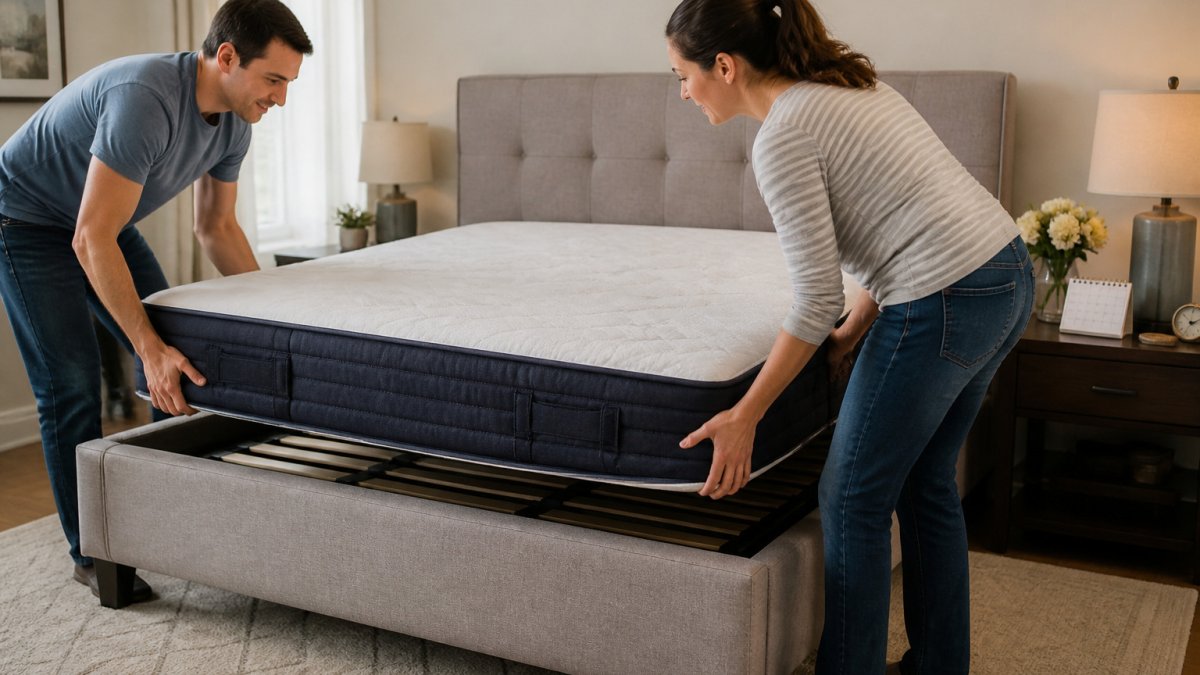
Rotating a mattress end to end, or flipping it if it is designed to be flipped, evens out the wear that comes from one body always landing in the same spot and helps extend the mattress lifespan. Our complete guide on how often to flip a mattress covers timing for each type. Many manufacturers suggest rotating every three to six months for the first year and then roughly every six months after that.
Hygiene, Allergens and Repair Versus Replacement
Mattresses collect dust mites, skin cells and moisture over time. Dust mites thrive in humid bedding, and their waste is a common allergy trigger. Regular washing of bedding, use of a breathable protector and keeping the bedroom dry all help.
Repair is rarely worthwhile. Sagging cores and worn foam cannot be fixed with a topper for long, and a topper usually just hides the problem.
Choosing a Mattress Built to Last Your Next Decade
If you want a mattress to serve you for a decade, prioritize construction over marketing. Follow our step-by-step guide to buying a flippable hybrid online to put these criteria into practice.
Durable Mattress offers 2-sided flippable hybrid mattresses in Medium, Firm, and Soft support, designed so the dual-sided construction helps prevent premature wear. For current pricing and availability, visit the Durable Mattress website and shop mattresses directly.
Frequently Asked Questions
How long does a mattress typically last?
Most mattresses last roughly 7 to 10 years, though the range varies by type and use. Innerspring models often wear out sooner, while well-built hybrids and latex mattresses can last longer when cared for properly. Body weight, sleeping position and how often the bed is used all affect the timeline. Warranty length is not the same as usable lifespan, so check whether support and comfort still hold up before relying on the warranty period as a guide.
What are the signs you need a new mattress?
Common signs include visible sagging or body impressions, waking with aches that ease after you leave the bed, and sleeping noticeably better in a hotel or guest bed. Lumps, broken coils, and a surface that no longer returns to shape are also red flags. Track these over a few weeks before deciding, since temporary discomfort can have other causes.
How can you make a mattress last longer?
Use a breathable mattress protector, place the mattress on a supportive foundation or slatted base, and keep the bed clean and dry. Rotate or flip the mattress on the schedule its manufacturer recommends, avoid jumping on it, and vacuum it periodically to reduce dust and allergens. Spot-clean stains with a mild solution and let the surface dry fully before making the bed.
Does flipping or rotating a mattress extend its lifespan?
Rotating or flipping helps distribute wear more evenly across the surface. Many two-sided designs are built for this, while one-sided models should only be rotated head to foot. The benefit depends on how consistently you do it, so setting a reminder every three to six months is more effective than occasional attempts.
Which type of mattress lasts the longest?
Lifespan depends on materials, construction and care rather than category alone. Memory foam can last a long time when its density is high, while lower-density foams and basic innerspring models tend to soften sooner. Construction quality and materials matter more than the category label alone.
Can a mattress last 20 years?
A mattress can last 20 years in some cases, but most owners will see significant loss of support well before then. Lifespan depends on materials, build quality, body weight and care habits. Expecting a decade or more from a durable, well-maintained mattress is more realistic than planning on two decades.
Double the life of your mattress today
Our mattresses will help you get the sleep you need. Not sure which one’s right for you? Check out our firmness guide below.