
Table of Contents
- Why Mattress Quality Is Hard to Judge (and What Actually Matters)
- Mattress Materials and Construction: What Separates Good Builds From Cheap Ones
- How to Read a Mattress Tag and Spot Misleading Labels
- How to Test a Mattress in Person: A Step-by-Step Checklist
- How Long Does a Mattress Last? Lifespan Signals to Check Before You Buy
- Quality vs. Price: Total Cost of Ownership and What to Ignore
- At-Home Inspection: How to Check Your Mattress for Wear and Sagging
- Frequently Asked Questions
Last Updated: October 21, 2026
Why Mattress Quality Is Hard to Judge (and What Actually Matters)
Mattress quality is the measurable combination of material density, coil specification, layer construction, and edge reinforcement that determines how long a bed holds its shape under daily load.
A mattress is a sealed box: you can touch the cover, but the foam density and coil gauge hiding inside decide whether the bed lasts three years or twelve. Here's how to identify mattress quality using the numbers and physical checks that predict lifespan.
Comfort tells you how a bed feels on day one. Construction tells you how it feels in year eight. Judge the second one before you buy.
Mattress Materials and Construction: What Separates Good Builds From Cheap Ones
Mattress construction falls into four families, all-foam, innerspring, hybrid, and latex, and each fails differently, so quality checks change with the build.
All-foam beds live or die by foam density. Innersprings depend on coil count, coil gauge, and how coils are joined.
Layers matter as much as material. A cheap bed often hides a low-density comfort layer above a firm support core, which feels supportive in-store but develops body impressions within a year.
Foam Density, Coil Gauge, and the Numbers That Reveal Quality
Foam density is the weight of foam per cubic foot and the best predictor of how long a foam layer holds up. Higher density resists compression and sagging far longer.
Pocketed coils sit in individual fabric pockets and move independently, improving motion isolation. Interconnected coils are joined with wire or helical lacing, creating a firmer, bouncier surface. Neither is automatically better; they serve different sleepers.
| Specification | What It Measures | Higher Means | Lower Means |
|---|---|---|---|
| Foam density | Weight per cubic foot | Longer life, less sag | Faster breakdown |
| Coil gauge | Wire thickness | Thinner wire, softer | Thicker wire, firmer |
| Coil count | Coils per bed | More contact points | Fewer contact points |
| Edge support | Perimeter reinforcement | Stable seating edge | Roll-off risk |
| Layer count | Comfort and transition layers | Gradual support | Abrupt feel |
A high coil count on a low-gauge, small-diameter coil is a marketing number, not a durability signal. Ask for gauge and coil diameter together, or the count tells you nothing.
How to Read a Mattress Tag and Spot Misleading Labels
A mattress law tag is the white label sewn to the mattress, and federal law requires it to list filling materials by percentage. It's the one document a retailer cannot quietly edit, so read it before any brochure.
Here is what the law tag will and will not tell you:
- It will list fiber content, foam types, and filling percentages by weight.
- It will not list foam density, coil gauge, or coil count. Those live in the spec sheet.
- It will show a manufacturer or distributor name and a model number you can cross-reference.
The Federal Trade Commission's guidance on mattress labeling explains the required disclosures, and it is worth knowing what the tag legally must contain before a salesperson tells you otherwise.
A Practical Checklist for Misleading Marketing Terms
Most words on a mattress tag or product page are unregulated. That doesn't make them lies, but you have to translate them into something verifiable:
| Marketing term | What it usually means | What to ask for instead |
|---|---|---|
| "Organic" | May refer to the cover, the filling, or the entire bed, often only the cover | A third-party organic certification for the specific component, not the whole product |
| "Cooling" or "temperature-regulating" | Often a cover fabric or a phase-change material in a thin layer | The thickness and placement of the cooling layer, and whether it sits above or below the comfort foam |
| "Orthopedic" | No legal definition; frequently just a firm bed | Foam density and firmness rating on a stated scale |
| "Luxury" or "premium" | A price tier, not a material grade | Foam density, coil gauge, and layer thickness in inches |
| "High-density" | Relative to the brand's own line, not an industry benchmark | The actual density in pounds per cubic foot |
| "Hypoallergenic" | No standardized test behind the claim | Material certifications and a list of known allergens in the build |
| "Doctor-recommended" | A survey or paid endorsement, rarely a clinical standard | The specific study or organization behind the claim |
What Evidence to Request
When a brand uses one of those terms, ask for the underlying number or certificate:
- Foam density in pounds per cubic foot for each foam layer, not just the support core.
- Coil gauge and coil count together, since either number alone is easy to game.
- Layer thickness in inches so you can tell whether a "cooling layer" is a meaningful sheet or a spray-on finish.
If a brand won't publish foam density and coil gauge, treat that as your answer: a spec sheet with only marketing language has nothing to hide behind.
How to Test a Mattress in Person: A Step-by-Step Checklist
Testing a mattress takes about fifteen minutes in the right order. Most shoppers lie down for thirty seconds on their back and call it done, which tells you almost nothing.
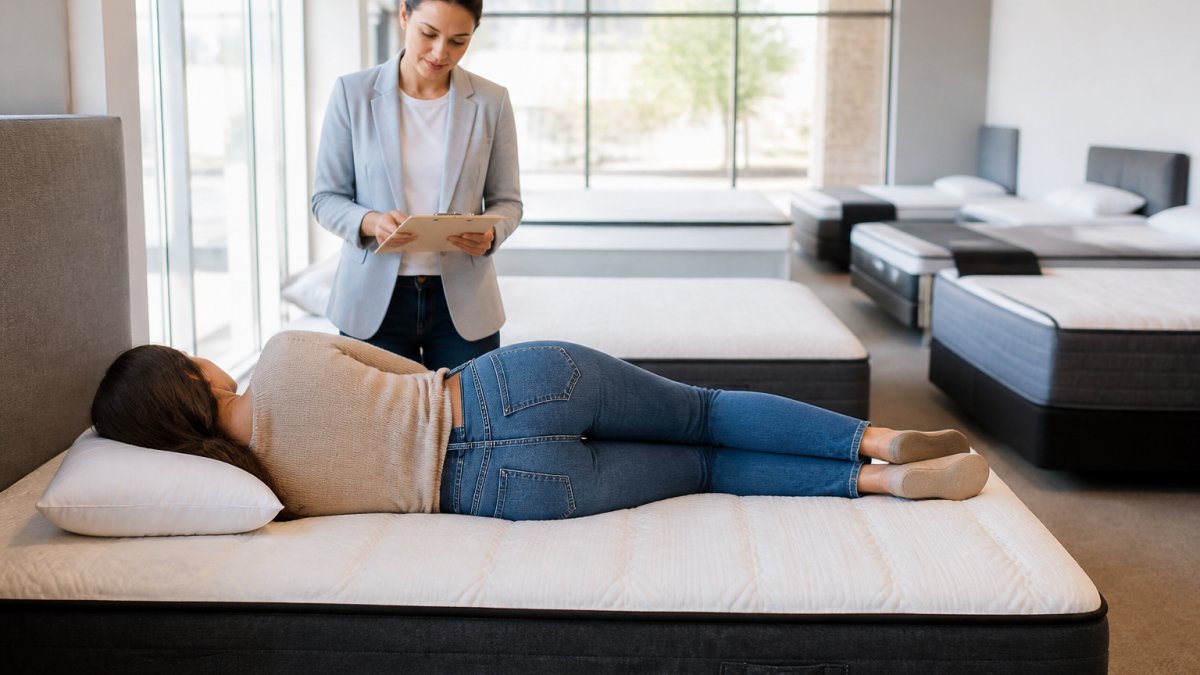
Work through this sequence:
- Lie in your dominant sleep position for at least ten minutes. Set a timer. Discomfort shows up after minute five, not minute one.
- Slide a hand under your lower back. A good fit fills the gap without lifting your hips.
- Roll to your other side and repeat. Asymmetric support is a red flag.
- Sit on the edge and lean back. Feel the perimeter. Weak edge support means the usable sleep surface is smaller than the bed.
- Press your palm into the comfort layer. It should recover quickly, not leave a slow-filling dent.
- Ask for the spec sheet and rate firmness on a 1-10 scale. Write the number down; showroom memory fades fast.
- Check the return policy in writing before you leave the store.
Matching Firmness to Sleep Position and Body Weight
Side sleepers need a softer surface that lets the shoulder and hip sink in, keeping the spine straight. Back sleepers do better with medium support that fills the lumbar curve.
Body weight shifts all of this: a heavier sleeper sinks further into any firmness level, so a medium bed may feel soft to them and firm to a lighter partner.
Bring your own pillow to a showroom test. Half of what people blame on the mattress is actually a pillow that puts the neck at the wrong angle.
How Long Does a Mattress Last? Lifespan Signals to Check Before You Buy
Most mattresses last seven to ten years, with quality construction pushing toward the upper end and cheap foam failing earlier. Lifespan tracks material density and coil durability more than brand promises.
How Each Construction Type Fails
Durability isn't one number. Each build has a characteristic failure point, and knowing it tells you what to inspect.
- All-foam beds fail first in the comfort layer. Low-density polyurethane or memory foam compresses and loses resilience, producing body impressions while the support core stays fine. Check foam density in the comfort layers, not the core.
- Innerspring beds fail at the coil unit and connections. Wire fatigue, bent coils, and broken helical lacing show up as a lumpy or noisy surface. Check coil gauge, coil diameter, and whether coils are pocketed or interconnected.
- Hybrids fail at the interface between coil core and foam comfort layers. A thin or low-density transition layer lets foam shear against the coils, accelerating sagging. Check the transition layer's thickness and density, not just the top comfort foam.
Signals That a Bed Is Built to Last
- Denser foams in the comfort layers, disclosed on the spec sheet in pounds per cubic foot
- Thicker coil wire with a stated gauge, plus a stated coil diameter
- Reinforced perimeter with dedicated edge support foam or coils
Many warranties exclude the exact failure most people experience. Read the sagging clause before assuming coverage protects you: thresholds that kick in only beyond a deep depression, or prorating after the first few years, may not help with the impression you actually develop.
We built our hybrid collection around a 2-sided flippable design for this reason. Flipping spreads load across both surfaces instead of compressing one side for a decade, a wear-management strategy, not a gimmick, and the single most effective way to extend a bed's useful life.
Match the inspection to the build. Foam beds fail at the comfort layer, innersprings at the coil unit, and hybrids at the transition layer. Check the part that actually wears out.
Quality vs. Price: Total Cost of Ownership and What to Ignore
Price and quality correlate, but loosely.
Total cost of ownership is the better lens: divide purchase price by expected years of use.
What to ignore: thread count on the cover, "sleep technology" language, celebrity endorsements, and any firmness claim without a scale.
The Consumer Product Safety Commission's mattress safety guidance is also worth a look for flammability and safety standards, since certifications belong in your buying decision alongside comfort.
Divide price by expected years of use. That number, not the sticker price, tells you which mattress is actually the better value.
At-Home Inspection: How to Check Your Mattress for Wear and Sagging
If you suspect your mattress is failing, check it yourself in about twenty minutes. Strip the bedding and look for these signs:
- Visible body impressions deeper than about an inch and a half
- A dip in the center where two sleepers converge
- Soft or collapsed edges that no longer hold weight
Rotate or flip the mattress if the design allows, then recheck in two weeks.
For a longer read on material standards and testing methods, the ASTM International standards for mattress and bedding testing documents how manufacturers measure firmness, durability, and flammability, which is useful when you want to compare a spec sheet against a real benchmark.
Judging mattress quality comes down to a handful of numbers most shoppers never ask for: foam density, coil gauge, edge construction, and warranty terms on sagging.
At Durable Mattress, we build 2-sided flippable hybrid mattresses in Medium, Firm, and Soft so you can manage wear instead of replacing a bed every few years.
Frequently Asked Questions
What determines a quality mattress?
Mattress quality comes down to materials and construction, not marketing. Check foam density (1.8 lb/ft³ or higher for polyurethane), coil gauge (12-14 gauge for support, 15-16 for comfort layers), and whether the cover and comfort layers use durable materials. A supportive base layer, adequate edge support, and honest labeling matter more than thread count claims or fancy names. High-density foams and properly tempered coils resist sagging, while cheap low-density foam breaks down within a few years.
How can you tell if a mattress is well made?
Look at the law tag, feel the perimeter for edge support, and press into the surface to gauge how quickly it recovers. A well-made mattress has dense foam that springs back, coils that don't shift or creak, and reinforced edges that hold firm. Check whether the brand publishes foam density and coil gauge numbers, since honest manufacturers share specs. Also look for a flippable or two-sided design, which spreads wear across both surfaces and typically extends usable life.
How do you test a mattress for comfort and support?
Lie on the mattress in your normal sleep position for at least 10-15 minutes. Check that your spine stays neutral, your shoulders and hips don't bottom out, and your lower back feels supported. Roll to the edge to test perimeter support. Press your palm into the surface to see how quickly it recovers. Bring your partner if you share a bed and test motion transfer by having them move while you lie still.
How long should a quality mattress last?
A well-constructed mattress typically lasts 8-10 years, with higher-density foams and quality coils pushing toward the upper end. Signs it's time to replace include visible sagging over 1 inch, body impressions that don't recover, morning stiffness, and worsening allergy symptoms from dust mites. A flippable design can extend lifespan because you rotate wear between two surfaces instead of one. Cheap low-density foam mattresses often show sagging within 2-3 years.
Does a mattress warranty indicate its quality?
Not directly. Most warranties cover manufacturing defects like broken coils or seams, not normal softening or body impressions. A 10-year warranty sounds impressive but often excludes the sagging most people actually experience. Read the fine print: some warranties require a certain impression depth (often 1.5 inches) before they'll honor a claim. Use warranty length as one signal, but check foam density and coil specs for a truer picture of durability.
Which foam is better, polyurethane or high-resilience foam?
High-resilience (HR) foam is denser and more durable than standard polyurethane foam, typically rated at 2.5 lb/ft³ or higher. It holds its shape longer, resists sagging, and provides better support. Standard polyurethane at 1.5 lb/ft³ or lower breaks down faster and is common in budget mattresses. When comparing, ask for the foam density number. Higher density means more material and better longevity, though it also adds weight and cost.
Table of Contents
- What to Look for in a Flippable Hybrid Mattress
- Mattress Firmness Levels Explained
- How Often to Flip Mattress for Maximum Lifespan
- Benefits of Double-Sided Mattresses vs. Single-Sided Designs
- Step-by-Step: How to Buy Your Flippable Hybrid Mattress Online
- Comparing Price and Total Cost of Ownership
- Common Mistakes to Avoid When Buying Online
- Frequently Asked Questions
Last Updated: October 19, 2026
What to Look for in a Flippable Hybrid Mattress
When you're ready to buy flippable hybrid mattress online, understanding what makes a mattress genuinely flippable separates a smart investment from a costly mistake. This dual-sided construction differs fundamentally from standard single-sided mattresses, which wear unevenly and often sag within a few years.
The key to evaluating a flippable hybrid mattress lies in three core elements: construction quality, firmness consistency on both sides, and genuine durability engineering. Many buyers assume all flippable mattresses are created equal. They're not.
At Durable Mattress, we design flippable hybrid mattresses with intentional symmetry. Both sides feature hybrid construction combining memory foam comfort layers with a coil support core. This means you're not flipping to a firmer, less comfortable surface; you're rotating to a genuinely engineered sleep surface that mirrors the other side.
When shopping online, look for these specific details in product descriptions: layer-by-layer construction transparency, firmness specifications for each side, and clear statements about whether the mattress is truly flippable or merely reversible. A reversible mattress can be turned end-to-end but not flipped side-to-side. A flippable mattress does both.
Mattress Firmness Levels Explained
Firmness is the most personal variable in mattress selection, and it's where many online buyers struggle without in-person testing. Mattress firmness typically ranges across a spectrum: soft, medium, and firm, with variations in between. Each level serves different body types, sleep positions, and pain profiles.
Soft mattresses compress easily under body weight, creating a cradling sensation that suits side sleepers and lighter individuals. They reduce pressure points but may not provide adequate spinal support for heavier sleepers or those with back pain.
The challenge with buying online is that firmness perception is subjective. A mattress labeled "firm" by one brand might feel medium-firm compared to another. This is why reading detailed customer reviews and understanding your own sleep profile matters enormously.
At Durable Mattress, we offer our flippable hybrid mattresses in medium, firm, and soft options. Each side maintains consistent firmness, so you're not trading comfort for durability when you flip.
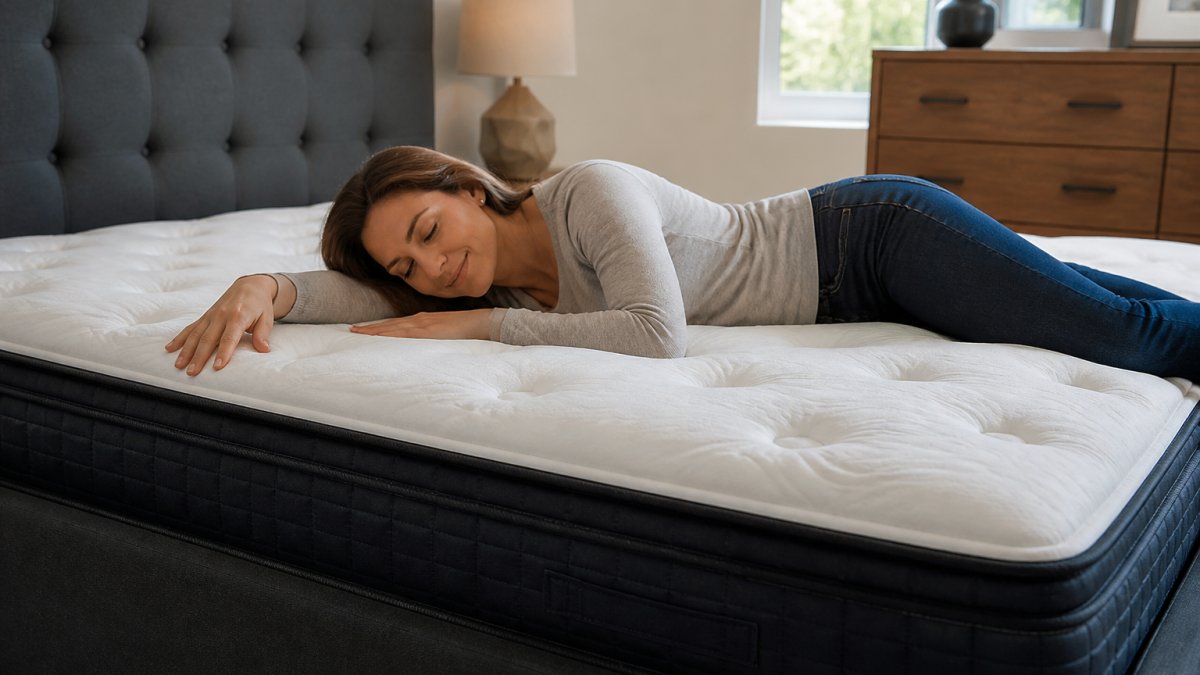
How Often to Flip Mattress for Maximum Lifespan
The frequency of flipping directly impacts how long your mattress lasts. Many people assume they should flip monthly, but the optimal schedule depends on your mattress type and use patterns.
For a flippable hybrid mattress, we recommend flipping every 3 to 6 months. This rotation distributes body weight evenly across both surfaces, preventing the deep body impressions and sagging that occur when one side bears all your weight year-round. Some manufacturers suggest quarterly flipping for the first year, then semi-annual flipping thereafter.
The logic is straightforward: your body compresses the comfort layers and support core nightly. Over time, one side experiences cumulative compression. Flipping redistributes that stress, allowing compressed foam to recover and extending the mattress's effective lifespan by several years.
Set a calendar reminder for your flip schedule. Many people forget after the first few months, which defeats the purpose. Some families make it a seasonal task, flip with the time change or during spring cleaning. The consistency matters more than the exact interval.
Benefits of Double-Sided Mattresses vs. Single-Sided Designs
The practical advantage of a double-sided mattress is durability and cost-per-year of use. A single-sided mattress forces you to replace it sooner because one surface bears all compression stress. A double-sided design extends usable life significantly.
Consider the financial perspective: if a quality single-sided mattress lasts 6-7 years before noticeable sagging, and a flippable double-sided mattress of similar quality lasts 10-12 years with regular flipping, the per-year cost drops substantially. You're spreading your investment across more sleep nights.
Beyond longevity, double-sided mattresses offer flexibility. If one side develops a preference mismatch, you bought firm but realize you prefer medium, flipping to the other side gives you a different feel without replacing the entire mattress. Some families with different firmness preferences can share a flippable mattress more comfortably than a single-sided one.
The trade-off is weight and flipping effort. Flippable mattresses are heavier than single-sided designs because they require strong construction on both surfaces. Flipping a queen or king mattress requires physical effort and ideally a second person. This isn't a dealbreaker, but it's a real consideration for people with mobility limitations.
Step-by-Step: How to Buy Your Flippable Hybrid Mattress Online
Buying a mattress online without lying on it first creates legitimate anxiety. Here's how to navigate that risk systematically.
Step 1: Assess Your Sleep Needs and Body Type
Start by identifying your primary sleep position. Back sleepers typically need firm to medium-firm support. Side sleepers benefit from softer, more contouring surfaces that cushion the hip and shoulder. Stomach sleepers need firm support to prevent lower back strain. Combination sleepers need balanced firmness that doesn't penalize any position too heavily.
Next, consider your body weight. Lighter individuals (under 150 pounds) can sleep comfortably on softer mattresses. People over 200 pounds typically need firmer support to prevent excessive sinking. Average weight (150-200 pounds) has the most flexibility across firmness levels.
Finally, assess any pain patterns. Chronic back pain often improves with firmer support, though some people find medium firmness more comfortable. Neck pain, shoulder pain, and hip pain suggest you need a mattress that cushions pressure points while maintaining spinal alignment.
Document these factors before shopping. This clarity narrows your options significantly.
Step 2: Verify the Mattress Is Genuinely Flippable
Not every mattress marketed as "flippable" is truly dual-sided. Read the product description carefully. Look for these red flags:
- Descriptions that say "reversible" instead of "flippable" (reversible means end-to-end only)
- Asymmetrical construction (one side quilted, one side unquilted)
- Warnings against flipping in the care instructions
- Thin or minimal quilting on the bottom surface
Genuine flippable mattresses describe both sides explicitly. You should see layer-by-layer construction details for each side, not just one side. Hybrid construction on both sides is a strong indicator of true dual-sided design.
Step 3: Check Return Policy and Sleep Trial
Online mattress retailers typically offer 100-120 night sleep trials. This window allows you to test the mattress in your own bed with your own pillows and sleep patterns. Thirty nights is too short; ninety to one hundred twenty nights is standard and reasonable.
Understand the return logistics: Does the company pick up the mattress, or do you arrange shipping? Are there restocking fees? What condition must the mattress be in? Some companies donate returned mattresses; others recycle them. This doesn't affect your decision, but it's good to know.
A strong return policy is your insurance against online purchase risk. If the mattress doesn't work for you, a hassle-free return protects your investment.
Step 4: Review Warranty and Durability Claims
Mattress warranties typically cover manufacturing defects for 10 years. Read the fine print. Some warranties require regular flipping to remain valid, this is actually a good sign because it shows the manufacturer engineered the mattress for flipping.
Check what the warranty covers. Does it address sagging (usually defined as indentations deeper than 1.5 inches)? Does it cover foam degradation or coil breakage? Full-coverage warranties are stronger than limited ones.
Durability claims should be specific. Avoid vague language like "built to last." Look for concrete claims: "engineered for 10+ years of nightly use" or "tested for 20,000 compression cycles" (equivalent to roughly 10 years of use). These specifics suggest the manufacturer tested the design.
Step 5: Confirm Bed Frame Compatibility
Flippable mattresses are heavier than single-sided designs. Confirm your bed frame can support the weight. Most modern bed frames handle this fine, but older frames or lightweight platforms might struggle.
Check mattress dimensions against your bed frame. A queen mattress is 60 inches wide by 80 inches long. Measure your frame's interior to ensure proper fit. Undersized frames can cause edge support issues.
If you're using a platform bed, ensure slats are spaced no more than 3 inches apart. Wider spacing allows the mattress to sag between slats, defeating the durability advantage of a flippable design.
Step 6: Place Your Order and Arrange Delivery
Most online mattress retailers offer free shipping to your bedroom door. Confirm this before ordering. Some charge for white-glove delivery (assembly and old mattress removal), while others include it.
Delivery timing matters. If your current mattress is failing, order early enough that delivery overlaps. If you're replacing a functional mattress, order when you're ready to transition. Many companies deliver within 1-2 weeks of order placement.
Upon delivery, inspect the mattress for damage before signing. Open the packaging fully and check for tears, stains, or structural issues. If you notice problems, document them with photos and contact customer service immediately.
Comparing Price and Total Cost of Ownership
The sticker price of a flippable hybrid mattress often runs higher than single-sided alternatives, but the total cost of ownership, the price divided by years of useful life, often favors flippable designs.
A quality single-sided mattress might cost less upfront but require replacement every 6-8 years. A flippable mattress costs more initially but lasts 10-12 years with proper care. Spread that cost across the lifespan, and the per-year expense becomes competitive or even cheaper.
Factor in the sleep trial period. If you need to return a mattress that doesn't work, you lose the purchase price. A strong return policy and reasonable sleep trial reduce this risk. Some companies offer partial refunds if you return after the trial period, which softens the financial hit of a poor choice.
Consider financing options. Many online retailers offer payment plans, 0% interest over 12-24 months. This spreads the cost without adding interest, making a higher-quality mattress more accessible.
| Factor | Single-Sided Mattress | Flippable Hybrid Mattress |
|---|---|---|
| Typical Lifespan | 6-8 years | 10-12 years |
| Upfront Cost | Lower | Higher |
| Per-Year Cost | Higher when amortized | Lower when amortized |
| Maintenance | Minimal | Flip every 3-6 months |
| Comfort Consistency | Declines over time | Maintained longer |
Common Mistakes to Avoid When Buying Online
The biggest mistake is buying based solely on price or brand name recognition. A cheaper mattress that doesn't match your sleep needs will be uncomfortable for years.
Second mistake: ignoring the sleep trial period. Some people order, receive the mattress, sleep on it for three nights, decide it's not perfect, and return it immediately. This defeats the purpose.
Third mistake: not flipping regularly after purchase. You've invested in a flippable design; the durability benefit only materializes if you actually flip it. Set calendar reminders and commit to the schedule.
Fourth mistake: overlooking bed frame compatibility. A flippable mattress on an incompatible frame won't perform as designed. Verify frame support before ordering.
Fifth mistake: not reading return policy details. Some companies have strict conditions, the mattress must be in pristine condition, or restocking fees apply. Know the rules before you order.
Sixth mistake: confusing "flippable" with "reversible." Reversible mattresses flip end-to-end but not side-to-side. True flippable designs flip both ways.
Buying a flippable hybrid mattress online requires research, but the durability and cost-per-year value justify the effort.
Frequently Asked Questions
How often should you flip a double-sided mattress?
Most manufacturers recommend flipping your flippable hybrid mattress every 3 to 6 months to ensure even wear and extend its lifespan. Some suggest rotating it quarterly in addition to flipping. Check your mattress warranty for specific guidance, as recommendations vary by construction and materials used in the comfort and support layers.
What are the main benefits of double-sided mattresses?
Double-sided mattresses extend durability by distributing wear across both surfaces, preventing sagging in high-pressure zones. They offer flexibility, you can switch sides if one becomes less comfortable over time. Flippable designs maximize your investment's value by effectively doubling the usable surface area, making them ideal for long-term ownership and reducing replacement frequency.
Can I return a flippable hybrid mattress if it doesn't feel right?
Most online retailers offer sleep trials ranging from 30 to 120 nights, allowing you to test the mattress at home before committing. Review the return policy before purchasing, confirm whether returns are free, whether the mattress must be unused, and how pickup or shipping is handled. This protects you if the firmness level or feel doesn't match your needs.
Are flippable hybrid mattresses really more durable than one-sided mattresses?
Flippable designs can extend mattress life when used as intended, since you're distributing body weight across two surfaces rather than wearing down a single side. However, durability depends on overall construction quality, materials, and how often you actually flip it. Hybrid mattresses with quality coil support cores and foam layers generally offer better long-term durability than budget one-sided alternatives.
Table of Contents
- What Double Sided Mattresses Are and How They Work
- How Often to Flip a Mattress for Maximum Lifespan
- Even Wear and Reduced Body Impressions
- Flippable Mattress vs. One-Sided Mattress: Key Differences
- How to Flip a Mattress Safely and Effectively
- Long-Term Cost Effectiveness and Value
- Who Benefits Most From Double Sided Mattresses
- Conclusion
- Frequently Asked Questions
Last Updated: October 16, 2026
What Double Sided Mattresses Are and How They Work
A double sided mattress is a flippable bed with two distinct sleep surfaces, each built for comfort and support. Unlike one-sided mattresses, both the top and bottom of a double sided mattress are designed for sleeping, so you can flip it periodically to distribute wear evenly.
Construction typically combines foam comfort layers with innerspring or coil support systems. Flipping regularly rotates which side bears your body weight, preventing the concentrated wear that leads to permanent impressions and sagging, and extending usable lifespan versus one-sided alternatives.
At Durable Mattress, we build our flippable mattresses with this principle at the core. Our hybrid collection balances cushioning comfort with durable support in medium, firm, and soft, so you can choose the feel that suits you.
How Often to Flip a Mattress for Maximum Lifespan
Most manufacturers recommend flipping a double sided mattress every three to six months. Exact frequency depends on body weight, sleep position, and how many people share the bed.
Heavier individuals or those who sleep in the same spot nightly should flip every three months; lighter sleepers or couples who rotate positions can stretch to six months. Tying the routine to seasonal changes makes it easier to remember.
The goal is simple: prevent any single area from bearing concentrated pressure too long. Consistent flipping keeps any part from compressing permanently, separating a mattress that lasts a decade from one that sags after three years.
Mark your calendar when you flip. A consistent schedule prevents the "I think I flipped it last month" confusion that leads to skipped rotations and premature wear.
Even Wear and Reduced Body Impressions
Body impressions are permanent indentations that form where your torso, hips, and shoulders rest night after night. On a one-sided mattress, body weight compresses the foam and support layers into your shape, and over time that compression becomes permanent, costing you proper support.
A double sided mattress distributes pressure across two surfaces. Flipping every few months gives the loaded side a rest period to recover while the opposite side handles the load, dramatically reducing the depth and speed of impression formation.
The difference shows after two to three years: a one-sided mattress often has clear body-shaped depressions, while a properly maintained double sided mattress stays relatively flat on both surfaces, keeping its support structure and comfort profile. That even wear is why flippable mattresses typically outlast traditional designs by several years.
The ability to flip distributes wear across two surfaces instead of concentrating it on one. This simple mechanic is the primary reason double sided mattresses last longer and feel supportive for a decade or more.
Flippable Mattress vs. One-Sided Mattress: Key Differences
The core difference between a flippable mattress and a one-sided mattress is construction and durability strategy. A one-sided mattress has a single comfort surface over a base layer not meant for sleeping; once the top compresses, you're stuck with a degrading experience until replacement.
A flippable mattress is engineered as two complete sleep systems stacked back-to-back, both with full comfort and support layers. Each flip switches you to a genuinely fresh sleep surface, not just a worn side rotated back into use.
| Feature | Double Sided Mattress | One-Sided Mattress |
|---|---|---|
| Sleep surfaces | Two full, usable surfaces | One optimized surface |
| Flipping benefit | Extends lifespan by 40-60% | No benefit; cannot flip |
| Body impression timeline | 5-7 years to noticeable depth | 2-3 years to significant sagging |
| Long-term support | Maintains firmness across lifespan | Degrades progressively |
| Repair options | Flip to fresh surface when worn | Replace mattress |
| Best for | Long-term value seekers | Budget-conscious buyers accepting shorter lifespan |
One-sided mattresses cost less upfront because manufacturers skip half the construction. Flippable mattresses require twice the engineered layers, raising the initial investment, but cost-per-year often favors the flippable design because you replace it less often.
How to Flip a Mattress Safely and Effectively
Flipping a mattress safely takes two people and proper technique to avoid strain or damage:
First, strip all bedding and clear the floor around the bed. Remove any bed frame components in the way, and if the mattress is in a tight corner or against a wall, move it to the center of the room.
Stand on opposite sides, one person at the head and one at the foot. Bend at your knees, not your waist, and grip the edges or handles firmly. On the count of three, lift together, rotate 180 degrees so the head end becomes the foot end, then flip so the bottom faces up, rotating and flipping at once is the most efficient method.
For heavy mattresses or mobility concerns, a mattress flipper tool or furniture dolly reduces strain. Some prefer to rotate first (spin 180 degrees without flipping), then flip on a separate occasion, slower, but less physically demanding.
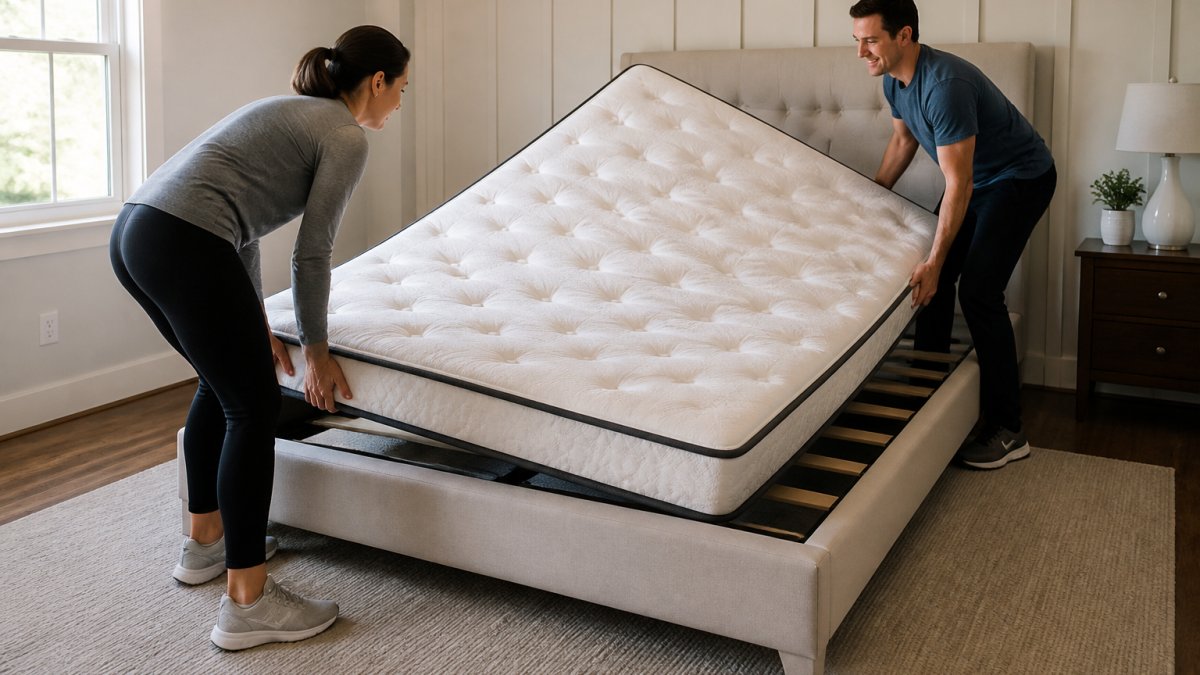
After flipping, let the mattress settle for a few hours before making the bed so compressed areas can begin recovering. If you notice odors or moisture, ventilate the room before sleeping on the newly flipped side.
Never flip a mattress alone if it weighs over 100 pounds. Attempting to lift and rotate solo significantly increases injury risk to your back, shoulders, and wrists. A second person or mechanical aid is worth the effort.
Long-Term Cost Effectiveness and Value
The usual line is that a double sided mattress costs more upfront but lasts longer, so it wins on cost per year.
The basic cost-per-year formula
Cost per year = purchase price ÷ realistic years of service. The catch is that "realistic years of service" depends far more on materials and construction than on whether the mattress flips.
The honest framing: flipping is a multiplier on good construction, not a substitute. A two-sided mattress made with low-density foam will still break down, just on a slightly longer timeline.
A transparent example
Suppose a one-sided mattress costs $1,000 and serves 6 years, about $167 per year.
The lesson: run the numbers with your own price quotes and a conservative lifespan estimate for each option. Do not accept "lasts twice as long" as a given.
What actually drives lifespan
- Support core density and gauge. Higher-density foam and heavier-gauge coils resist compression longer. This matters more than the number of sleep surfaces.
- Comfort layer quality. Low-density comfort foam is the first thing to break down, on either design.
- Foundation and frame support. A sagging or flexing foundation accelerates wear regardless of how often you flip.
- Body weight and sleep position. Higher weight and a fixed sleep position concentrate load and shorten life on any mattress.
- Rotation and flipping discipline. Consistent flipping is what unlocks the two-sided advantage. Skip it and you are paying a premium for a feature you are not using.
The non-financial value
Cost per year is not the only variable. Fewer replacement cycles mean fewer shopping trips, delivery windows, and disposal hassles, real value if you dislike the mattress-buying process, even when dollar savings are modest.
When one-sided makes more sense
Treat the value claim as a calculation, not a slogan. Compare upfront price against a conservative lifespan estimate for each specific mattress, and remember that construction quality sets the ceiling while flipping only helps you reach it.
Who Benefits Most From Double Sided Mattresses
Whether a double sided mattress is worth it depends less on the mattress than on you: sleep position, body weight, how you use the bed, and whether you'll keep up with flipping.
By sleep position
- Side sleepers concentrate pressure at the hips and shoulders, which is exactly where one-sided mattresses develop deep impressions first. A flippable design lets you move that load to a fresh surface, so side sleepers tend to see the clearest benefit. They also generally need a softer, more contouring surface to keep the spine aligned, so a soft or medium flippable model is often the better match.
- Back sleepers need even support along the spine and are usually well served by a medium to medium-firm feel. Because they tend to sleep in a consistent position, they also concentrate wear in predictable zones, another good case for flipping.
- Stomach sleepers need a firmer surface to keep the hips from sinking and the lower back from arching. They often move around more during the night, which spreads pressure and can mean slightly slower wear. The benefit of flipping is real but less dramatic for this group.
- Combination sleepers who shift positions throughout the night distribute load more evenly, so they may see a smaller durability advantage from flipping.
By body weight
Higher body weight accelerates compression on any mattress, most pronounced on lower-density comfort layers. Sleepers above roughly 200 pounds often find a one-sided mattress softens noticeably within a few years, making the dual-surface design of a flippable mattress more valuable.
Lighter sleepers put less stress on the comfort layers and may find that a well-built one-sided mattress lasts long enough that the flipping advantage is modest.
By firmness preference
Firmness is personal, but the guidance holds: softer contours more and suits side sleepers and lighter bodies; firmer supports more and suits back and stomach sleepers and heavier bodies.
Who should not flip a mattress
This is the part most benefit pages leave out. Do not flip:
- One-sided mattresses. Many modern beds have a single sleep surface and a non-sleepable base. Flipping puts you on the support core.
- Mattresses with a designated head and foot. Some two-sided models are built to be rotated end-to-end, not turned over. Check the law tag or care instructions.
- Mattresses with structural damage. A torn cover, exposed coils, or a broken edge support will not be fixed by flipping.
- Anyone unable to handle the weight safely. If lifting and turning the mattress is a strain or a fall risk, rotation-only or a professional service may be the better routine.
A quick self-check
If you sleep mainly on your side or back, weigh above roughly 200 pounds, plan to keep the mattress for years, and will commit to flipping every few months, a double sided mattress is likely a strong fit.
The benefit of a double sided mattress is conditional. It rewards sleepers who concentrate pressure in fixed spots, carry more weight, and will actually flip on schedule. For everyone else, construction quality matters more than the number of sleep surfaces.
Conclusion
Double sided mattresses address a fundamental problem with traditional design: concentrated wear in predictable locations. Distributing pressure across two sleep surfaces through regular flipping extends lifespan, maintains support, and reduces costly replacements.
The durability advantage is real: a properly maintained double sided mattress resists body impressions and sagging significantly longer than a one-sided alternative, delivering genuine long-term value for anyone wanting a decade or more of performance.
Durable Mattress engineers our flippable collection with this principle at the core. Our hybrid construction, in medium, firm, and soft, balances comfort and durability to make flipping worthwhile, an investment in years of consistent, supportive sleep rather than repeated replacements.
Consumer Reports mattress durability testing
Sleep Foundation guide to mattress lifespan and care
American Chiropractic Association recommendations on mattress support
Frequently Asked Questions
Are double sided mattresses more durable than one-sided mattresses?
Yes, double sided mattresses typically last longer because flipping distributes wear across both surfaces. One-sided mattresses concentrate all body weight and pressure on a single comfort layer, causing faster sagging and deterioration. By rotating use between two surfaces, flippable designs extend the overall lifespan and maintain consistent support longer than traditional one-sided options.
How often should you flip a double-sided mattress?
Most manufacturers recommend flipping every 3 to 6 months for optimal wear distribution. Some suggest rotating quarterly and flipping semi-annually. The exact frequency depends on your mattress construction, body weight, and sleep position. Heavier sleepers may benefit from more frequent flipping. Check your mattress care guidelines for brand-specific recommendations to maximize longevity.
What are the main benefits of a double-sided mattress?
The primary benefits include extended lifespan through even wear distribution, reduced body impressions and sagging, improved long-term comfort consistency, and better value over time. Double sided mattresses also offer flexibility if you prefer switching between firmness levels, and they reduce the need for early replacement, making them a cost-effective investment for homeowners seeking durability.
Is flipping a mattress really worth the effort?
Yes, regular flipping significantly extends mattress life and prevents premature sagging. While it requires minimal effort every few months, the payoff is substantial: you avoid replacing your mattress every 5-7 years and instead enjoy 10+ years of consistent support. For value-conscious buyers investing in quality construction, the maintenance effort is worthwhile and pays dividends in long-term comfort and cost savings.
Table of Contents
- Mattress Sagging Causes: Why Your Bed Sinks in the Middle
- How to Identify Sagging vs. Normal Softness
- Mattress Support and Bed Frame: The Foundation That Prevents Sag
- How Often to Rotate a Mattress (And Why It Matters)
- How to Fix a Sagging Mattress: Temporary Repairs vs. Real Fixes
- Flippable vs. One-Sided Mattresses: Care That Matches the Design
- Measuring Sag and Checking Warranty Coverage
- Frequently Asked Questions
Last Updated: October 18, 2026
Mattress Sagging Causes: Why Your Bed Sinks in the Middle
Mattress sagging is the permanent compression of the comfort layers in the spot where you sleep, and it usually starts long before you notice it. At Durable Mattress, we see the same pattern again and again: the dip forms where body weight concentrates, not where the bed gets the most use.
The causes stack up fast:
- Body weight in one spot. Hips and shoulders press into the same few inches of foam every night.
- Weak support underneath. Slats that bow, a box spring past its prime, or no center rail on a queen or king.
- Heat and moisture. Trapped sweat and warmth break down foam faster. A cool, dry bed lasts longer.
Here's what most guides miss: sagging is rarely a mattress problem alone. It's a support system problem. Fix the foundation and you slow the wear.
A mattress only sags as much as the support beneath it allows. Check the frame before you blame the bed.
How to Identify Sagging vs. Normal Softness
Normal softness feels even across the whole sleep surface. Sagging is localized and stays put after you get up.
Try this simple test. Lay a straight edge, like a broom handle or a ruler, across the dip and measure the gap underneath. A dip of 1 inch or more is the point where most warranties consider it a real problem, so measure before you call anyone.
Watch for these signs:
- A visible body impression that doesn't bounce back within a few minutes
- Rolling toward the middle when you lie near the edge
- Waking with hip or lower back pain that eases once you're up
Softness you can press through and recover from is comfort. A crater that stays is wear.
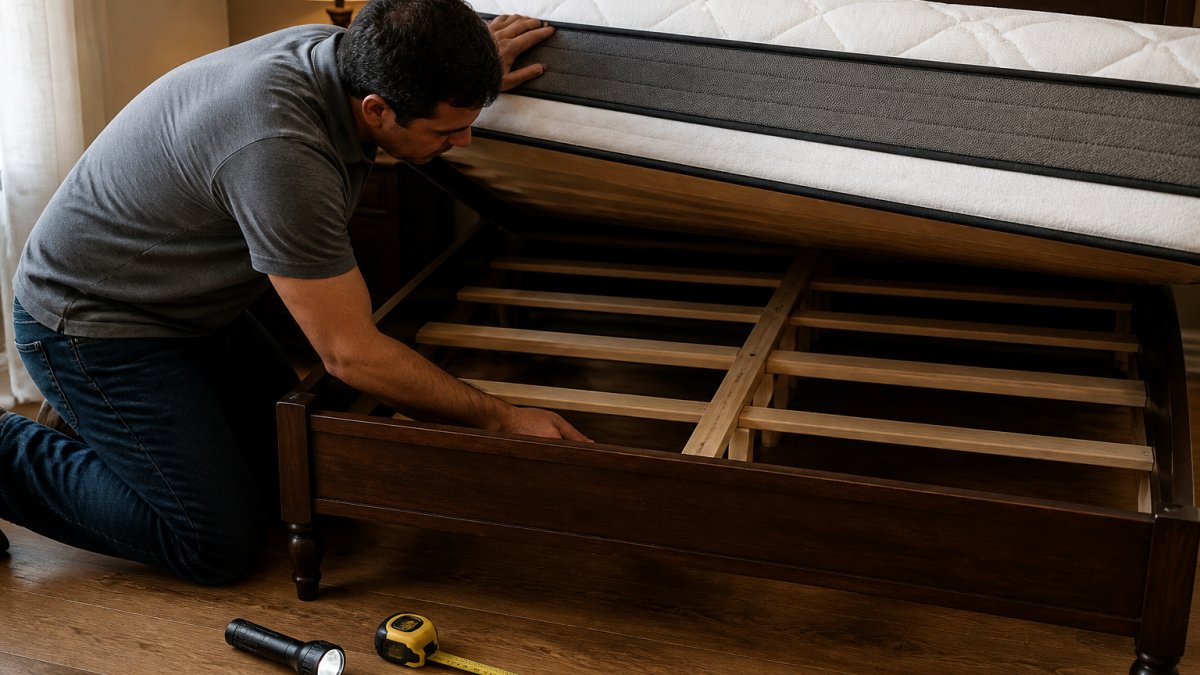
Mattress Support and Bed Frame: The Foundation That Prevents Sag
The single best way to prevent mattress sagging is a rigid, well-ventilated foundation. A firm base spreads weight across the whole mattress instead of letting it pool in the middle.
Foundation Compatibility by Mattress Type
| Mattress Type | Best Foundation | Slat Spacing | Center Support | Adjustable Base |
|---|---|---|---|---|
| Foam and memory foam | Solid platform or closely spaced slats | 2-3 inches or less | Required on queen and king | Check manufacturer approval; some foam beds flex poorly on adjustable bases |
| Innerspring | Box spring or slatted base that flexes with the coils | 3 inches or less | Required on queen and king | Usually compatible if the base has a solid deck or close slats |
| Hybrid | Firm platform or slats with a center rail | 3 inches or less | Required on queen and king | Often compatible; confirm the coil core is rated for articulation |
| Latex | Solid platform or closely spaced slats | 2-3 inches or less | Required on queen and king | Check manufacturer guidance; latex is heavy and may need a reinforced deck |
Slat spacing matters because a mattress bridges the gaps between slats. Wider gaps let the comfort layers dip between them, and the dip becomes permanent over time. Gaps under about 3 inches are the common standard; foam and latex do best at 2-3 inches or less.
Checking Slats, Center Support, and Box Springs
On a queen or king, a center support rail with a leg to the floor is not optional. It carries the middle, which is exactly where sagging starts. Without it, the mattress bridges a gap and caves in the center within a couple of years.
Press down on each slat. If one bows or cracks, replace it. Look for slats that have slipped out of their brackets or bowed under the mattress weight.
Adjustable Bases: What to Check Before You Buy
An adjustable base can be a good foundation, but not every mattress is built for it. Before pairing a mattress with an adjustable base:
- Confirm the mattress is rated for articulation. Foam and hybrid beds usually are; some innerspring and latex beds are not.
- Check that the base has a solid deck or slats close enough to support the mattress in the flat position.
- Make sure the base has a center support or a reinforced deck for queen and king sizes.
Skipping the center support on a queen or king is the most common cause of middle sag. Without it, the mattress bridges a gap and caves in the center within a couple of years.
Ventilation and Moisture
A foundation that traps heat and moisture accelerates foam breakdown. Slatted bases ventilate better than solid platforms, and a breathable mattress protector helps keep sweat away from the comfort layers. If you live in a humid climate or sleep hot, prioritize airflow under the mattress, a solid platform with no ventilation can trap moisture and soften foam faster.
Match the foundation to the mattress type, keep slat gaps under 3 inches, and never skip the center support on a queen or king. The foundation is the cheapest part of the sleep system to fix and the most common cause of preventable sag.
How Often to Rotate a Mattress (And Why It Matters)
Rotation is the cheapest prevention tool you own, but "rotate every few months" is too vague to act on. The right interval depends on your mattress construction, your body weight, and how many sleepers share the bed. Use the schedule below as a starting point, then tighten it if you notice early softening.
A Practical Rotation and Inspection Schedule
| Task | How Often | What to Look For |
|---|---|---|
| Head-to-foot rotation (180 degrees) | Every 3 months for foam and hybrid; every 6 months for innerspring | Fresh pressure points under hips and shoulders |
| Flip (flippable beds only) | Every 3-6 months, paired with rotation | Even wear across both sleep faces |
| Slat and frame check | Every 6 months | Bowed slats, cracked rails, missing center leg |
| Full inspection and sag measurement | Once a year | A dip of 1 inch or more under a straight edge |
| Mattress tag date check | At every rotation | Confirm the flip or rotation date is written down |
A 180-degree rotation moves your body's pressure points to a fresh section of the sleep surface. That spreads wear and delays the dip. Mark the date on the mattress tag with a marker so the schedule stays honest, a calendar reminder works too, but the tag travels with the bed.
Why the Interval Changes by Mattress Type
- Memory foam and polyurethane foam: These soften fastest under concentrated load. A 3-month rotation is a reasonable default, especially for sleepers over 200 pounds or couples who sleep close to the center.
- Innerspring: Steel coils hold their shape longer, but the comfort layers above them still compress. A 6-month rotation is usually enough unless the mattress has a pillow-top or euro-top, which behaves more like foam.
- Hybrid: Treat it like foam for the top layers and like innerspring for the coil core. A 3-6 month rotation covers both.
One-Sided vs. Flippable: Different Rules
A one-sided mattress only rotates. The support core sits on the bottom and is not built to sleep on, so flipping it can damage the foundation layers and may void the warranty.
A flippable mattress gives you two sleep surfaces. Flip and rotate on the same schedule to redistribute wear across both faces. If one side starts to soften, flip to the fresh surface instead of shopping for a replacement.
Pair Rotation With a Quick Inspection
Ten minutes twice a year is cheaper than a new mattress. At each rotation:
- Vacuum the sleep surface and the foundation to remove dust and allergens.
- Press down on each slat and the center rail; replace any that bow or crack.
- Run a straight edge across the sleep surface and note any dip.
- Check the box spring or foundation for broken springs, a sagging top, or new squeaks.
- Photograph the tag date and any visible impression for your records.
Set a phone reminder for the first weekend of January, April, July, and October. Quarterly reminders match the 3-month foam schedule and are easy to remember.
If you share the bed, rotate more often, two sleepers concentrate weight in the same zones and accelerate compression. Couples over 200 pounds each may benefit from a 2-3 month rotation on a foam mattress.
How to Fix a Sagging Mattress: Temporary Repairs vs. Real Fixes
A quick fix buys time. A real fix stops the sag from coming back.
Temporary repairs:
- Add a mattress topper to level the dip
- Slide a plywood board or a support insert under the sagging zone
- Tighten or add slats and a center leg
Real fixes:
- Replace a worn box spring or bowed slats
- Add proper center support to the frame
- Rotate or flip the mattress to a fresh side
The difference matters. A topper hides the problem; fixing the foundation solves it. Start with the support system, then decide if the mattress itself needs replacing.
Flippable vs. One-Sided Mattresses: Care That Matches the Design
One-sided mattresses only rotate. Flippable mattresses rotate and flip, which doubles the usable sleep surface and spreads wear across both sides.
For a one-sided bed, rotate head-to-foot every three to six months and never flip it. The support core sits on the bottom and isn't built to sleep on.
For a flippable design, you get two sleep sides. Flip and rotate on the same schedule to redistribute wear across both faces.
Write the flip date on the mattress tag with a marker. It's the easiest way to keep the schedule honest.
Measuring Sag and Checking Warranty Coverage
Measure the dip before you file a claim, because warranty coverage usually has a threshold. Lay a straight edge across the sag, measure the gap, and photograph it with a ruler in frame.
Then check the fine print:
- Foundation requirement. Many warranties are void if you used an unsupportive base.
- Proper support. Missing center support can disqualify a claim.
- Normal softening. Body impressions under the threshold usually aren't covered.
If the sag is real and the support was right, warranty replacement may apply. For guidance on mattress care and materials, the Consumer Product Safety Commission and sleep health guidance from the National Institutes of Health are useful starting points.
Frequently Asked Questions
Why is my mattress sagging after only 3 months?
Early sagging usually points to a support problem, not a defective mattress. Check the bed frame first: slats spaced more than 2 to 3 inches apart, a missing center rail, or a worn box spring can let the mattress sink within weeks. Memory foam also softens slightly in the first month as it adjusts to room temperature, which is normal. If the dip is deeper than about 1 inch and the foundation checks out, document it with photos and a straight edge and contact the retailer about warranty coverage.
How often should you rotate a mattress to prevent sagging?
Rotate a mattress head to foot every 3 to 6 months during the first year, then every 6 to 12 months after that. A 180-degree rotation spreads body weight across a fresh section of the sleep surface and reduces localized sagging where hips and shoulders press hardest. Set a calendar reminder so you do not forget. If you sleep alone, rotate more often, since one side takes all the wear. Flippable mattresses can also be turned over, which doubles the usable surface.
Can a bed frame cause a mattress to sag?
Yes. Mattress support and bed frame quality decide how evenly weight distributes across the sleep surface. Slats spaced wider than 3 inches, weak or bowed slats, and frames without a center support rail let the middle of the mattress drop. Box springs older than 8 to 10 years also lose their structure. For foam and hybrid mattresses, a solid platform or closely spaced slats work best. Add a center rail on queen and king sizes and check the frame annually for cracks or loose hardware.
Does flipping a mattress help prevent sagging?
Flipping helps only if the mattress is designed for it. Two-sided flippable mattresses can be turned over to use a fresh sleep surface, which spreads wear and extends mattress lifespan. One-sided mattresses should never be flipped, only rotated head to foot, because the support core sits on the bottom. Check the care label before you flip. If you own a flippable model, flip it every 6 months alongside your rotation schedule for the most even wear distribution.
Preventing mattress sagging comes down to three habits: support the bed properly, rotate on schedule, and catch dips early. Durable Mattress builds 2-sided flippable hybrid mattresses in Medium, Firm, and Soft so you can flip to a fresh surface and get more years from your investment. Our dual-sided design is made to be flipped for longer life, with the support and comfort to match your sleep style. Ready to stop replacing sagging beds? Shop Mattresses and find your fit.
Table of Contents
- Best Mattress for Seniors 2026: Top Picks & Buying Guide
- Best Mattress for Seniors with Back Pain
- Best Mattress for Elderly with Mobility Issues
- Hybrid vs. Memory Foam Mattress for Seniors
- How Often Should You Replace Your Mattress?
- Key Features to Look for in a Mattress for Seniors
- Conclusion: Choosing the Best Mattress for Seniors in 2026
- Frequently Asked Questions
Last Updated: October 14, 2026
Best Mattress for Seniors 2026: Top Picks & Buying Guide
Finding the best mattress for seniors in 2026 comes down to three things: support, safety, and longevity. At Durable Mattress, we build two-sided flippable hybrids for sleepers who want a bed that still feels supportive years from now.
This guide covers what matters for older sleepers, from spinal alignment and pressure relief to edge support and ease of movement, so you can match a mattress to your sleep position, body weight, and pain points.
For most seniors, a medium-firm hybrid with reinforced edges and a flippable design offers the best balance of support, pressure relief, and durability.
Quick Comparison: Top Mattress Picks for Seniors
| Priority | Best Mattress Type | Why It Works |
|---|---|---|
| Back pain | Medium-firm hybrid | Supports spinal alignment, cushions joints |
| Mobility issues | Firm hybrid with edge support | Easier to get in and out of bed |
| Hot sleepers | Latex or coil hybrid | Breathability and temperature regulation |
| Long-term value | Two-sided flippable | Prevents premature wear, extends lifespan |
| Side sleepers | Medium hybrid with foam comfort layer | Pressure relief for hips and shoulders |
Best Mattress for Seniors with Back Pain
The best mattress for seniors with back pain is a medium-firm hybrid that keeps the spine neutral while cushioning pressure points. Too soft, and the hips sink out of alignment.
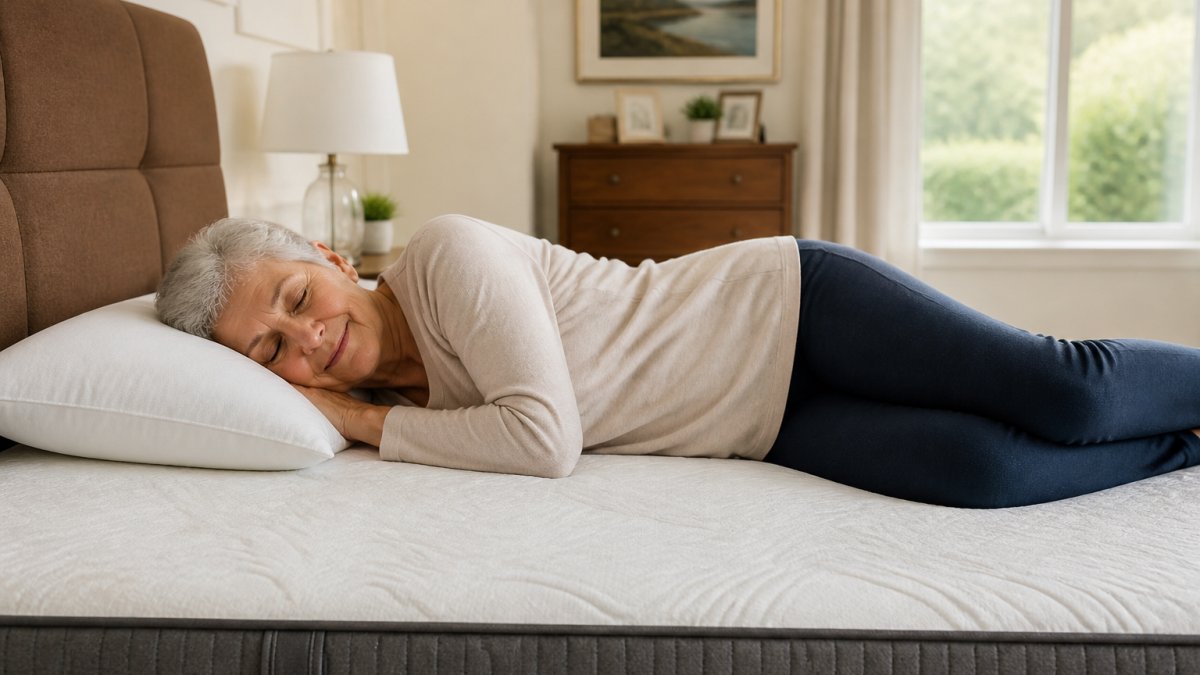
Back pain often comes from a mattress that has already broken down, not the wrong firmness level. A two-sided flippable design lets you rotate the sleep surface before sagging sets in.
If you wake up stiff but feel better an hour later, your mattress is likely too firm. If you wake up sore and stay sore, it's probably too soft.
Best Mattress for Elderly with Mobility Issues
For sleepers with mobility limitations, the best mattress is a firm hybrid with reinforced edge support and a height that matches how you sit down and stand up. Safe transfers depend on the geometry of your body against the bed.
The measurements that matter
- Bed height (top of mattress plus foundation): A common target is roughly the height of the back of your knee when seated, so your feet rest flat on the floor and your hips are level with or slightly above your knees, usually 18 to 23 inches from floor to sleep surface. Too tall and you climb or hop; too low and you push up out of a squat.
- Edge support depth: Look for reinforced perimeter foam or a coil row that stays firm within about 3 to 4 inches of the edge, the zone you sit on when you swing your legs over. A collapsing edge turns a controlled transfer into a slide.
- Responsiveness: A surface that returns to shape quickly lets you push off with a hand or elbow. Deep sink-in foam makes every reposition harder because you climb out of the crater first.
Transfer ease, step by step
A safe transfer follows the same pattern: sit on the edge with both feet down, lean forward over your knees, push through your arms and legs, and stand. Each step demands something of the mattress:
- Sitting down requires an edge that does not compress more than an inch or two under your weight.
- Leaning forward requires a surface that does not tilt you backward into the mattress.
- Pushing up requires enough firmness under your hands and hips that your arms do the work instead of fighting the foam.
If any step feels like a struggle, the mattress is working against you regardless of how comfortable it feels lying down.
Adjustable-base compatibility
An adjustable base lets you raise the head for reading, breathing comfort, or reflux, and the feet for circulation and swelling. Two checks before you buy:
- Is the mattress rated for adjustable bases? Most hybrids and latex mattresses are; many traditional innerspring sets and some dense all-foam beds are not, and using one anyway can void the warranty.
- Does the mattress bend without damage? A two-sided flippable hybrid needs a coil unit and comfort layers that flex repeatedly without cracking. Ask the manufacturer directly rather than assuming.
When to consider a mobility limitation
If you use a walker or cane, have had a hip or knee replacement, or need to sit on the edge before standing, treat transfer ease as the top priority, ahead of plushness. A medium-firm surface with strong edges and a height near knee level beats a soft pillow-top that traps you in the middle.
Measure the height of the chair you stand up from most easily. That seat height is a good starting point for your ideal bed height, then adjust for the thickness of your foundation and any mattress topper.
Caregiver considerations
If someone else helps with transfers or repositioning, a mattress that is too thick or too soft makes their job harder and riskier. A lower-profile hybrid with firm edges gives a caregiver a stable surface to brace against and keeps the person closer to the floor. Confirm the mattress weight before delivery, a king hybrid can exceed 120 pounds.
Hybrid vs. Memory Foam Mattress for Seniors
Hybrid mattresses combine pocketed coils with foam or latex layers, while memory foam mattresses use dense foam as the entire support core. For most seniors, a hybrid wins on support, cooling, and ease of movement, but the right answer depends on how your body has changed.
How age-related sleep changes shift the trade-offs
Sleep architecture changes with age: lighter sleep, more frequent awakenings, and sharper temperature swings. Those changes tilt the decision in specific ways.
- Temperature: Memory foam is dense and traps body heat, worsening night sweats and hot flashes. Coil hybrids move air through the support core and sleep cooler. If you already wake up overheated, this alone can decide the category.
- Joint sensitivity: Memory foam contours closely and relieves pressure on hips and shoulders, but the same contouring makes turning over harder. A hybrid with latex or responsive foam gives pressure relief without the stuck-in-the-mud feeling.
- Frequent repositioning: Lighter sleepers who wake and shift position several times a night usually do better on a responsive surface. Deep memory foam rewards stillness; hybrids reward movement.
This is general comfort guidance, not medical advice. If you have a diagnosed condition such as arthritis, spinal stenosis, or sleep apnea, talk to your clinician about positioning and support needs before choosing a mattress.
A decision matrix by sleep position, body weight, and pain location
Rather than picking by age alone, match firmness and construction to how you sleep and where you hurt.
| Your situation | Recommended construction | Firmness target |
|---|---|---|
| Side sleeper, shoulder or hip pain | Hybrid with 2-3 in. of responsive foam or latex | Medium (5-6 of 10) |
| Back sleeper, lower-back pain | Hybrid with zoned or reinforced lumbar support | Medium-firm (6-7 of 10) |
| Stomach sleeper | Firm hybrid, thin comfort layer | Firm (7-8 of 10) |
| Under 150 lbs | Softer comfort layer, medium support core | Medium |
| Over 200 lbs | Denser coils, thicker support core, firmer feel | Medium-firm to firm |
| Combination sleeper | Responsive hybrid, balanced comfort layer | Medium |
Use the matrix as a starting point, then adjust for your current surface. If your mattress is too soft and you wake with a sore back, move one step firmer. If it is too firm and you wake with numb arms or aching shoulders, move one step softer.
Shared-bed and partner considerations
If you share a bed, you may need different things. Motion isolation matters when one partner moves frequently or gets up at night, memory foam isolates motion best, hybrids are moderate, innersprings transfer the most. If firmness preferences differ, consider a split-firmness mattress, two twin XLs on a split king base, or a firmness-adjustable air bed. A split king also lets each side raise independently on an adjustable base.
Ownership, setup, and return logistics
Category choice affects what happens after delivery.
- Weight and setup: A queen hybrid typically weighs 100 to 130 pounds; a queen memory foam often runs 70 to 100 pounds. If you cannot lift either, budget for white-glove delivery or setup service.
- Removal of the old mattress: Many retailers offer haul-away for a fee, and some municipalities require scheduled bulk pickup. Confirm before delivery day so the old bed is not blocking the new one.
- Trial periods and returns: Most online brands offer a 90- to 120-night trial, but returns usually require donation or pickup, and some charge a fee. Read the fine print on who arranges pickup and whether the mattress must be in original condition.
Before you buy, confirm three things in writing: the trial length and return fee, the warranty sag threshold, and whether the mattress is rated for your foundation or adjustable base. These three details cause most post-purchase disputes.
If you sleep hot, move often, or need help getting in and out of bed, a hybrid is usually the better fit. If you sleep still, share a bed with a restless partner, and want maximum pressure relief, memory foam earns its place, just plan for the heat and setup logistics.
How Often Should You Replace Your Mattress?
Most mattresses should be replaced every 7 to 10 years, but the real signal is how your body feels, not the calendar (How Long Should A Mattress Last?). Sagging, visible indentations, and morning stiffness are the clearest signs it's time.
A few practical checks:
- Does the mattress sag where you sleep?
- Do you wake up with new aches that fade during the day?
- Are the edges collapsing when you sit down?
A flippable, two-sided mattress can extend that timeline. By rotating the sleep surface, you spread wear across both sides instead of one, which slows the breakdown that leads to replacement.
Key Features to Look for in a Mattress for Seniors
The features that matter most for older sleepers are support, pressure relief, edge support, cooling, and durability. Firmness should match your sleep position and body weight, not a generic label.
- Support core: Pocketed coils or a dense foam base that holds the spine neutral.
- Comfort layer: Foam or latex thick enough to cushion joints without sinking.
- Edge support: Reinforced sides for safe sitting and getting in and out of bed.
Test firmness against your dominant sleep position first, then check edge support and cooling. Price matters, but longevity usually costs less than replacing a cheap mattress every few years.
Conclusion: Choosing the Best Mattress for Seniors in 2026
The right mattress for an older sleeper supports your spine, cushions your joints, and still feels the same in five years. That combination of comfort and durability is what we build at Durable Mattress. Our two-sided flippable hybrids are designed to be flipped, so you get more life out of every mattress, with medium, firm, and soft options to match your sleep position and support needs.
Frequently Asked Questions
What is the best mattress for seniors in 2026?
The best mattress for seniors in 2026 depends on individual needs. Look for a hybrid mattress with medium-firm support, responsive coils for ease of movement, and strong edge support. A flippable design, like those from Durable Mattress, can extend longevity by preventing sagging. Prioritize pressure relief for joints, cooling features, and a sleep trial to test comfort at home. Always match firmness to your sleep position and body weight.
How often should you replace your mattress?
Most mattresses last 7 to 10 years, but seniors may need to replace sooner if sagging, pain, or allergies occur. High-quality flippable mattresses can last longer with regular rotation. Check for visible indentations, worsening back pain, or difficulty getting out of bed. If you wake up stiff or the mattress feels uneven, it's time to shop.
Is a hybrid or memory foam mattress better for seniors?
Hybrid mattresses are often better for seniors because they combine supportive coils with comfort layers, making it easier to move and get in and out of bed. Memory foam can feel too sinky and trap heat, which may worsen mobility issues. Hybrids offer better edge support and responsiveness. However, if you prefer a plush feel and have no mobility concerns, memory foam can work. Consider a hybrid with a flippable design for added durability.
What mattress firmness is best for older adults?
Medium-firm to firm mattresses are generally best for older adults. Medium-firm provides a balance of support and pressure relief, while firm offers more stability for getting in and out of bed. Side sleepers may need medium-firm to cushion shoulders and hips. Back and stomach sleepers often prefer firm. If you have back pain, a medium-firm hybrid with responsive support is a safe starting point. Always use a sleep trial to confirm comfort.
Choosing a mattress for your later years shouldn't mean guessing online and hoping for the best. Durable Mattress builds two-sided flippable hybrids with a dual-sided design that prevents premature wear, available in medium, firm, and soft support to match your body and sleep position. Get started with Durable Mattress and invest in a mattress built to last.
Table of Contents
- Flippable vs Non-Flippable Mattress Durability: What Actually Matters
- How Flippable Mattress Construction Extends Lifespan
- Mattress Sagging Causes and How Flipping Prevents Wear
- How Often to Flip a Mattress for Maximum Durability
- How to Rotate a Mattress and Optimize Wear Distribution
- How to Make a Mattress Last Longer: Practical Maintenance Steps
- Real Durability Expectations: Lifespan Comparison and Value
- Frequently Asked Questions
Last Updated: October 12, 2026
Flippable vs Non-Flippable Mattress Durability: What Actually Matters
Buying a mattress affects your sleep and your wallet for the next decade. Flippable vs non-flippable mattress durability determines how long your investment lasts and whether you face premature sagging.
At Durable Mattress, we've spent years analyzing how construction affects longevity. The core difference: a flippable mattress has two usable sleep surfaces, a non-flippable mattress has one. That design choice changes how wear distributes over time.
Most shoppers assume all mattresses are built the same way. They're not. Construction method, materials, and whether you can flip or rotate all determine how many years of comfortable sleep you get.
How Flippable Mattress Construction Extends Lifespan
A flippable mattress has symmetrical construction with two usable sleep surfaces, both engineered with comfort layers and a support core, so you can flip it periodically to distribute body weight. Non-flippable mattresses are one-sided: the top carries premium comfort materials, the bottom is a firmer base. You can rotate them end-to-end but not flip them, so all your body weight concentrates on the same surface for the mattress's entire life.
The durability difference is not automatic. It depends on how each design's materials fail, which tells you when flipping actually extends life.
Material-specific failure modes
Memory foam softens and takes a permanent set under sustained load, producing body impressions that do not recover. A two-sided memory foam mattress can alternate surfaces, giving each side recovery time, but the foam still degrades. Flipping slows visible sagging; it does not stop the breakdown.
High-density polyfoam (often 1.8 lb/ft³ or higher) resists compression better than low-density foam (1.2-1.5 lb/ft³). In a flippable design, the denser foam holds its shape longer, so the benefit of alternating sides is meaningful.
Latex rebounds quickly, resisting permanent compression better than memory foam. A two-sided latex mattress can last many years with regular flipping because the material recovers between uses. Latex tends to fail by tearing at the edges rather than forming deep body impressions.
Innerspring and hybrid designs rely on a coil unit for support. Pocketed coils distribute load individually, but the comfort layers above them still compress. In a flippable hybrid, both sides have comfort layers, so flipping spreads wear across two sets of foams.
Realistic lifespan ranges
A quality non-flippable mattress typically lasts about 5-7 years, while a comparable flippable mattress lasts 8-12 years. These are ranges, not guarantees: a premium non-flippable with dense foam and a strong coil unit can reach 8-10 years, and a budget flippable with thin foam can fail in 4-6 years. Construction quality and material density matter more than the flip label.
Body weight and sleep position shift the range. A 250-pound sleeper concentrates more load per square inch than a 150-pound sleeper, so foam compresses faster. Back and stomach sleepers spread weight more evenly than side sleepers, who concentrate load at the shoulder and hip.
When flipping actually helps
Flipping helps most when the mattress has two genuine comfort layers of similar quality and the materials recover between uses. It helps least when one side is thin, low-density, or the mattress is past its useful life. Rotating a one-sided mattress distributes wear along its length but cannot rest the top surface. At equal material quality, a flippable design tends to outlast a non-flippable one, not because flipping is magic, but because two surfaces share the load.
Flipping extends life by sharing load across two surfaces. It cannot rescue low-density foam or a worn-out core. Match the design to the material quality, then follow a realistic schedule.
Mattress Sagging Causes and How Flipping Prevents Wear
Sagging happens when comfort layers compress permanently and don't spring back, because body weight applies constant pressure to the same spots night after night. The foam or latex loses its ability to rebound, creating body impressions and reduced support.
Flipping addresses this directly: by rotating which surface bears your weight, compressed areas recover. Like rotating tires on a car, you extend usable life by spreading wear evenly.
Materials matter enormously. Memory foam compresses faster than latex or high-density polyfoam, so a flippable memory foam mattress needs more frequent flipping to prevent sagging. Hybrid designs with coil support resist compression better and hold up longer whether you flip or not.
Fiber padding and lower-density foams break down fastest and are common in budget mattresses. A non-flippable budget mattress using them can sag noticeably within 2-3 years. A flippable mattress with the same materials lasts longer because you can flip it, but it won't solve the underlying material weakness.
How Often to Flip a Mattress for Maximum Durability
The standard recommendation is to flip a mattress every 3-6 months, giving each side adequate time under load before being rested. Flipping seasonally, at the start of spring and fall, can be easy to remember and maintain.
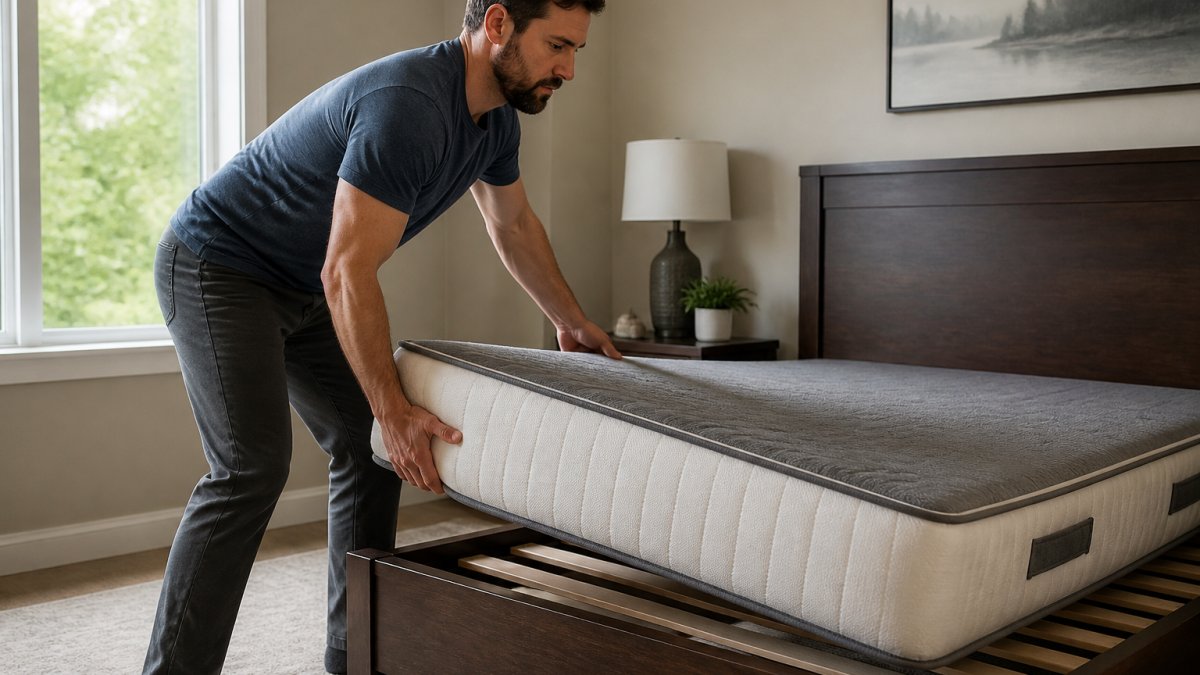
Exact frequency depends on body weight and construction. Heavier individuals should flip more often because their weight creates more concentrated compression: someone 250+ pounds might flip every 2-3 months, while someone 150 pounds could extend to 4-6 months.
A hybrid flippable mattress with pocketed coils can go longer between flips because the coil system resists compression; an all-foam flippable needs more frequent flipping. The firmer the foam density (in pounds per cubic foot), the longer you can wait.
Is flipping worth the effort? It depends on your priorities. If you're keeping the mattress 10+ years, flipping extends durability noticeably. If you replace mattresses every 5-7 years anyway, flipping helps but isn't critical.
How to Rotate a Mattress and Optimize Wear Distribution
Rotation and flipping are different actions, though both help durability. Rotating means turning the mattress 180 degrees end-to-end, so the head becomes the foot. This distributes wear along the length, preventing the head area from sagging faster than the foot area.
For non-flippable mattresses, rotation is your only option. Rotate every 2-3 months to even out wear. It won't extend lifespan as much as flipping, but it prevents head-area sagging while the foot stays firm.
For flippable mattresses, do both: flip every 3-6 months and rotate every 2-3 months. This four-position schedule distributes weight across all areas. A simple system: flip in spring, rotate in summer, flip in fall, rotate in winter.
Technique matters for safety and mattress integrity. Flip with a partner if possible, most mattresses are heavy and awkward alone. Grip the sides firmly, keep your back straight, and lift with your legs. Flipping on a sturdy bed frame is easier than on a platform with limited clearance.
How to Make a Mattress Last Longer: Practical Maintenance Steps
Beyond flipping and rotating, several maintenance practices extend mattress lifespan, and some of them protect your warranty as much as your comfort.
Protect the surface
Use a waterproof mattress protector from day one. It blocks sweat, skin cells, and spills from reaching the foam or coils, which can accelerate breakdown and create odor. A quality protector can add years to usable life. Vacuum the top surface monthly with an upholstery attachment to remove dust and allergens. Blot spills immediately rather than rubbing, which pushes liquid deeper into the layers.
Control the environment
Maintain 30-50% relative humidity in the bedroom. Very dry air can make foam brittle; high humidity encourages mold in the core. In dry climates, a humidifier helps. In humid climates, use air circulation or a dehumidifier. Avoid placing the mattress directly on a cold floor or in direct sunlight, both of which stress materials.
Support the mattress correctly
A weak or sagging foundation transfers stress unevenly and accelerates wear. Use a sturdy frame or platform with slats spaced no more than 3 inches apart. A poor foundation can reduce mattress lifespan. Check your mattress manufacturer's foundation requirements, many warranties specify an approved base, and using an unsupported frame can void coverage. Adjustable bases are compatible with many modern mattresses, but confirm the model is approved before purchase.
Follow the warranty terms
Most mattress warranties cover manufacturing defects such as sagging beyond a stated threshold (often 1-1.5 inches), not normal softening or wear. Warranties typically require:
- A mattress protector to keep the surface clean
- An approved foundation or bed frame
- Rotation or flipping according to the manufacturer's schedule
- Proof of purchase and sometimes registration within a set window
Flipping a mattress that is not designed to be flipped can damage it and void the warranty. Always check the law tag or manufacturer instructions before flipping. If the tag says "no flip" or "rotate only," follow that guidance.
Reduce concentrated stress
Avoid sitting on the mattress edge regularly. That concentrates weight on the perimeter and causes edge sagging faster than the center. If you have a partner who sits on the edge every morning, that area will wear first. A mattress pad or topper can protect high-stress areas, but it does not replace proper support underneath.
Calculate cost per year
Durability is a value question, not just a lifespan question. Divide the purchase price by the expected usable years to compare options:
- A $1,000 non-flippable mattress lasting 6 years costs about $167 per year.
- A $1,200 flippable mattress lasting 10 years costs about $120 per year.
A flippable model can cost more upfront and still be cheaper over time. But if a premium non-flippable mattress outlasts a budget flippable one, the cheaper option may win. Compare at similar quality levels, then factor in the effort of flipping and the cost of a protector and foundation.
Set a seasonal reminder to flip or rotate. Pair it with a quick inspection of the foundation and a vacuum of the surface. Small habits protect both comfort and warranty coverage.
Real Durability Expectations: Lifespan Comparison and Value
A non-flippable mattress typically lasts 5-7 years with normal use, assuming quality construction with dense foam or hybrid support. Budget models last 3-5 years; premium models can reach 8-10 years.
A flippable mattress typically lasts 8-12 years. The dual-sided design and regular flipping distribute wear so effectively that support lasts longer. A quality flippable hybrid with proper maintenance often reaches the 10-year mark.
The flippable option can become cheaper over time despite a potentially higher upfront price.
Material quality matters more than flippability. A premium non-flippable mattress with high-density foam and strong coil support might outlast a budget flippable with thin foam and weak coils.
Consider your situation: if you have chronic back pain and need a specific firmness, a non-flippable mattress with that firmness might be right, you can't flip to a different firmness anyway.
When you invest in a mattress, you're not just buying comfort, you're buying years of sleep quality. The difference between flippable and non-flippable construction determines whether you'll enjoy that mattress for a decade or replace it in five years.
| Feature | Flippable Mattress | Non-Flippable Mattress |
|---|---|---|
| Sleep Surfaces | Two usable sides | One usable side |
| Typical Lifespan | 8-12 years | 5-7 years |
| Wear Distribution | Spreads across both sides | Concentrates on top |
| Flipping Schedule | Every 3-6 months | Not applicable |
| Rotation Benefit | High | Moderate |
| Cost Per Year | Lower over time | Higher |
| Best For | Long-term value seekers | Those with specific firmness needs |
Frequently Asked Questions
Do flippable mattresses really last longer than non-flippable mattresses?
Flippable mattress construction distributes body weight and compression across two sleep surfaces instead of one, which slows foam cell breakdown and extends overall lifespan. Non-flippable mattresses concentrate wear on a single surface, causing faster sagging and support loss. The durability advantage depends on consistent flipping, if you never flip, both types wear similarly. Hybrid mattresses with symmetrical construction on both sides maximize this benefit.
How often should you flip a flippable mattress?
Flip your mattress every 3 to 6 months for the first year, then every 6 months after that. More frequent flipping in the first year helps break in the mattress evenly and prevents early body impressions. Mark your calendar or set a phone reminder to stay consistent. If you weigh over 200 pounds, flip every 3 months to better distribute compression across both sides.
What causes a mattress to sag, and can flipping prevent it?
Mattress sagging results from foam cell breakdown, pocketed coil compression, and uneven weight distribution. Flipping distributes your body weight across both sleep surfaces, slowing compression on any single side. Rotating the mattress head-to-foot also helps. However, sagging eventually occurs in all mattresses, flipping just delays it significantly. Quality materials like high-density foam and individually wrapped coils resist sagging longer than budget construction.
How can I make my mattress last longer?
Flip or rotate every 3 to 6 months, use a supportive bed frame or foundation, add a mattress protector to prevent stains and moisture, keep the bedroom cool and dry, and avoid jumping on the mattress. Flippable designs extend lifespan when maintained properly. Investing in a hybrid mattress with pocketed coils and quality comfort layers also resists wear better than all-foam or budget innerspring options over time.
Table of Contents
- What Makes a Mattress Last: The Durability Foundation
- How Long Does a Mattress Last: Realistic Timelines
- Durable Mattress Materials That Stand the Test
- Mattress Signs of Wear: When to Replace
- Mattress Maintenance Tips to Extend Durability
- Best Mattress for Long Term: Support Levels Matter
- Long-Term Value: Investment That Pays Off
- Frequently Asked Questions
Last Updated: October 11, 2026
What Makes a Mattress Last: The Durability Foundation
A mattress that lasts depends on three core factors: construction quality, material selection, and how well you maintain it. The best mattress for long term value combines all three. Most people focus only on comfort when buying, then wonder why their mattress sags within a few years.
High-quality materials resist compression and body impressions. Proper support layers prevent sagging. Flippable designs distribute wear evenly across both sides, extending usable life significantly.
Construction matters more than brand name. A hybrid mattress with quality foam, sturdy coils, and reinforced edges will outlast a premium-priced all-foam option with weak edge support. The best mattress for long term is built to handle nightly pressure without permanent deformation.
Flip your mattress every 3-6 months, even if it's not marketed as flippable. This simple habit extends lifespan by distributing body weight across different areas and preventing concentrated wear patterns.
How Long Does a Mattress Last: Realistic Timelines
Most mattresses last 7-10 years, though budget options may sag after 5 years and well-engineered mattresses can last 12+ years. Lifespan depends on body weight, sleep position, construction, and maintenance. Heavier sleepers and stomach sleepers experience faster compression; side sleepers distribute weight more evenly.
Hybrid mattresses with individually wrapped coils and high-density foam typically last longer than all-foam options. Flippable designs can effectively double lifespan by offering two usable surfaces.
A mattress that lasts 10+ years requires high-quality materials, proper support layers, and consistent maintenance, not just a premium price tag.
Durable Mattress Materials That Stand the Test
Material selection directly determines how a mattress resists compression, sagging, and support loss over time. Different constructions fail in different ways, and understanding these failure modes helps you choose a mattress built to last.
Foam Density and Compression Resistance
Polyfoam and memory foam degrade through compression, the material loses height and resilience as it's repeatedly compressed under body weight. High-density foam (2.0 pounds per cubic foot or higher) resists compression better than standard-density foam (1.5 pounds per cubic foot), but density alone doesn't guarantee longevity.
Memory foam ranges from 3.0-5.0 pounds per cubic foot. A mattress using 4.0+ pound memory foam resists body impressions better than 2.5-pound foam, though it costs more and may sleep warmer.
Polyfoam degrades faster than memory foam or latex. Budget mattresses use low-density polyfoam (1.0-1.5 lbs/cu ft), which compresses within 3-5 years. Mid-range mattresses use 2.0-2.5 lb polyfoam for longer life, though higher density adds weight and cost.
Coil Systems and Support Retention
Innerspring and hybrid mattresses rely on coils to provide structural support and prevent bottoming out. Coil quality directly affects durability.
Individually wrapped coils are wrapped in fabric sleeves that isolate each coil, reducing noise and motion transfer.
Continuous coil systems use a single wire looped into multiple coils, connected along the mattress length. This cheaper design transfers motion and stress across the entire system. Continuous coil mattresses often sag within 5-7 years.
Coil gauge (thickness) matters: lower numbers indicate thicker wire. Premium hybrids use 12-13 gauge coils; budget options use 14-16 gauge. Thicker coils resist permanent deformation longer.
Latex: Natural vs. Synthetic Durability
Latex resists compression better than foam and lasts 15+ years. Natural latex is more durable than synthetic but costs $500-$1,000 more per queen. Blended latex (70% natural/30% synthetic) offers a middle ground.
Hybrid Construction: Balancing Comfort and Longevity
Hybrid mattresses combine foam comfort layers with a coil support system. This design addresses a key durability problem: foam-only mattresses can bottom out (compress fully under body weight), losing support. Coils prevent this by providing a structural floor.
A well-engineered hybrid uses high-density foam (3.0+ lbs/cu ft) over individually wrapped coils (800+ per queen), lasting 10-12 years. Poorly engineered hybrids with thin foam and low-quality coils fail faster. Durability depends on both layers working together. Consistent support relies on the structural integrity of these materials, which is why professional foam durability remains the most critical factor in extending the functional lifespan of any sleep surface.
Flippable Design: Engineering for Extended Life
A truly flippable mattress has identical comfort and support on both sides, effectively doubling usable life.
Material Trade-Offs for Different Sleepers
Heavier sleepers (over 230 lbs) need high-density foam (4.0+ lbs/cu ft), thick coils (12-13 gauge), and hybrid construction; all-foam may sag within 5 years. Lighter sleepers (under 150 lbs) can use lower-density materials. Side sleepers benefit from high-density foam to resist shoulder and hip impressions; back and stomach sleepers distribute weight more evenly.
Durability is determined by measurable material properties, foam density, coil gauge and count, latex type, not brand reputation.
Mattress Signs of Wear: When to Replace
Visible sagging is the clearest sign of mattress failure. If you see or feel a body-shaped depression that doesn't bounce back within a few hours, the foam or coils have lost structural integrity.
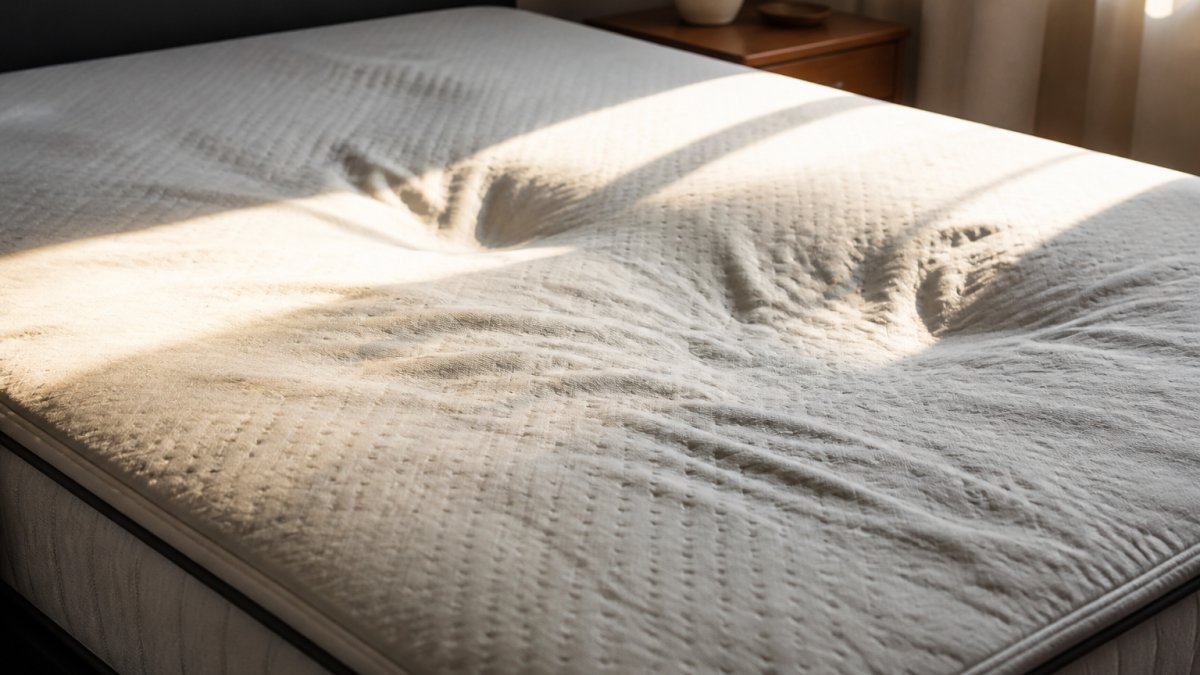
Waking with back or neck pain often signals mattress failure. As foam compresses and coils weaken, support diminishes and pressure points develop. If pain improves elsewhere, your mattress is likely the cause.
Excessive motion transfer indicates coil degradation. If you feel your partner moving throughout the night more than you used to, the coils may no longer be isolating motion properly.
Lumps, bunching, or uneven surfaces mean the internal structure has shifted. Foam layers may have separated, or coils may have broken. These issues worsen over time and cannot be repaired. Replacement becomes necessary.
Mattress Maintenance Tips to Extend Durability
Rotate your mattress every 3 months if not flippable. This distributes wear across different areas and prevents concentrated compression.
Use a mattress protector from day one. A quality protector shields the mattress from sweat, spills, and dust mites, preventing foam degradation and coil rust.
Support your mattress properly. A weak foundation accelerates wear on coils and foam. Use a sturdy box spring, platform bed, or slatted frame with proper spacing.
Keep your bedroom cool and dry (65-70°F, 30-50% humidity). Heat and humidity degrade foam and encourage mold growth.
Avoid jumping on your mattress or sitting on the edge repeatedly, as these actions concentrate stress and accelerate wear.
Best Mattress for Long Term: Support Levels Matter
The best mattress for long term matches your sleep position and body weight. Side sleepers need medium firmness; back sleepers prefer medium-firm; stomach sleepers need firmer support. A properly matched firmness level reduces stress on specific areas and extends lifespan. Durable Mattress offers medium, firm, and soft options to match your needs.
Choosing firmness based solely on brand reputation or online reviews is a common mistake. A mattress that's popular overall may be wrong for your body type, causing poor sleep and accelerated wear in pressure point areas.
Long-Term Value: Investment That Pays Off
True long-term value requires comparing purchase price, expected lifespan, warranty coverage, and total cost of ownership, not just the sticker price.
Cost Per Year of Use
Calculate cost per year by dividing purchase price by expected lifespan. A $1,200 mattress lasting 12 years costs $100/year; a $600 mattress lasting 5 years costs $120/year. A moderately priced hybrid lasting 12 years may offer better value than a budget mattress replaced every 5 years.
Warranty Coverage: What's Actually Included
Mattress warranties vary dramatically in scope, and most consumers misunderstand what they cover.
Sagging thresholds are the most important warranty detail. Most warranties cover 1.5 inches or more; some cover 1 inch; a few cover 0.75 inches.
Warranty duration ranges from 5-20 years. A 10-year warranty is standard for mid-range mattresses; budget mattresses often have 5-year warranties.
What's covered vs. excluded varies: Most cover manufacturing defects (broken coils, foam separation). Many exclude sagging from inadequate foundation support or normal wear.
Repair vs. replacement is critical. Some warranties cover repair only; others cover full replacement; a few cover only partial refunds. Always clarify what your warranty covers.
Prorated vs. non-prorated warranties differ significantly. Non-prorated warranties cover full repair or replacement for the entire period.
Hidden Ownership Costs
Beyond the purchase price and warranty, several costs affect long-term value:
Mattress protectors ($50-$200) extend lifespan by preventing moisture damage, dust mites, and stains. A waterproof protector prevents sweat and spills from degrading foam and corroding coils.
Foundation replacement may be necessary. A weak or damaged bed frame accelerates mattress wear. A sturdy platform bed or slatted frame costs $200-$800. Poor foundation support causes premature failure and warranty denial.
Warranty Claim Reality: Common Denial Reasons
Many mattress owners file warranty claims only to have them denied. Understanding common denial reasons helps you avoid them:
-
Inadequate foundation support: The most common denial reason. If your mattress is on a weak box spring, floor, or frame with gaps, the warranty is void. Verify your foundation meets the manufacturer's requirements before purchasing.
-
Sagging below the threshold: If your mattress sags 0.8 inches but the warranty covers 1.5 inches or more, the claim is denied. Measure sagging accurately before filing.
-
Missing proof of purchase: Keep your receipt and proof of purchase. Some manufacturers require this for warranty claims, even years later.
-
Normal wear and tear: Mattresses naturally soften over time. If the manufacturer determines your sagging is normal wear rather than a defect, the claim is denied.
-
Damage from misuse: Jumping on the mattress, sitting on the edge repeatedly, or allowing liquid damage voids the warranty. Document how you've used the mattress.
-
Stains or odors: These are almost never covered, even if they don't affect support.
Comparing True Ownership Cost
To compare two mattresses fairly, calculate total cost of ownership over 10 years:
Mattress A: $800 purchase price, 5-year lifespan, no warranty coverage for sagging under 1.5 inches.
- Year 0-5: $800 + $100 (protector) + $200 (foundation upgrade) = $1,100
- Year 5-10: $800 (replacement) + $100 (protector) = $900
- Total 10-year cost: $2,000
Mattress B: $1,400 purchase price, 12-year lifespan, 10-year non-prorated warranty covering sagging above 1 inch.
- Year 0-12: $1,400 + $150 (protector) + $200 (foundation) = $1,750
- Total 10-year cost: $1,750 (with 2 years of warranty remaining)
Mattress B costs $250 more over 10 years but provides better support for longer and includes warranty protection. This is better long-term value despite the higher initial price.
Don't assume a longer warranty means better durability. A 20-year prorated warranty that covers only 25% of replacement cost after year 10 may offer worse value than a 10-year non-prorated warranty. Always read the fine print.
Frequently Asked Questions
How long does a mattress last before it needs replacing?
Most quality mattresses last 7 to 10 years with proper care, though this varies based on construction, materials, and how often you flip or rotate it. Hybrid mattresses with flippable designs can extend durability by 2 to 3 years because you're distributing wear evenly across both sides. Budget-tier mattresses may show signs of wear within 5 to 7 years, while premium construction can reach 10 to 15 years. Track visible sagging, reduced support, and morning stiffness as signals to evaluate replacement.
What mattress materials are most durable for long-term use?
Hybrid mattresses combine memory foam, latex, and innerspring coils to distribute weight and reduce localized wear. Latex is naturally resilient and resists body impressions better than foam alone. High-density memory foam (5+ pounds per cubic foot) holds its shape longer than low-density alternatives. Flippable designs maximize durability by allowing you to alternate between sides, preventing premature sagging on one surface. Innerspring coils with reinforced edges resist edge collapse, a common durability issue in single-sided mattresses.
Does flipping a mattress really make it last longer?
Yes, flipping a mattress extends its lifespan by distributing body weight and pressure across both sides instead of concentrating wear on one surface. This prevents uneven sagging and body impressions that typically develop after 3 to 5 years. Flippable mattresses are engineered with consistent comfort on both sides, so each flip resets the wear cycle. Rotating (head to foot) also helps, but full flipping is more effective for long-term durability. Most manufacturers recommend flipping every 3 to 6 months for optimal results.
What's your return policy if the mattress doesn't work for my back pain?
Visit our website or contact our customer service team for current return policy details, trial periods, and warranty information. We offer options designed to give you confidence in your purchase and ensure you find the right firmness level for your specific needs. Our support team can answer questions about medium, firm, and soft options to help match your back pain requirements before you order.
Choosing a mattress that lasts requires understanding construction, materials, and maintenance. Durable Mattress builds mattresses engineered for longevity with 2-sided flippable design, hybrid construction, and available firmness levels that match your body's needs. Our mattresses prevent premature wear and extend your investment's lifespan. Shop Mattresses today and experience the difference quality construction makes for your long-term comfort.
Table of Contents
- How Often to Flip a Mattress: The Basics
- How Often to Rotate a Mattress
- Mattress Rotation vs. Flipping: What's the Difference?
- How to Flip a Mattress Safely
- Why Are Mattresses Not Flippable Anymore?
- Flipping and Rotation Schedules by Mattress Type
- What to Do When Your Mattress Already Sags
- Frequently Asked Questions
Last Updated: October 9, 2026
How Often to Flip a Mattress: The Basics
Knowing how often to flip a mattress is one of the simplest ways to extend its lifespan and prevent sagging. Most double-sided mattresses benefit from regular flipping, while modern one-sided designs require only rotation. At Durable Mattress, our 2-sided flippable mattresses are engineered to distribute wear evenly.
The general rule: flip your mattress every six months if it's designed to be flipped, giving both sides equal time supporting your body weight.
The 6-Month Rule for Double-Sided Mattresses
Double-sided mattresses are built to be flipped. Flipping every six months keeps both surfaces in good condition, like rotating tires on a car.
Some flip every three months, others stretch it to nine. The key is consistency.
Mark your calendar or set a phone reminder, many people flip when seasons change or on their birthday.
Why Frequency Matters for Mattress Lifespan
A mattress that never gets flipped will sag in the same spots where you sleep night after night, as body weight creates an indent and the support underneath weakens.
Flipping spreads that wear across both sides, so both surfaces share the load. This simple step can add years to your mattress.
Neglecting to flip is one of the biggest reasons mattresses fail early, soft spots, body-shaped impressions, and reduced support within a few years.
How Often to Rotate a Mattress
Rotation is different from flipping. When you rotate, you turn the mattress 180 degrees, moving the head end to the foot end, which addresses wear patterns along its length.
Even one-sided mattresses need rotation, which prevents the head area from wearing faster than the foot area.
Rotation Schedules by Mattress Type
One-sided mattresses should be rotated every three to six months.
Double-sided mattresses can be both flipped and rotated. Many people flip every six months and rotate every three months for maximum longevity.
Memory foam and latex mattresses often come one-sided. Rotate these every three to four months.
Innerspring and hybrid mattresses vary by design. Check your manufacturer's instructions, some can be flipped, others cannot.
Mattress Rotation vs. Flipping: What's the Difference?
These two tasks do different jobs, and confusing them can damage a modern mattress or void your warranty.
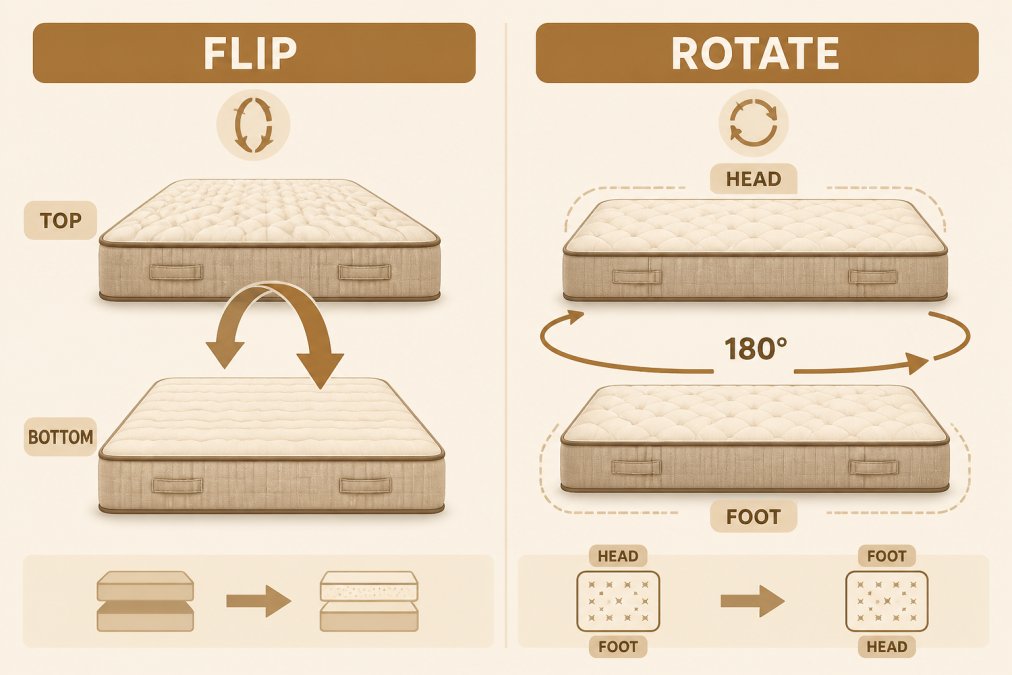
Flipping means turning the mattress over completely, so the bottom becomes the top. This works only on double-sided designs where both surfaces are equally supportive.
Rotating means turning the mattress 180 degrees along its length. The head end moves to the foot end. The top stays on top. Rotation works on all mattress types, including one-sided models.
How to Tell If Your Mattress Is Flippable
Before you flip anything, confirm your mattress is designed for it. Here is a quick identification method:
- Check the care label. Look for the sewn-in tag on the mattress edge or under the bottom. Flippable mattresses typically say "flip and rotate" or "double-sided." One-sided mattresses usually say "rotate only" or "do not flip."
- Look for a pillow-top or euro-top. If the top surface has a sewn-on extra comfort layer, it is almost certainly one-sided. Flipping would put that layer face-down against the foundation.
- Inspect the bottom surface. On a double-sided mattress, the bottom looks and feels like the top, same quilting, same fabric, same cushioning. On a one-sided mattress, the bottom is often a plain, darker fabric with no quilting.
- Check the warranty terms. Many manufacturers void coverage if a one-sided mattress is flipped. The warranty document will state whether flipping is permitted.
If you are unsure whether your mattress is flippable, rotate only. Rotating is safe for every mattress type and will not void your warranty. Flipping a one-sided mattress can expose the support core, reduce comfort, and damage the internal structure.
When to Flip vs. When to Rotate
If your mattress is double-sided and flippable, do both. Flip it every six months to use both surfaces. Rotate it every three months to prevent head-to-foot wear patterns.
If your mattress is one-sided (most modern mattresses are), rotate only. Flipping would expose the non-functional bottom layer and might void your warranty.
Always read your manufacturer's instructions before flipping. When in doubt, rotate only.
Why the Confusion Exists
The query "how often to flip mattress" is common because older mattresses, particularly innerspring models made before the 2000s, were almost all double-sided, so flipping was standard advice. Today most mattresses sold are one-sided, but the old advice persists, and many people flip mattresses that should only be rotated, causing premature wear.
How to Flip a Mattress Safely
Flipping a mattress is straightforward, but it requires the right technique to avoid injury or damage. Most full-size mattresses weigh 50-80 pounds; queen and king sizes can exceed 100 pounds.
Step-by-Step Flipping Instructions
Step 2: Get help. Never flip a mattress alone. One person on each side is the minimum.
Step 3: Position yourselves. Stand on opposite sides of the bed.
Step 5: Flip it over. Once the mattress is off the bed, flip it in one smooth motion.
Step 7: Replace bedding. Add clean sheets and make the bed as usual.
Tools and Help You'll Need
A mattress flipping tool, handles or straps that attach temporarily for better grip, isn't essential but costs $20-$50 and is worth it for heavier mattresses.
If you don't have a flipping tool, ask a friend or family member for help.
Some moving companies offer mattress flipping services, usually $30-$60 per flip, worth considering if you have mobility issues or a very large mattress.
Why Are Mattresses Not Flippable Anymore?
Modern mattress design has shifted away from double-sided, flippable models. Most new mattresses are one-sided. Understanding why helps you make better purchasing decisions.
Manufacturers discovered that customers prefer specialized comfort layers on top. Memory foam, latex, and pillow-top designs create a specific feel. Making both sides identical meant sacrificing that customization.
One-sided mattresses also cost less to produce, since manufacturers use cheaper materials on the bottom layer that won't contact your body.
One-Sided vs. Double-Sided Mattress Construction
One-sided mattresses have a comfort layer on top and a support layer on the bottom. The bottom is designed purely for structural support, so you never flip them.
Double-sided mattresses have comfort and support on both surfaces, so you can flip them without losing comfort or support.
The trade-off is clear: one-sided mattresses wear out faster, while double-sided flippable mattresses last longer because you're using both surfaces.
Flipping and Rotation Schedules by Mattress Type
Different mattress materials need different care. The schedule below is a starting point, but your manufacturer's care label and warranty always take priority.
Memory Foam Mattress Care
Memory foam mattresses are almost always one-sided. The foam top layer is what makes them comfortable, it's not designed to be flipped.
Rotate memory foam mattresses every three to four months, since the foam can develop permanent body impressions over time.
Memory foam is sensitive to heat, so keep your bedroom temperature moderate and avoid jumping on the mattress or putting excessive weight on one area.
Innerspring and Hybrid Mattress Care
Innerspring mattresses have metal coils for support and a comfort layer on top. Some older models are flippable, but most modern ones are one-sided.
Check your documentation. If your innerspring mattress is flippable, flip it every six months. If it's one-sided, rotate it every three to four months.
Hybrid mattresses combine foam and coils. Most hybrids are one-sided due to the foam layer on top. Rotate every three to four months.
Latex Mattress Care
Latex mattresses can be either one-sided or double-sided depending on the manufacturer. Many latex cores are flippable because latex is durable and symmetric. Check your care label.
If flippable, flip every six months and rotate every three months; if one-sided, rotate every three to four months. Latex resists dust mites and mold but can still develop impressions if not rotated.
Pillow-Top and Euro-Top Mattresses
Pillow-top and euro-top mattresses have a sewn-on comfort layer on one side only, so they are never flippable. Flipping would put the pillow-top face-down against the foundation, ruining the comfort layer and potentially damaging the seams.
Rotate every three to four months. Do not attempt to flip.
Adjustable Bed Mattresses
Adjustable bed mattresses are engineered for a specific orientation on a hinged or articulating frame. Never flip one, the internal structure, including any zoned support or reinforced edges, is designed for a fixed top and bottom.
Rotation depends on the frame. Some adjustable mattresses can be rotated head-to-foot; others have a tapered or split design that prevents rotation. Check your manual.
Zoned Mattresses
Zoned mattresses have different support levels along the length of the bed, typically firmer in the middle for hips and softer at the head and foot, calibrated for a specific orientation.
If your mattress is zoned, check the care label before rotating. Some allow rotation; many do not. Never flip a zoned mattress unless the label explicitly says it is double-sided.
Quick Reference Schedule
| Mattress Type | Flip? | Rotate? | Frequency |
|---|---|---|---|
| Double-sided innerspring | Yes | Yes | Flip every 6 months, rotate every 3 months |
| One-sided innerspring | No | Yes | Rotate every 3-4 months |
| Memory foam | No | Yes | Rotate every 3-4 months |
| Latex (flippable) | Yes | Yes | Flip every 6 months, rotate every 3 months |
| Latex (one-sided) | No | Yes | Rotate every 3-4 months |
| Hybrid | No | Yes | Rotate every 3-4 months |
| Pillow-top / euro-top | No | Yes | Rotate every 3-4 months |
| Adjustable bed | No | Check manual | Rotate every 4-6 months if allowed |
| Zoned | No | Check label | Follow label; often rotate only if permitted |
Set a recurring reminder on your phone or calendar for the first day of each quarter. Rotate then. If your mattress is flippable, add a flip reminder every six months, many people pair it with daylight saving time changes or their birthday.
How to Prioritize the Care Label Over Generic Advice
Every mattress ships with a care label, and many include a warranty document. These are the authoritative sources for your model.
If your care label says "rotate only," do not flip. If it says "do not rotate," follow that instruction.
Following the label protects your warranty. Many warranties require proof of proper maintenance, and flipping a one-sided mattress or rotating a zoned mattress against instructions can void coverage.
What to Do When Your Mattress Already Sags
If your mattress already has visible sagging or body impressions, flipping or rotating won't fix it, the damage is done.
A mattress topper can temporarily improve comfort.
Rotate the mattress to even out the wear.
Check your warranty. Many mattresses have a sagging guarantee: if yours sags more than 1.5 inches within the warranty period, the manufacturer may replace it.
If the mattress is beyond repair, it's time to replace it.
Frequently Asked Questions
How often should you flip a mattress?
For double-sided flippable mattresses, flip every 6 months to promote even wear and extend lifespan. For one-sided mattresses, rotate 180 degrees head-to-foot every 3 months instead. Memory foam and pillow-top mattresses should only be rotated, never flipped. Always check your mattress manufacturer's recommendations, as specific construction details affect the ideal schedule.
What is the difference between flipping and rotating a mattress?
Flipping turns your mattress over completely to use the opposite sleep surface, distributing wear across both sides. Rotating turns the mattress 180 degrees so the head end becomes the foot end, evening out pressure points without exposing the underside. Flipping works only for double-sided mattresses; rotating works for all types. Double-sided mattresses benefit from both practices.
Does flipping a mattress make it last longer?
Yes, flipping double-sided mattresses significantly extends their lifespan. Regular flipping distributes body weight and pressure more evenly across both surfaces, preventing sagging and body impressions in a single spot. This practice reduces wear and tear, helping your mattress maintain comfort and support for years.
Why are mattresses not flippable anymore?
Most modern mattresses are one-sided because manufacturers now use specialized materials like memory foam and pillow-top layers designed for the top surface only. These comfort layers perform best facing up and would feel uncomfortable or provide poor support if flipped. Double-sided flippable mattresses like hybrid designs distribute support layers more evenly, allowing safe flipping while maintaining comfort on both sides.
Premature sagging is frustrating after investing in a mattress. The good news: choosing a flippable design prevents this problem. At Durable Mattress, our 2-sided hybrid mattresses are engineered specifically for flipping, which distributes wear evenly across both surfaces and extends longevity. With multiple firmness levels, medium, firm, and soft, you get customized support that lasts. Shop our mattress collection and invest in a mattress built to last a decade or more.
Table of Contents
- Best Mattress for Side Sleepers: What Actually Matters
- The Mattress Firmness Scale for Side Sleepers
- Pressure Relief, Spinal Alignment, and Body Weight
- Benefits of 2-Sided Flippable Mattresses for Long-Term Durability
- How to Choose a Mattress for Side Sleeping
- Motion Isolation, Cooling, and Edge Support for Couples
- Common Mistakes Side Sleepers Make When Buying a Mattress
- Conclusion: Choosing the Best Mattress for Side Sleepers
- Frequently Asked Questions
Last Updated: October 7, 2026
Best Mattress for Side Sleepers: What Actually Matters
The best mattress for side sleepers keeps the spine straight while cushioning the shoulder and hip, and that single job drives every other decision. At Durable Mattress, we build 2-sided flippable hybrids around exactly this problem.
Your shoulder and hip carry concentrated load all night, so a mattress that feels great on day one can leave you aching by week three. Below, we'll show how firmness, body weight, and construction interact, and how to pick a surface you won't replace in two years.
Why Side Sleepers Have Different Needs
Back and stomach sleepers spread their weight across a wide area. Side sleepers don't. Your body contacts the mattress at the shoulder, ribcage, and hip, so three pressure points take the full load.
A surface that's too firm blocks the shoulder from sinking, pushing the spine out of line. A surface that's too soft lets the hips drop, bowing the lower back. The sleep health guidance from the National Sleep Foundation notes that mattress comfort directly affects how well you stay asleep, and for side sleepers that comfort is a narrow window.
The Mattress Firmness Scale for Side Sleepers
Most side sleepers do best on a medium or medium-firm mattress, roughly a 5 to 7 on the 1-to-10 firmness scale. That range lets the shoulder and hip sink just enough to level the spine without letting the midsection collapse.
Here's how the scale translates in practice:
- 1-3 (soft): Deep contouring. Best for lighter sleepers, but heavier sleepers sink too far.
- 4-6 (medium): Balanced give and support. The sweet spot for most side sleepers.
- 7-8 (medium-firm): Gentle cushioning with a firmer core. Good for heavier builds and combination sleepers.
- 9-10 (firm): Minimal sinkage. Usually too hard on shoulders and hips for side sleeping.
Soft, Medium, and Firm: What Each Does for Hips and Shoulders
Soft surfaces relieve shoulder pressure but let hips sag. Firm surfaces hold the hips up but jam the shoulder. Medium splits the difference, which is why it's the most recommended comfort level for side sleepers.
The practical test: lie on your side and check whether your spine forms a straight line from head to tailbone. If your waist dips, the mattress is too soft. If your shoulder aches, it's too firm.
Bring your own pillow to a showroom and place it between your knees. That small gap changes how your hips align, and it's the fastest way to feel whether a mattress is actually leveling your spine.
Pressure Relief, Spinal Alignment, and Body Weight
Pressure relief and spinal alignment are two sides of the same coin: the mattress must cushion the shoulder and hip while holding the midsection level.
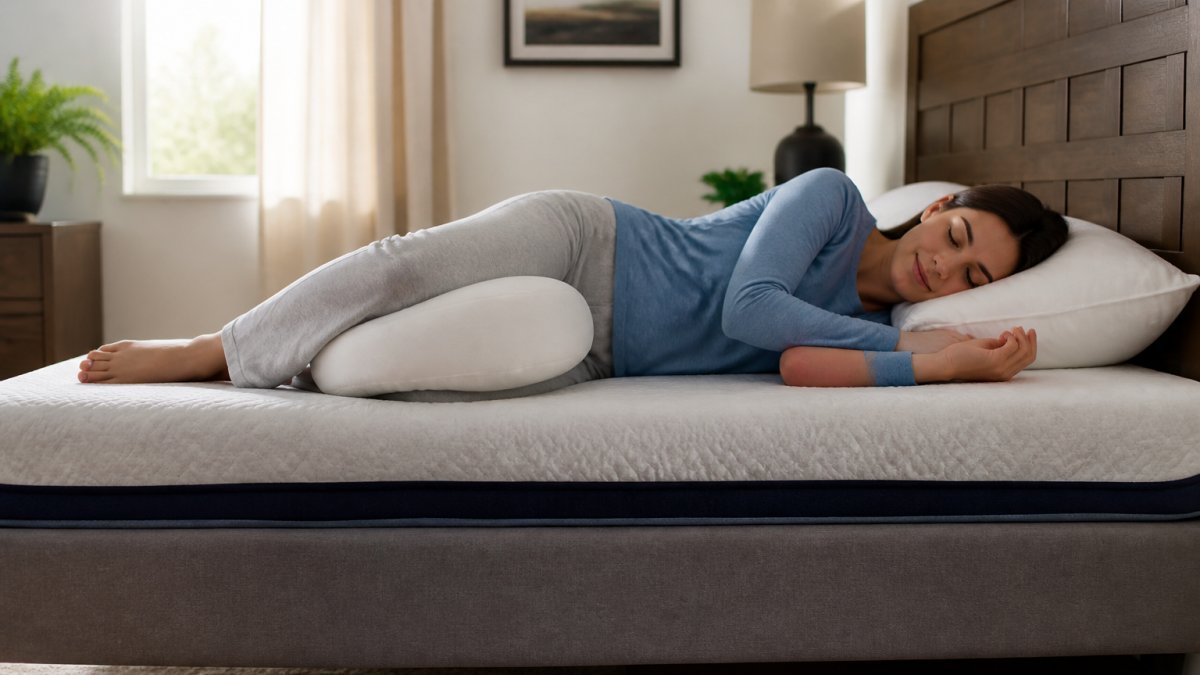
A comfort layer of memory foam or polyfoam compresses under load until it "bottoms out" against the firmer core below. A 120-pound side sleeper may compress that layer an inch, so a firm mattress feels like a board and the shoulder never sinks.
Matching Support to Build and Body Type
Side sleepers sort into three practical build tiers, and the firmness recommendation shifts with each one:
- Lighter builds (under roughly 130 pounds): Soft to medium, about a 4 to 6 on the 1-to-10 scale. A lighter sleeper doesn't generate enough load to compress a firm comfort layer, so the shoulder and hip stay perched on top. A plush or medium hybrid with a conforming top layer usually relieves pressure better than a firm one.
- Average builds (roughly 130 to 230 pounds): Medium to medium-firm, about a 5 to 7. This is the widest band and where most side sleepers land. The comfort layer compresses enough to cradle the shoulder while the core holds the hips level.
- Heavier builds (over roughly 230 pounds): Medium-firm to firm, about a 7 to 8, with a denser support core. A heavier sleeper needs a thicker, higher-density comfort layer and a stronger coil or foam core so the hips don't bottom out and the midsection doesn't collapse into a hammock.
Combination sleepers who roll onto their back or stomach should choose medium-firm, the most versatile comfort level across positions, though a true side sleeper with shoulder pain may still want the softer end of that range.
Pillow Height and the Full Side-Sleeping Setup
A mattress only solves half the alignment problem. On your side, your head needs a pillow tall enough to fill the gap between your ear and the mattress surface, or the neck bends and the upper spine follows.
The second piece is knee support. A pillow between the knees keeps the top hip from rolling forward and twisting the lower back. Test a mattress without a knee pillow and you're judging alignment with one variable missing.
Benefits of 2-Sided Flippable Mattresses for Long-Term Durability
A 2-sided flippable mattress is built with comfort layers on both faces, so you can rotate it over and use the other side. That spreads wear across two surfaces instead of one.
Most one-sided mattresses develop body impressions on the top layer because all the load lands in the same place, night after night.
Durable Mattress builds its hybrid collection this way on purpose: flip it on a schedule and the surface you sleep on stays closer to new for longer.
How to Choose a Mattress for Side Sleeping
Choosing a mattress for side sleeping comes down to four checks: firmness, pressure relief, support, and the terms behind the purchase. Get those right and you avoid the most expensive mistake in mattress buying: guessing.
Run through this before you commit:
- Confirm your firmness range. Start at medium and adjust up for weight or back pain.
- Check the support core. A hybrid with a responsive base holds alignment better than all-foam for most side sleepers.
- Test pressure points. Shoulder and hip should feel cushioned, not pinched.
- Read the fine print. Trial length, warranty, and return process decide your real risk.
- Plan for flipping. A 2-sided design only pays off if you actually rotate it.
Trial Periods, Warranties, and Return Policies
Trial periods, warranties, and return policies protect you when you buy without lying on the mattress first. A sleep trial lets you test it in your own bedroom, where your real sleep position shows up.
Look for a trial long enough to get past the adjustment period, a warranty that covers sagging rather than just manufacturing defects, and a return process that doesn't require you to arrange freight yourself. The FTC's guidance on buying big-ticket items online is a useful reminder to read return terms before you order, not after.
A warranty that only covers "manufacturing defects" often excludes the body impressions side sleepers care about most. Check whether the policy names a sagging depth threshold before you assume you're covered.
Motion Isolation, Cooling, and Edge Support for Couples
Couples need three things side sleepers often overlook: motion isolation, cooling, and edge support.
Motion isolation is about how quickly a disturbance dies out across the surface. Individually wrapped coils, also called pocketed coils, compress independently, so one partner's turn doesn't lift the other.
Cooling depends on airflow and on how much of your body contacts the surface. Memory foam is the usual heat culprit because it conforms and traps body heat.
Edge support matters more for couples than solo sleepers because two people share the perimeter.
When Partners Differ in Weight or Firmness Preference
If one partner is a 120-pound side sleeper who wants soft and the other is a 220-pound side sleeper who wants firm, no single firmness will fully satisfy both. Three workable approaches:
- Split the difference at medium-firm. It's the most versatile single surface, and a flippable design lets you choose which face is up.
- Choose a flippable 2-sided mattress. One face can be medium, the other firm, so the couple picks the side that suits the heavier or more pain-prone sleeper and adjusts from there.
- Use a split or dual-firmness setup if the gap is large. It costs more and limits your options, but it's the only way to give each sleeper a genuinely different feel.
A flippable medium-firm hybrid gives most couples the most room to compromise, pairing the motion isolation and airflow of a hybrid with two firmness options in one purchase.
| Feature | Why It Matters for Side Sleepers | What to Look For |
|---|---|---|
| Firmness | Levels the spine at shoulder and hip | Medium to medium-firm |
| Pressure relief | Cushions shoulder and hip | Contouring comfort layer |
| Support core | Prevents midsection sag | Responsive hybrid base |
| Motion isolation | Reduces partner disturbance | Individually wrapped coils or all-foam |
| Cooling | Prevents heat buildup | Breathable, open construction |
| Edge support | Firm perimeter for couples | Reinforced edges |
| Durability | Resists body impressions | 2-sided flippable design |
Motion isolation and cooling often pull in opposite directions. The all-foam mattress that isolates movement best is usually the one that traps the most heat, so a hot sleeper who also shares a bed may need to prioritize a hybrid with pocketed coils and accept slightly more motion transfer.
Common Mistakes Side Sleepers Make When Buying a Mattress
The biggest mistake is buying too firm. People assume firm equals supportive, then wake up with shoulder and hip pain because the surface never let the joint sink.
A second mistake is judging a mattress in the first ten minutes. Pressure problems show up after a few nights, not a few minutes, which is why a trial period matters more than a showroom test.
And the one nobody tells you about: people buy a one-sided mattress, never flip it, and then blame the brand when it sags.
Match firmness to your body weight first, then confirm the support core and sleep trial. Those three factors decide whether a mattress for side sleepers works for you long term.
Conclusion: Choosing the Best Mattress for Side Sleepers
Finding the best mattress for side sleepers means matching firmness to your build, confirming pressure relief at the shoulder and hip, and choosing a design that holds up over years, not months. Most people get the first two partly right and the last one completely wrong.
That's where Durable Mattress comes in. Our 2-sided flippable hybrid mattresses are built to be flipped for increased longevity, available in Medium, Firm, and Soft, and engineered to prevent premature wear so you get more out of the investment.
Frequently Asked Questions
What type of mattress is better for side sleepers?
Side sleepers generally do best on a medium to medium-firm mattress that lets the shoulders and hips sink in slightly while keeping the spine straight. Memory foam and hybrid mattresses are common picks because they contour to the body and reduce pressure points. A mattress that is too firm creates pressure at the shoulder and hip, while one that is too soft lets the midsection sag and throws the spine out of alignment.
Do side sleepers need firm or plush mattresses?
Most side sleepers land on medium or medium-firm rather than plush or extra-firm. Plush mattresses cushion the shoulder and hip but can let the lower back dip, while extra-firm surfaces push back against the shoulder and cause numbness. The right pick depends on body weight: lighter sleepers often do well on medium, and heavier sleepers usually need medium-firm for core support.
How does a flippable mattress design benefit side sleepers?
A 2-sided flippable mattress lets you rotate the sleep surface, so wear is spread across both sides instead of concentrating on one. For side sleepers, that means the comfort layer keeps its contouring and pressure relief for longer, which matters because compressed foam loses the give that protects shoulders and hips. Flipping also gives you two firmness options in one mattress if the two sides are built differently.
What is the best mattress firmness for side sleepers with hip pain?
Medium-firm is the usual starting point for side sleepers with hip pain, because it supports the pelvis without pressing hard into the hip. A surface that is too firm concentrates pressure on the hip joint, and one that is too soft lets the hips sink and rotate the spine. If hip pain persists after a few weeks on a new mattress, talk to a healthcare provider, since mattress firmness alone may not resolve it.
Buying a mattress you can't lie on first is a real risk, and side sleepers feel a wrong choice fastest. Durable Mattress removes most of that risk with a flippable hybrid design available in Medium, Firm, and Soft, so you can match the surface to your build and keep it supportive for years. Get started with Durable Mattress and choose a mattress built to last.
Double the life of your mattress today
Our mattresses will help you get the sleep you need. Not sure which one’s right for you? Check out our firmness guide below.