Last Updated: October 30, 2026
Quick Summary
Choose a medium mattress if you are a side sleeper who needs cushioning at the shoulders and hips, and a firm mattress if you sleep on your back or stomach and need steadier support. The medium vs firm mattress decision depends on sleep position, body weight and where your pain sits, not the firmness label alone.
- Medium mattresses give more contouring at the hips and shoulders for pressure relief.
- Firm mattresses resist sinking and often steady back sleepers and heavier bodies.
- Firmness describes surface feel; support depends on the deeper core layers.
- Heavier sleepers compress the comfort layer more and feel a softer effective firmness.
- Give a new mattress at least two weeks before judging whether it helps your back.
Table of Contents
- Medium vs Firm Mattress: How the Two Firmness Levels Differ
- How Mattress Firmness Is Measured on the Firmness Scale
- Best Mattress Firmness for Back Pain by Pain Type
- Mattress Firmness for Side Sleepers With Back Pain
- How Body Weight and Sleep Position Change the Right Firmness
- How to Test a Mattress and Adjust to a New Firmness
- Booking Your Durable Mattress Trial for Your Back
- Frequently Asked Questions
Medium vs Firm Mattress: How the Two Firmness Levels Differ
Choosing between a medium vs firm mattress for back pain comes down to how much the surface lets your spine sink in versus how much it holds your body up. The difference is worth understanding before you buy. The right answer depends less on the label and more on your sleep position and pain pattern.
A medium mattress cushions the shoulders and hips a little more, which can relieve pressure points for side sleepers. A firm mattress resists sinking. Neither is universally better. Sleep Foundation guide to mattress firmness describes these trade-offs in detail.
Here is the core difference in plain terms:
- Medium: More contouring, more give at the hips and shoulders, better pressure relief for many side sleepers.
- Firm: Less sink, stronger resistance, often steadier support for back sleepers and heavier bodies.
How Mattress Firmness Is Measured on the Firmness Scale
Firmness is not standardized by any single legal rule, and each manufacturer calibrates its own scale, so a "firm" from one brand may feel different from a "firm" from another.
That inconsistency is why the number alone is a weak buying signal. A rating describes the intended feel of the top comfort layer, not how the mattress will behave under your body. Two mattresses both labeled "firm" can feel completely different if one uses a dense support core and the other relies on a thin layer of high-density foam over springs.
Firmness Is Not the Same as Support
This is the most common misconception in mattress shopping, and it matters for back pain. Firmness is how the surface feels when you first lie down, plush, cushioning, or hard. Support is how well the deeper layers keep your spine in neutral alignment and prevent the heaviest parts of your body from sinking out of line.
A mattress can feel plush on top and still support your spine, and a mattress can feel hard on the surface while sagging in the middle. For back pain, support is the property that matters most; firmness is the feel you use to match your sleep position and comfort preference. When you shop, ask how the support core is built, coil gauge, foam density, and layer thickness, rather than relying on the firmness number alone.
What Actually Changes How Firm a Mattress Feels
Several construction and body factors shift perceived firmness even when the label stays the same:
- Comfort-layer thickness: A thick plush top layer can make a firm support core feel medium. A thin top layer exposes the firmer core sooner.
- Foam density: Higher-density foams resist compression longer and feel firmer under load; lower-density foams soften faster.
- Coil gauge and count: Thicker-gauge coils feel firmer; more coils distribute weight more evenly and can soften the overall feel.
- Body weight and shape: A heavier sleeper compresses the comfort layer more and feels a softer effective firmness; a lighter sleeper stays closer to the surface and feels the core sooner.
- Temperature: Memory foam softens in warmth, so a mattress can feel firmer in a cool room and softer after you have been lying on it.
Treat the firmness rating as a starting point, not a guarantee. Read the construction details, layer thickness, foam density, and coil specs, and judge how the mattress actually feels under your body.
Keep the firmness-versus-support distinction in mind as you read the recommendations below.
The table below sums up what changes how firm a mattress actually feels, using the factors the article describes.
| Factor | Effect on feel | Note |
|---|---|---|
| Comfort-layer thickness | Thick top layer feels softer | Can make a firm core feel medium |
| Foam density | Higher density feels firmer | Resists compression longer |
| Coil gauge and count | Thicker gauge feels firmer | More coils spread weight evenly |
| Body weight | Heavier sleepers feel softer | Compresses the comfort layer more |
| Temperature | Warm memory foam softens | Can feel firmer in a cool room |
Best Mattress Firmness for Back Pain by Pain Type
The best firmness depends on where your pain sits and what triggers it. Back pain is not one problem, so a single recommendation rarely fits everyone.
Lower Back Pain and Spinal Alignment
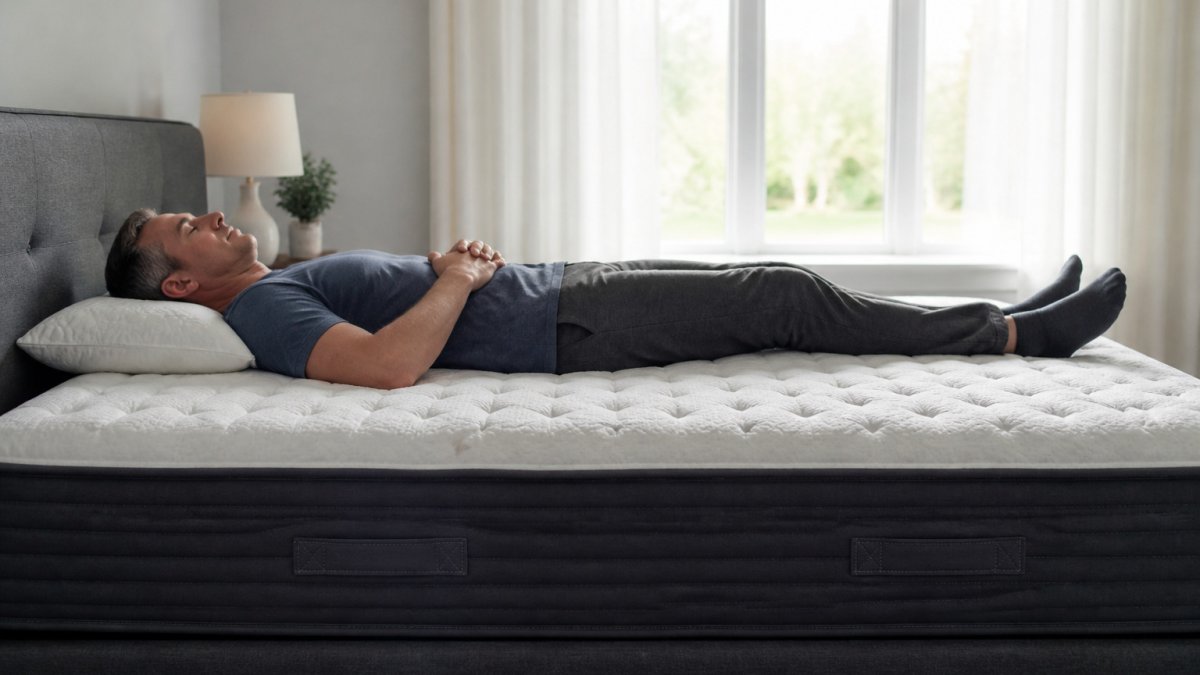
If your pain is in the lower back, the goal is keeping the spine straight from neck to hips. A surface that sags lets the pelvis tilt and strains the lumbar area. A medium-firm to firm surface can hold the spine level while still easing pressure at the hips.
Test this yourself. Lie on your back and check whether a hand fits under your lower back with light resistance. Too much room suggests the mattress is too soft.
When Back Pain Warrants Professional Medical Advice
A new mattress is not a treatment for injury or ongoing medical conditions. See a doctor or physical therapist if pain is severe, spreads down a leg, comes with numbness or weakness, follows an accident, or lasts more than a few weeks despite rest and changes at home. A clinician can tell you whether firmness is part of the solution at all.
Mattress Firmness for Side Sleepers With Back Pain
Side sleepers often prefer medium surfaces because the shoulders and hips need room to sink slightly. Without that give, pressure builds at the joints and the spine can bend sideways. Some side sleepers with back pain may find a medium-firm mattress that keeps the midsection supported suits them. You can compare options in our best mattresses for side sleepers guide.
If you sleep on your side and wake with lower back discomfort, a surface that is too firm may be the cause. Pay attention to whether your waist sits in a neutral line when you lie on your side.
How Body Weight and Sleep Position Change the Right Firmness
Body weight changes how a mattress feels, and it can change how the same mattress feels from one sleeper to another. Heavier sleepers compress the comfort layer more, so a surface that feels medium on a lighter person may feel softer than expected on a heavier one. Lighter sleepers may find firm mattresses feel harder than the rating suggests.
Sleep position matters just as much. Back sleepers usually benefit from firmer support so the lumbar region does not dip; side sleepers need enough give at the shoulder and hip to keep the spine straight; stomach sleepers need a firmer surface that stops the hips from sinking and arching the lower back. Combine the two factors when you choose.
A Practical Weight-and-Position Framework
Rather than memorizing rules, use this decision framework to narrow your choice between medium and firm:
- Back sleeper, average weight: Medium-firm is usually the safer starting point. It holds the lumbar spine level while still cushioning the hips. Choose firm if you wake with lower-back stiffness and prefer a harder surface.
- Back sleeper, heavier body: Firm often works better because a medium surface may compress enough to let the pelvis tilt. Confirm the support core is rated for your weight.
- Back sleeper, lighter body: Medium may feel firmer than the label suggests; a firm mattress can feel like a board. Start with medium and use the trial period to test.
- Side sleeper with back pain: Medium is usually the better match for shoulder and hip pressure relief, but medium-firm can work if the waist stays in a neutral line.
- Stomach sleeper: Firm is generally the better choice to keep the hips from dipping and the lower back from arching.
- Couples with different weights or positions: A medium-firm surface is a common compromise. Check the construction details of any mattress you consider.
Why the Same Mattress Feels Different to Different People
Perceived firmness is a product of your body and the mattress construction together, not the label alone. A 150-pound back sleeper and a 250-pound back sleeper can lie on the same medium mattress and have opposite experiences: the lighter sleeper stays on top of the comfort layer and feels the support core, while the heavier sleeper sinks through it and feels the firmer base. That is why a mattress that feels supportive to one partner can feel like a hammock to the other.
Match firmness to your sleep position first, then adjust for body weight. If you and your partner differ on both, prioritize a medium-firm surface or a flippable mattress that lets each side pick a feel.
If you are unsure, start with the firmness that matches your dominant sleep position and use the trial period to confirm it under your own body weight.
How to Test a Mattress and Adjust to a New Firmness
Most people need one to three weeks to adapt to a new firmness, and the first few nights can feel unfamiliar even if the mattress is a good fit. Give your body time before deciding it is wrong.
Here is a practical way to evaluate a mattress at home:
- Sleep on it for at least two weeks, tracking morning back stiffness.
- Note whether pain eases, stays the same, or worsens.
- Check spinal alignment in your usual sleep position.
- Flip the mattress on schedule, since the 2-sided construction is designed to help prevent premature wear.
Watch out: a mattress that causes sharp pain or numbness after several weeks should be reassessed with a clinician.
Booking Your Durable Mattress Trial for Your Back
If you want a firm feel for back support, the firm option in the Durable Mattress hybrid collection is worth considering.
Durable Mattress offers 2-sided, flippable hybrid mattresses designed to help prevent premature wear. Choose the firmness that matches your sleep position and pain pattern, then give it a fair trial. Shop Mattresses to find the level that fits your back.
Frequently Asked Questions
Is a medium or firm mattress better for back pain?
Neither firmness is better for every back. Firm mattresses can suit stomach and back sleepers, while medium or medium-firm options can suit side sleepers who need pressure relief at the shoulders and hips. If your pain is severe, persistent or radiates down a leg, talk to a doctor before changing your bed. Durable Mattress offers medium, firm and soft options in its hybrid collection, and current pricing is available on the Durable Mattress website.
Can a mattress that is too firm cause back pain?
Yes. A mattress that is too firm can leave pressure points at the hips and shoulders, which pushes the spine out of its natural curve and can cause morning stiffness. Signs that a mattress is too firm include waking with aching shoulders or hips, lying awkwardly to avoid pressure, or feeling that your body sits on top of the bed rather than sinking in slightly. Side sleepers are the most likely to notice this. A medium or medium-soft feel often reduces these pressure points while still supporting alignment.
What mattress firmness is best for side sleepers with back pain?
Side sleepers with back pain usually do best on a medium or medium-firm mattress. The surface needs enough give to cushion the shoulder and hip, which carry most of your weight in this position, while still keeping the spine level. A mattress that is too soft lets the hips sink and twist the spine, and one that is too firm creates pressure at the joints. Using a pillow between the knees can further support alignment on any firmness.
How do I know if my mattress is too soft or too firm?
Lie in your usual sleep position for 10 to 15 minutes and check your spine. A mattress that is too soft lets your hips or shoulders sink so your spine bends out of line, while one that is too firm keeps your body resting on top with pressure at the hips and shoulders. Waking with new aches usually points to a firmness problem.

Last Updated: October 23, 2026
Quick Summary
The best dual sided mattress has mirrored comfort layers on both faces, a symmetric coil core, and a warranty that explicitly permits flipping. Verify these four checks in writing before buying, since most flippable claims collapse under inspection. Durable Mattress is our verified pick, a two-sided hybrid in Medium, Firm, and Soft.
- Flip a two-sided mattress every three to six months and rotate it head-to-foot in between.
- Confirm both faces have a real comfort layer, the warranty covers flipping, and the trial applies to both surfaces.
- Side sleepers should choose the Soft or Medium face for pressure relief at the shoulder and hip.
- Divide purchase price by expected comfortable years to compare cost per year of usable life.
- Give a new firm face a full two weeks before judging it, since most returns happen in the first week.
Table of Contents
- Why Dual Sided Mattress Reviews Matter in 2026
- Our Verified Shortlist: Best Dual Sided Mattress Picks
- What Makes the Best Flippable Mattress Worth Buying
- Benefits of a Flippable Mattress for Sleep and Longevity
- Mattress Durability: What the Construction Actually Tells You
- How Often to Flip a Mattress (and How to Do It Right)
- Matching a Dual Sided Mattress to Your Sleeper Profile
- Conclusion
- Frequently Asked Questions
Why Dual Sided Mattress Reviews Matter in 2026
Most mattress reviews tell you how a bed feels on day one. That is the wrong test.
Here is the tension nobody addresses: the top layer of any mattress takes the compression. Body weight, heat, and moisture break down foam and fiber where you lie, not where you don't.
That is the whole argument. Everything below explains how to verify it before you buy.
Our Verified Shortlist: Best Dual Sided Mattress Picks
Our shortlist has one entry, and that is deliberate. Genuinely two-sided mattresses are rare, and most "flippable" claims collapse under inspection once you check whether the comfort layers are actually mirrored on both faces. Rather than pad this list with beds that only rotate, we verified each candidate against four tests before it earned a spot.
How We Verified Each Pick
Every mattress considered for this shortlist had to pass all four checks. If a model failed any one of them, it was cut, regardless of review score or brand recognition.
- Both faces have a real comfort layer. We confirmed a quilted or foam comfort layer on each side, not a finished sleeping surface on one face and a nonskid base fabric on the other.
- The coil or core system is symmetric. A two-sided hybrid only works if the support core performs the same in either orientation. Asymmetric cores create a "good side" and a "bad side," which defeats the purpose.
- The warranty explicitly permits flipping. If turning the mattress voids coverage, the design was never meant to be flipped. We read the fine print, not the marketing page.
- The trial and return terms survive a flip. A sleep trial that requires the mattress to remain in its original orientation is a red flag. We confirmed the trial applies to both surfaces.
Many mattresses marketed as flippable have a finished sleeping surface on one side and a nonskid base fabric on the other. Flipping that bed means sleeping on the bottom. Before you buy any reversible mattress, confirm that both faces have a real comfort layer, and ask the seller to confirm it in writing.
Durable Mattress: The Two-Sided Hybrid Built to Be Flipped
Durable Mattress is a hybrid mattress with a 2-sided flippable design, available in Medium, Firm, and Soft.
Construction, surface by surface. The build pairs a symmetric coil core with mirrored comfort layers on both faces.
Firmness and intended sleeper. The Soft face suits side sleepers and lighter body weights who need pressure relief at the shoulder and hip.
What it does well. A flippable hybrid spreads compression across two surfaces instead of one, which is the mechanism behind the brand's core claim: it prevents premature wear and extends the life of the mattress. The multiple firmness levels also mean couples with different preferences can sometimes split the difference by choosing a build with contrasting faces.
Where it falls short. We do not publish a price on this page, and pricing depends on size and firmness selection, so check the current price on the Durable Mattress site before you commit.
What to Confirm Before You Buy Any Pick
Because genuinely two-sided mattresses are rare, the purchase conversation matters as much as the review. Before you commit to any model on this list, confirm four things in writing: that both faces carry a comfort layer, that the warranty covers flipping, that the sleep trial applies to both surfaces, and that the foundation or adjustable base is rated for a two-sided mattress.
What Makes the Best Flippable Mattress Worth Buying
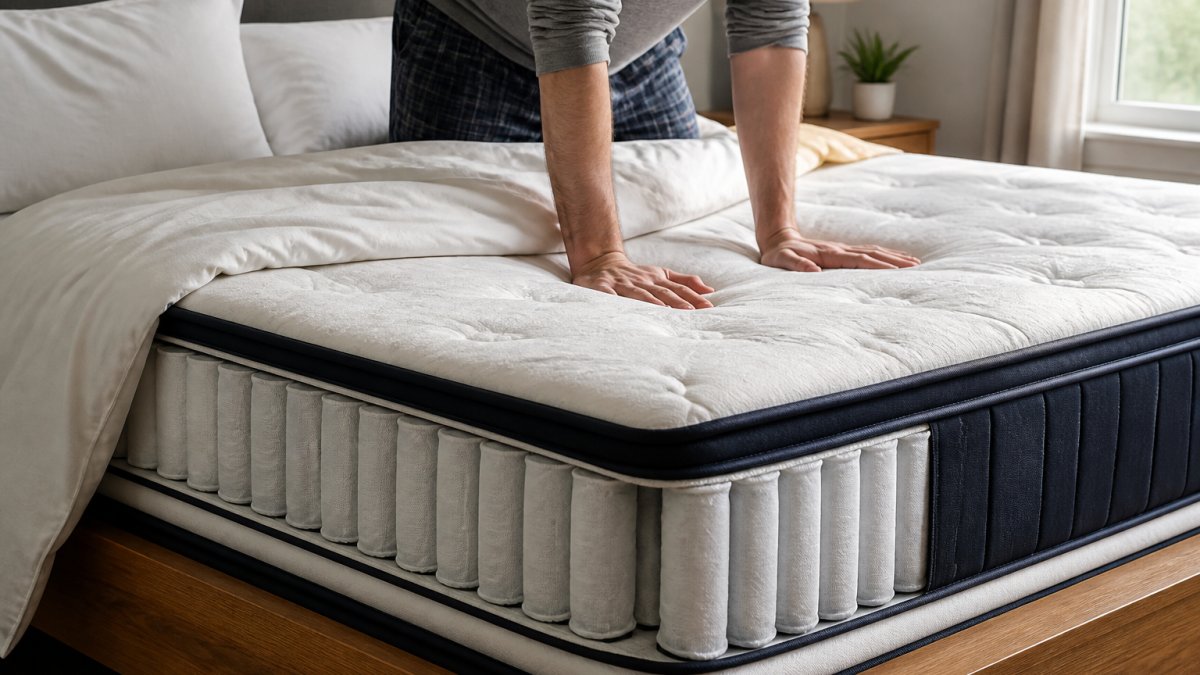
The best flippable mattress earns its price through construction you can inspect, not marketing language. Four things separate a real reversible mattress from a gimmick.
- Mirrored comfort layers. Both faces need a genuine comfort layer, not one sleeping surface and one base.
- A coil system that works in both orientations. Offset coils and a stable coil gauge keep support consistent whichever way the bed sits.
- Edge support that survives the flip. Weak edges are the first thing to fail on a reversible build.
That last point is where most shoppers get caught. Read the fine print before the trial clock starts.
Benefits of a Flippable Mattress for Sleep and Longevity
The benefits of a flippable mattress come down to one number: how many years you get before the comfort layer compresses past the point of comfort.
For back sleepers and stomach sleepers who need firmer support, a two-sided build also lets you choose which face matches your spinal alignment on a given night.
Cooling is the quiet benefit. A hybrid with a coil core moves air better than an all-foam block, and flipping exposes a fresher surface when the top one starts holding heat.
Mattress Durability: What the Construction Actually Tells You
Mattress durability is a construction question, not a brand promise.
Coil gauge and count. A lower gauge means thicker wire. Thicker wire resists sagging longer under heavier body weight, though it feels firmer.
Comfort layer density. Higher-density memory foam holds its shape. Low-density foam feels plush in the showroom and flattens within a couple of years.
Whether the bed can be flipped. This is the one most buyers ignore.
The Cost-Per-Year Framing Competitors Skip
Most reviews compare sticker prices. A more honest comparison is cost per year of usable life, and it is simple arithmetic: divide the purchase price by the number of years you expect the comfort layer to remain comfortable. A bed that costs more up front but holds its feel for several additional years can cost less per year than a cheaper one that flattens early.
What the Warranty Actually Covers
Warranty length is not the same as warranty usefulness. Read three things: whether the warranty covers sagging and at what threshold (a common industry threshold is a measured indentation, not a subjective "feels soft"), whether flipping the mattress voids coverage, and whether the warranty is prorated after an initial period. A long warranty that excludes the wear pattern you are trying to prevent is marketing, not protection.
What We Can and Cannot Prove
We cannot hand you a lab report proving a specific year count, and we will not invent one. Our durability claims rest on a structural mechanism, more usable surface, slower compression, plus the construction signals above, which you can verify yourself before purchase. That is a different kind of evidence than a test lab, and we would rather be honest about the difference than dress up a guess as a measurement.
Durability is the one spec you cannot feel in a showroom. Verify it with three numbers, coil gauge and count, comfort-layer density, and the warranty's sag threshold, plus one design fact: whether the bed can actually be flipped.
How Often to Flip a Mattress (and How to Do It Right)
Flip a two-sided mattress every three to six months, and rotate it head-to-foot on the months in between. How often to flip a mattress depends on body weight and how many people sleep on it; heavier sleepers and couples should lean toward the three-month end.
Here is the routine we recommend:
- Strip the bedding and vacuum the surface.
- Rotate head-to-foot on month one.
- Flip it over on month three, so the other face takes the compression.
- Check the foundation or adjustable base for even support.
- Note the date so you stop guessing.
If your bed sits on an adjustable base, flip it in the flat position and confirm the base is rated for a two-sided mattress. Flipping a bed on a raised base is how people tear handles and pinch fingers.
Matching a Dual Sided Mattress to Your Sleeper Profile
Match the face to the sleeper, not the other way around. A dual sided mattress only pays off if you pick firmness deliberately.
| Sleeper Profile | Recommended Face | Why |
|---|---|---|
| Side sleeper | Soft or Medium | Pressure relief at shoulder and hip |
| Back sleeper | Medium | Spinal alignment without sinking |
| Stomach sleeper | Firm or Extra Firm | Keeps hips from dropping |
| Couples, mixed preferences | Medium and Firm pairing | Each side gets a workable surface |
| Heavier body weight | Firm | Thicker support resists compression |
If you are coming from a one-sided pillow top, expect the firm face to feel harder than you are used to. Give it a full two weeks before you judge it. Most returns happen in the first week, before the comfort layer has settled.
Conclusion
The real challenge with any mattress purchase is that you cannot feel the years ahead of you, only the first night. Construction is the closest thing to a preview, and a two-sided design is the most honest durability feature a bed can carry.
Durable Mattress builds around exactly that: a 2-sided flippable design, hybrid construction, and Medium, Firm, and Soft options so the support matches the sleeper. If you want a bed engineered to be turned rather than replaced, start there.
Sleep Foundation guidance on mattress care and rotation
Frequently Asked Questions
Are dual sided mattresses good for back pain?
They can be, because the two surfaces let you choose the firmness your back responds to. A firm side suits back and stomach sleepers who need spinal alignment, while a medium or soft side cushions side sleepers at the hips and shoulders. Durable Mattress builds its hybrid collection in Medium, Firm, and Soft, so you can start on the surface that matches your sleep position and flip if your needs change. Pair the choice with a supportive base and rotate the mattress on schedule for consistent pressure relief.
How long do dual-sided mattresses last?
A genuinely two-sided mattress spreads wear across both surfaces instead of concentrating it on one. Flipping and rotating on a regular schedule keeps the comfort layers and coil system from compressing in the same spot. Lifespan still depends on body weight, foundation type, and how faithfully you flip. Ask the brand for its warranty terms and expected service life before buying, and treat any specific year count as a claim to verify rather than a guarantee.
Do both sides of a double-sided mattress have the same firmness?
Not always. Some reversible mattresses use identical construction on both faces, while others pair a firm side with a medium or soft side so couples and changing sleep needs are covered. Check the spec sheet for each surface before ordering, because the firmness difference decides whether the flip actually solves a comfort problem or just moves it. Durable Mattress publishes Medium, Firm, and Soft options, which makes it easier to match a surface to your sleep position rather than guessing.
Can you flip a hybrid mattress?
Only if it is built as a two-sided hybrid. Many hybrid mattresses have a comfort layer on top and a non-sleepable base underneath, so flipping them ruins the feel and voids the warranty. A flippable hybrid puts a full comfort and support build on both faces, which is what makes the turn safe. Confirm the design in writing before you flip anything, and check whether the mattress is rated for an adjustable base, since some two-sided models are not.
The mattress you buy today is the one you sleep on for the next decade, so choose a build that gives you two surfaces instead of one. Durable Mattress offers a 2-sided flippable hybrid in Medium, Firm, and Soft, engineered to prevent premature wear and extend the life of your investment. Shop Mattresses at Durable Mattress and give yourself a bed built to be flipped, not replaced.
Table of Contents
- Best Mattress for Seniors 2026: Top Picks & Buying Guide
- Best Mattress for Seniors with Back Pain
- Best Mattress for Elderly with Mobility Issues
- Hybrid vs. Memory Foam Mattress for Seniors
- How Often Should You Replace Your Mattress?
- Key Features to Look for in a Mattress for Seniors
- Conclusion: Choosing the Best Mattress for Seniors in 2026
- Frequently Asked Questions
Last Updated: October 14, 2026
Best Mattress for Seniors 2026: Top Picks & Buying Guide
Finding the best mattress for seniors in 2026 comes down to three things: support, safety, and longevity. At Durable Mattress, we build two-sided flippable hybrids for sleepers who want a bed that still feels supportive years from now.
This guide covers what matters for older sleepers, from spinal alignment and pressure relief to edge support and ease of movement, so you can match a mattress to your sleep position, body weight, and pain points.
For most seniors, a medium-firm hybrid with reinforced edges and a flippable design offers the best balance of support, pressure relief, and durability.
Quick Comparison: Top Mattress Picks for Seniors
| Priority | Best Mattress Type | Why It Works |
|---|---|---|
| Back pain | Medium-firm hybrid | Supports spinal alignment, cushions joints |
| Mobility issues | Firm hybrid with edge support | Easier to get in and out of bed |
| Hot sleepers | Latex or coil hybrid | Breathability and temperature regulation |
| Long-term value | Two-sided flippable | Prevents premature wear, extends lifespan |
| Side sleepers | Medium hybrid with foam comfort layer | Pressure relief for hips and shoulders |
Best Mattress for Seniors with Back Pain
The best mattress for seniors with back pain is a medium-firm hybrid that keeps the spine neutral while cushioning pressure points. Too soft, and the hips sink out of alignment.
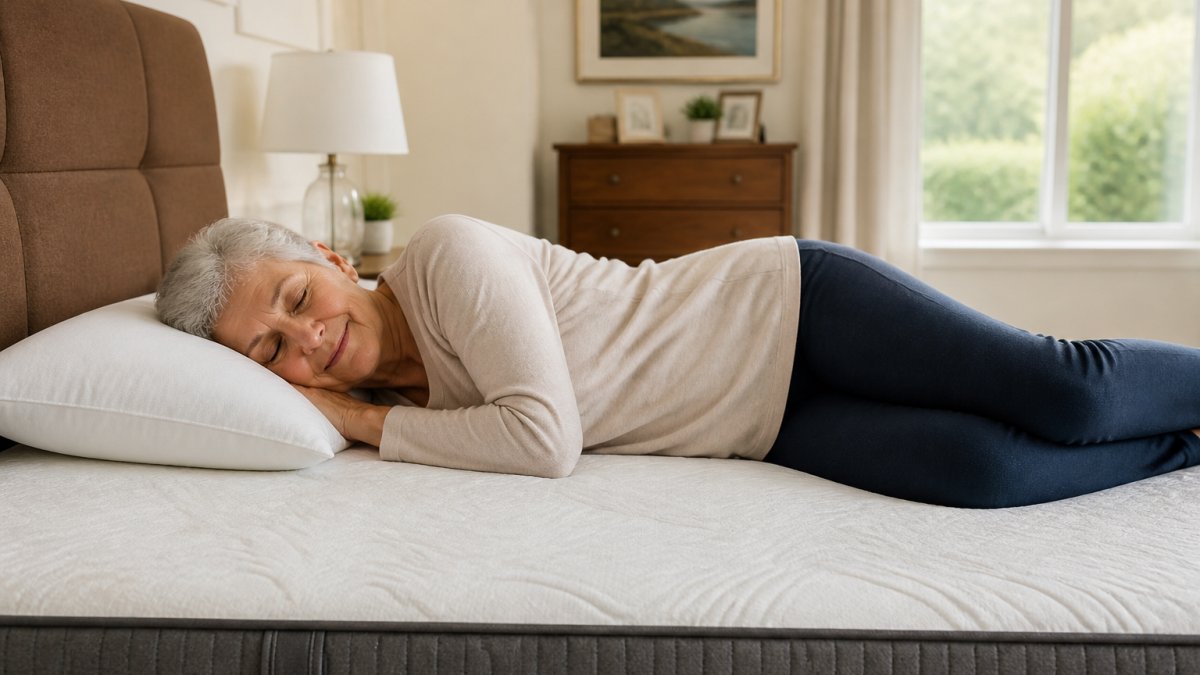
Back pain often comes from a mattress that has already broken down, not the wrong firmness level. A two-sided flippable design lets you rotate the sleep surface before sagging sets in.
If you wake up stiff but feel better an hour later, your mattress is likely too firm. If you wake up sore and stay sore, it's probably too soft.
Best Mattress for Elderly with Mobility Issues
For sleepers with mobility limitations, the best mattress is a firm hybrid with reinforced edge support and a height that matches how you sit down and stand up. Safe transfers depend on the geometry of your body against the bed.
The measurements that matter
- Bed height (top of mattress plus foundation): A common target is roughly the height of the back of your knee when seated, so your feet rest flat on the floor and your hips are level with or slightly above your knees, usually 18 to 23 inches from floor to sleep surface. Too tall and you climb or hop; too low and you push up out of a squat.
- Edge support depth: Look for reinforced perimeter foam or a coil row that stays firm within about 3 to 4 inches of the edge, the zone you sit on when you swing your legs over. A collapsing edge turns a controlled transfer into a slide.
- Responsiveness: A surface that returns to shape quickly lets you push off with a hand or elbow. Deep sink-in foam makes every reposition harder because you climb out of the crater first.
Transfer ease, step by step
A safe transfer follows the same pattern: sit on the edge with both feet down, lean forward over your knees, push through your arms and legs, and stand. Each step demands something of the mattress:
- Sitting down requires an edge that does not compress more than an inch or two under your weight.
- Leaning forward requires a surface that does not tilt you backward into the mattress.
- Pushing up requires enough firmness under your hands and hips that your arms do the work instead of fighting the foam.
If any step feels like a struggle, the mattress is working against you regardless of how comfortable it feels lying down.
Adjustable-base compatibility
An adjustable base lets you raise the head for reading, breathing comfort, or reflux, and the feet for circulation and swelling. Two checks before you buy:
- Is the mattress rated for adjustable bases? Most hybrids and latex mattresses are; many traditional innerspring sets and some dense all-foam beds are not, and using one anyway can void the warranty.
- Does the mattress bend without damage? A two-sided flippable hybrid needs a coil unit and comfort layers that flex repeatedly without cracking. Ask the manufacturer directly rather than assuming.
When to consider a mobility limitation
If you use a walker or cane, have had a hip or knee replacement, or need to sit on the edge before standing, treat transfer ease as the top priority, ahead of plushness. A medium-firm surface with strong edges and a height near knee level beats a soft pillow-top that traps you in the middle.
Measure the height of the chair you stand up from most easily. That seat height is a good starting point for your ideal bed height, then adjust for the thickness of your foundation and any mattress topper.
Caregiver considerations
If someone else helps with transfers or repositioning, a mattress that is too thick or too soft makes their job harder and riskier. A lower-profile hybrid with firm edges gives a caregiver a stable surface to brace against and keeps the person closer to the floor. Confirm the mattress weight before delivery, a king hybrid can exceed 120 pounds.
Hybrid vs. Memory Foam Mattress for Seniors
Hybrid mattresses combine pocketed coils with foam or latex layers, while memory foam mattresses use dense foam as the entire support core. For most seniors, a hybrid wins on support, cooling, and ease of movement, but the right answer depends on how your body has changed.
How age-related sleep changes shift the trade-offs
Sleep architecture changes with age: lighter sleep, more frequent awakenings, and sharper temperature swings. Those changes tilt the decision in specific ways.
- Temperature: Memory foam is dense and traps body heat, worsening night sweats and hot flashes. Coil hybrids move air through the support core and sleep cooler. If you already wake up overheated, this alone can decide the category.
- Joint sensitivity: Memory foam contours closely and relieves pressure on hips and shoulders, but the same contouring makes turning over harder. A hybrid with latex or responsive foam gives pressure relief without the stuck-in-the-mud feeling.
- Frequent repositioning: Lighter sleepers who wake and shift position several times a night usually do better on a responsive surface. Deep memory foam rewards stillness; hybrids reward movement.
This is general comfort guidance, not medical advice. If you have a diagnosed condition such as arthritis, spinal stenosis, or sleep apnea, talk to your clinician about positioning and support needs before choosing a mattress.
A decision matrix by sleep position, body weight, and pain location
Rather than picking by age alone, match firmness and construction to how you sleep and where you hurt.
| Your situation | Recommended construction | Firmness target |
|---|---|---|
| Side sleeper, shoulder or hip pain | Hybrid with 2-3 in. of responsive foam or latex | Medium (5-6 of 10) |
| Back sleeper, lower-back pain | Hybrid with zoned or reinforced lumbar support | Medium-firm (6-7 of 10) |
| Stomach sleeper | Firm hybrid, thin comfort layer | Firm (7-8 of 10) |
| Under 150 lbs | Softer comfort layer, medium support core | Medium |
| Over 200 lbs | Denser coils, thicker support core, firmer feel | Medium-firm to firm |
| Combination sleeper | Responsive hybrid, balanced comfort layer | Medium |
Use the matrix as a starting point, then adjust for your current surface. If your mattress is too soft and you wake with a sore back, move one step firmer. If it is too firm and you wake with numb arms or aching shoulders, move one step softer.
Shared-bed and partner considerations
If you share a bed, you may need different things. Motion isolation matters when one partner moves frequently or gets up at night, memory foam isolates motion best, hybrids are moderate, innersprings transfer the most. If firmness preferences differ, consider a split-firmness mattress, two twin XLs on a split king base, or a firmness-adjustable air bed. A split king also lets each side raise independently on an adjustable base.
Ownership, setup, and return logistics
Category choice affects what happens after delivery.
- Weight and setup: A queen hybrid typically weighs 100 to 130 pounds; a queen memory foam often runs 70 to 100 pounds. If you cannot lift either, budget for white-glove delivery or setup service.
- Removal of the old mattress: Many retailers offer haul-away for a fee, and some municipalities require scheduled bulk pickup. Confirm before delivery day so the old bed is not blocking the new one.
- Trial periods and returns: Most online brands offer a 90- to 120-night trial, but returns usually require donation or pickup, and some charge a fee. Read the fine print on who arranges pickup and whether the mattress must be in original condition.
Before you buy, confirm three things in writing: the trial length and return fee, the warranty sag threshold, and whether the mattress is rated for your foundation or adjustable base. These three details cause most post-purchase disputes.
If you sleep hot, move often, or need help getting in and out of bed, a hybrid is usually the better fit. If you sleep still, share a bed with a restless partner, and want maximum pressure relief, memory foam earns its place, just plan for the heat and setup logistics.
How Often Should You Replace Your Mattress?
Most mattresses should be replaced every 7 to 10 years, but the real signal is how your body feels, not the calendar (How Long Should A Mattress Last?). Sagging, visible indentations, and morning stiffness are the clearest signs it's time.
A few practical checks:
- Does the mattress sag where you sleep?
- Do you wake up with new aches that fade during the day?
- Are the edges collapsing when you sit down?
A flippable, two-sided mattress can extend that timeline. By rotating the sleep surface, you spread wear across both sides instead of one, which slows the breakdown that leads to replacement.
Key Features to Look for in a Mattress for Seniors
The features that matter most for older sleepers are support, pressure relief, edge support, cooling, and durability. Firmness should match your sleep position and body weight, not a generic label.
- Support core: Pocketed coils or a dense foam base that holds the spine neutral.
- Comfort layer: Foam or latex thick enough to cushion joints without sinking.
- Edge support: Reinforced sides for safe sitting and getting in and out of bed.
Test firmness against your dominant sleep position first, then check edge support and cooling. Price matters, but longevity usually costs less than replacing a cheap mattress every few years.
Conclusion: Choosing the Best Mattress for Seniors in 2026
The right mattress for an older sleeper supports your spine, cushions your joints, and still feels the same in five years. That combination of comfort and durability is what we build at Durable Mattress. Our two-sided flippable hybrids are designed to be flipped, so you get more life out of every mattress, with medium, firm, and soft options to match your sleep position and support needs.
Frequently Asked Questions
What is the best mattress for seniors in 2026?
The best mattress for seniors in 2026 depends on individual needs. Look for a hybrid mattress with medium-firm support, responsive coils for ease of movement, and strong edge support. A flippable design, like those from Durable Mattress, can extend longevity by preventing sagging. Prioritize pressure relief for joints, cooling features, and a sleep trial to test comfort at home. Always match firmness to your sleep position and body weight.
How often should you replace your mattress?
Most mattresses last 7 to 10 years, but seniors may need to replace sooner if sagging, pain, or allergies occur. High-quality flippable mattresses can last longer with regular rotation. Check for visible indentations, worsening back pain, or difficulty getting out of bed. If you wake up stiff or the mattress feels uneven, it's time to shop.
Is a hybrid or memory foam mattress better for seniors?
Hybrid mattresses are often better for seniors because they combine supportive coils with comfort layers, making it easier to move and get in and out of bed. Memory foam can feel too sinky and trap heat, which may worsen mobility issues. Hybrids offer better edge support and responsiveness. However, if you prefer a plush feel and have no mobility concerns, memory foam can work. Consider a hybrid with a flippable design for added durability.
What mattress firmness is best for older adults?
Medium-firm to firm mattresses are generally best for older adults. Medium-firm provides a balance of support and pressure relief, while firm offers more stability for getting in and out of bed. Side sleepers may need medium-firm to cushion shoulders and hips. Back and stomach sleepers often prefer firm. If you have back pain, a medium-firm hybrid with responsive support is a safe starting point. Always use a sleep trial to confirm comfort.
Choosing a mattress for your later years shouldn't mean guessing online and hoping for the best. Durable Mattress builds two-sided flippable hybrids with a dual-sided design that prevents premature wear, available in medium, firm, and soft support to match your body and sleep position. Get started with Durable Mattress and invest in a mattress built to last.
Table of Contents
- Flippable vs Non-Flippable Mattress Durability: What Actually Matters
- How Flippable Mattress Construction Extends Lifespan
- Mattress Sagging Causes and How Flipping Prevents Wear
- How Often to Flip a Mattress for Maximum Durability
- How to Rotate a Mattress and Optimize Wear Distribution
- How to Make a Mattress Last Longer: Practical Maintenance Steps
- Real Durability Expectations: Lifespan Comparison and Value
- Frequently Asked Questions
Last Updated: October 12, 2026
Flippable vs Non-Flippable Mattress Durability: What Actually Matters
Buying a mattress affects your sleep and your wallet for the next decade. Flippable vs non-flippable mattress durability determines how long your investment lasts and whether you face premature sagging.
At Durable Mattress, we've spent years analyzing how construction affects longevity. The core difference: a flippable mattress has two usable sleep surfaces, a non-flippable mattress has one. That design choice changes how wear distributes over time.
Most shoppers assume all mattresses are built the same way. They're not. Construction method, materials, and whether you can flip or rotate all determine how many years of comfortable sleep you get.
How Flippable Mattress Construction Extends Lifespan
A flippable mattress has symmetrical construction with two usable sleep surfaces, both engineered with comfort layers and a support core, so you can flip it periodically to distribute body weight. Non-flippable mattresses are one-sided: the top carries premium comfort materials, the bottom is a firmer base. You can rotate them end-to-end but not flip them, so all your body weight concentrates on the same surface for the mattress's entire life.
The durability difference is not automatic. It depends on how each design's materials fail, which tells you when flipping actually extends life.
Material-specific failure modes
Memory foam softens and takes a permanent set under sustained load, producing body impressions that do not recover. A two-sided memory foam mattress can alternate surfaces, giving each side recovery time, but the foam still degrades. Flipping slows visible sagging; it does not stop the breakdown.
High-density polyfoam (often 1.8 lb/ft³ or higher) resists compression better than low-density foam (1.2-1.5 lb/ft³). In a flippable design, the denser foam holds its shape longer, so the benefit of alternating sides is meaningful.
Latex rebounds quickly, resisting permanent compression better than memory foam. A two-sided latex mattress can last many years with regular flipping because the material recovers between uses. Latex tends to fail by tearing at the edges rather than forming deep body impressions.
Innerspring and hybrid designs rely on a coil unit for support. Pocketed coils distribute load individually, but the comfort layers above them still compress. In a flippable hybrid, both sides have comfort layers, so flipping spreads wear across two sets of foams.
Realistic lifespan ranges
A quality non-flippable mattress typically lasts about 5-7 years, while a comparable flippable mattress lasts 8-12 years. These are ranges, not guarantees: a premium non-flippable with dense foam and a strong coil unit can reach 8-10 years, and a budget flippable with thin foam can fail in 4-6 years. Construction quality and material density matter more than the flip label.
Body weight and sleep position shift the range. A 250-pound sleeper concentrates more load per square inch than a 150-pound sleeper, so foam compresses faster. Back and stomach sleepers spread weight more evenly than side sleepers, who concentrate load at the shoulder and hip.
When flipping actually helps
Flipping helps most when the mattress has two genuine comfort layers of similar quality and the materials recover between uses. It helps least when one side is thin, low-density, or the mattress is past its useful life. Rotating a one-sided mattress distributes wear along its length but cannot rest the top surface. At equal material quality, a flippable design tends to outlast a non-flippable one, not because flipping is magic, but because two surfaces share the load.
Flipping extends life by sharing load across two surfaces. It cannot rescue low-density foam or a worn-out core. Match the design to the material quality, then follow a realistic schedule.
Mattress Sagging Causes and How Flipping Prevents Wear
Sagging happens when comfort layers compress permanently and don't spring back, because body weight applies constant pressure to the same spots night after night. The foam or latex loses its ability to rebound, creating body impressions and reduced support.
Flipping addresses this directly: by rotating which surface bears your weight, compressed areas recover. Like rotating tires on a car, you extend usable life by spreading wear evenly.
Materials matter enormously. Memory foam compresses faster than latex or high-density polyfoam, so a flippable memory foam mattress needs more frequent flipping to prevent sagging. Hybrid designs with coil support resist compression better and hold up longer whether you flip or not.
Fiber padding and lower-density foams break down fastest and are common in budget mattresses. A non-flippable budget mattress using them can sag noticeably within 2-3 years. A flippable mattress with the same materials lasts longer because you can flip it, but it won't solve the underlying material weakness.
How Often to Flip a Mattress for Maximum Durability
The standard recommendation is to flip a mattress every 3-6 months, giving each side adequate time under load before being rested. Flipping seasonally, at the start of spring and fall, can be easy to remember and maintain.
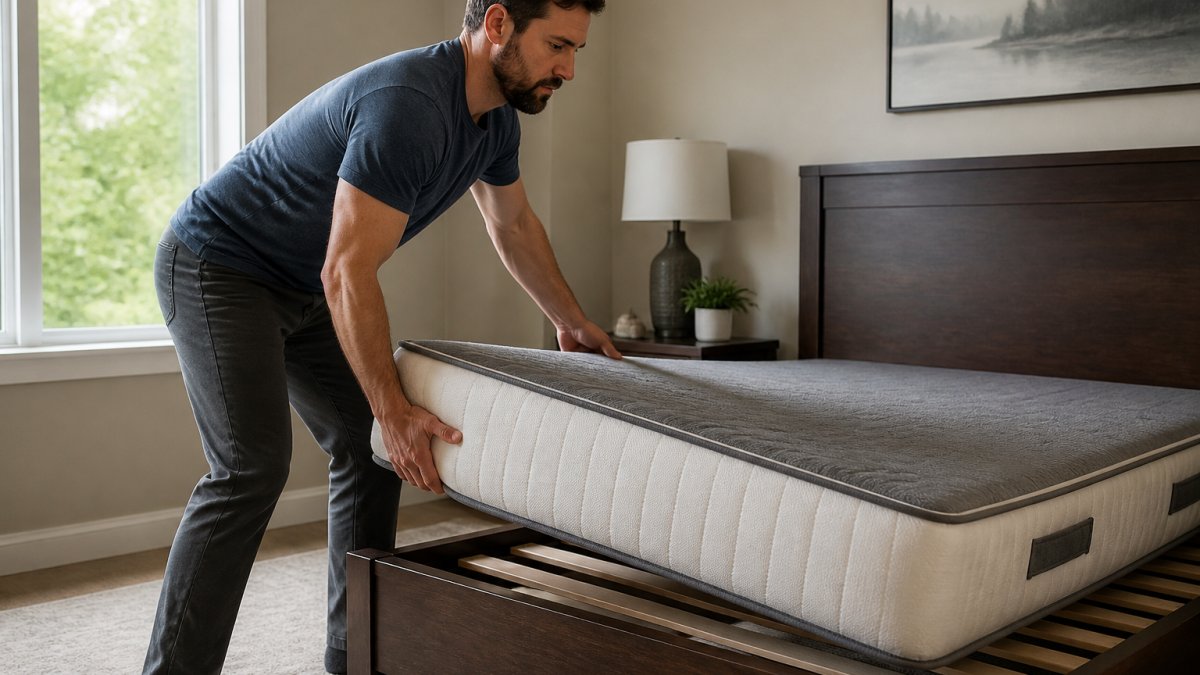
Exact frequency depends on body weight and construction. Heavier individuals should flip more often because their weight creates more concentrated compression: someone 250+ pounds might flip every 2-3 months, while someone 150 pounds could extend to 4-6 months.
A hybrid flippable mattress with pocketed coils can go longer between flips because the coil system resists compression; an all-foam flippable needs more frequent flipping. The firmer the foam density (in pounds per cubic foot), the longer you can wait.
Is flipping worth the effort? It depends on your priorities. If you're keeping the mattress 10+ years, flipping extends durability noticeably. If you replace mattresses every 5-7 years anyway, flipping helps but isn't critical.
How to Rotate a Mattress and Optimize Wear Distribution
Rotation and flipping are different actions, though both help durability. Rotating means turning the mattress 180 degrees end-to-end, so the head becomes the foot. This distributes wear along the length, preventing the head area from sagging faster than the foot area.
For non-flippable mattresses, rotation is your only option. Rotate every 2-3 months to even out wear. It won't extend lifespan as much as flipping, but it prevents head-area sagging while the foot stays firm.
For flippable mattresses, do both: flip every 3-6 months and rotate every 2-3 months. This four-position schedule distributes weight across all areas. A simple system: flip in spring, rotate in summer, flip in fall, rotate in winter.
Technique matters for safety and mattress integrity. Flip with a partner if possible, most mattresses are heavy and awkward alone. Grip the sides firmly, keep your back straight, and lift with your legs. Flipping on a sturdy bed frame is easier than on a platform with limited clearance.
How to Make a Mattress Last Longer: Practical Maintenance Steps
Beyond flipping and rotating, several maintenance practices extend mattress lifespan, and some of them protect your warranty as much as your comfort.
Protect the surface
Use a waterproof mattress protector from day one. It blocks sweat, skin cells, and spills from reaching the foam or coils, which can accelerate breakdown and create odor. A quality protector can add years to usable life. Vacuum the top surface monthly with an upholstery attachment to remove dust and allergens. Blot spills immediately rather than rubbing, which pushes liquid deeper into the layers.
Control the environment
Maintain 30-50% relative humidity in the bedroom. Very dry air can make foam brittle; high humidity encourages mold in the core. In dry climates, a humidifier helps. In humid climates, use air circulation or a dehumidifier. Avoid placing the mattress directly on a cold floor or in direct sunlight, both of which stress materials.
Support the mattress correctly
A weak or sagging foundation transfers stress unevenly and accelerates wear. Use a sturdy frame or platform with slats spaced no more than 3 inches apart. A poor foundation can reduce mattress lifespan. Check your mattress manufacturer's foundation requirements, many warranties specify an approved base, and using an unsupported frame can void coverage. Adjustable bases are compatible with many modern mattresses, but confirm the model is approved before purchase.
Follow the warranty terms
Most mattress warranties cover manufacturing defects such as sagging beyond a stated threshold (often 1-1.5 inches), not normal softening or wear. Warranties typically require:
- A mattress protector to keep the surface clean
- An approved foundation or bed frame
- Rotation or flipping according to the manufacturer's schedule
- Proof of purchase and sometimes registration within a set window
Flipping a mattress that is not designed to be flipped can damage it and void the warranty. Always check the law tag or manufacturer instructions before flipping. If the tag says "no flip" or "rotate only," follow that guidance.
Reduce concentrated stress
Avoid sitting on the mattress edge regularly. That concentrates weight on the perimeter and causes edge sagging faster than the center. If you have a partner who sits on the edge every morning, that area will wear first. A mattress pad or topper can protect high-stress areas, but it does not replace proper support underneath.
Calculate cost per year
Durability is a value question, not just a lifespan question. Divide the purchase price by the expected usable years to compare options:
- A $1,000 non-flippable mattress lasting 6 years costs about $167 per year.
- A $1,200 flippable mattress lasting 10 years costs about $120 per year.
A flippable model can cost more upfront and still be cheaper over time. But if a premium non-flippable mattress outlasts a budget flippable one, the cheaper option may win. Compare at similar quality levels, then factor in the effort of flipping and the cost of a protector and foundation.
Set a seasonal reminder to flip or rotate. Pair it with a quick inspection of the foundation and a vacuum of the surface. Small habits protect both comfort and warranty coverage.
Real Durability Expectations: Lifespan Comparison and Value
A non-flippable mattress typically lasts 5-7 years with normal use, assuming quality construction with dense foam or hybrid support. Budget models last 3-5 years; premium models can reach 8-10 years.
A flippable mattress typically lasts 8-12 years. The dual-sided design and regular flipping distribute wear so effectively that support lasts longer. A quality flippable hybrid with proper maintenance often reaches the 10-year mark.
The flippable option can become cheaper over time despite a potentially higher upfront price.
Material quality matters more than flippability. A premium non-flippable mattress with high-density foam and strong coil support might outlast a budget flippable with thin foam and weak coils.
Consider your situation: if you have chronic back pain and need a specific firmness, a non-flippable mattress with that firmness might be right, you can't flip to a different firmness anyway.
When you invest in a mattress, you're not just buying comfort, you're buying years of sleep quality. The difference between flippable and non-flippable construction determines whether you'll enjoy that mattress for a decade or replace it in five years.
| Feature | Flippable Mattress | Non-Flippable Mattress |
|---|---|---|
| Sleep Surfaces | Two usable sides | One usable side |
| Typical Lifespan | 8-12 years | 5-7 years |
| Wear Distribution | Spreads across both sides | Concentrates on top |
| Flipping Schedule | Every 3-6 months | Not applicable |
| Rotation Benefit | High | Moderate |
| Cost Per Year | Lower over time | Higher |
| Best For | Long-term value seekers | Those with specific firmness needs |
Frequently Asked Questions
Do flippable mattresses really last longer than non-flippable mattresses?
Flippable mattress construction distributes body weight and compression across two sleep surfaces instead of one, which slows foam cell breakdown and extends overall lifespan. Non-flippable mattresses concentrate wear on a single surface, causing faster sagging and support loss. The durability advantage depends on consistent flipping, if you never flip, both types wear similarly. Hybrid mattresses with symmetrical construction on both sides maximize this benefit.
How often should you flip a flippable mattress?
Flip your mattress every 3 to 6 months for the first year, then every 6 months after that. More frequent flipping in the first year helps break in the mattress evenly and prevents early body impressions. Mark your calendar or set a phone reminder to stay consistent. If you weigh over 200 pounds, flip every 3 months to better distribute compression across both sides.
What causes a mattress to sag, and can flipping prevent it?
Mattress sagging results from foam cell breakdown, pocketed coil compression, and uneven weight distribution. Flipping distributes your body weight across both sleep surfaces, slowing compression on any single side. Rotating the mattress head-to-foot also helps. However, sagging eventually occurs in all mattresses, flipping just delays it significantly. Quality materials like high-density foam and individually wrapped coils resist sagging longer than budget construction.
How can I make my mattress last longer?
Flip or rotate every 3 to 6 months, use a supportive bed frame or foundation, add a mattress protector to prevent stains and moisture, keep the bedroom cool and dry, and avoid jumping on the mattress. Flippable designs extend lifespan when maintained properly. Investing in a hybrid mattress with pocketed coils and quality comfort layers also resists wear better than all-foam or budget innerspring options over time.
Table of Contents
- What Makes a Mattress Last: The Durability Foundation
- How Long Does a Mattress Last: Realistic Timelines
- Durable Mattress Materials That Stand the Test
- Mattress Signs of Wear: When to Replace
- Mattress Maintenance Tips to Extend Durability
- Best Mattress for Long Term: Support Levels Matter
- Long-Term Value: Investment That Pays Off
- Frequently Asked Questions
Last Updated: October 11, 2026
What Makes a Mattress Last: The Durability Foundation
A mattress that lasts depends on three core factors: construction quality, material selection, and how well you maintain it. The best mattress for long term value combines all three. Most people focus only on comfort when buying, then wonder why their mattress sags within a few years.
High-quality materials resist compression and body impressions. Proper support layers prevent sagging. Flippable designs distribute wear evenly across both sides, extending usable life significantly.
Construction matters more than brand name. A hybrid mattress with quality foam, sturdy coils, and reinforced edges will outlast a premium-priced all-foam option with weak edge support. The best mattress for long term is built to handle nightly pressure without permanent deformation.
Flip your mattress every 3-6 months, even if it's not marketed as flippable. This simple habit extends lifespan by distributing body weight across different areas and preventing concentrated wear patterns.
How Long Does a Mattress Last: Realistic Timelines
Most mattresses last 7-10 years, though budget options may sag after 5 years and well-engineered mattresses can last 12+ years. Lifespan depends on body weight, sleep position, construction, and maintenance. Heavier sleepers and stomach sleepers experience faster compression; side sleepers distribute weight more evenly.
Hybrid mattresses with individually wrapped coils and high-density foam typically last longer than all-foam options. Flippable designs can effectively double lifespan by offering two usable surfaces.
A mattress that lasts 10+ years requires high-quality materials, proper support layers, and consistent maintenance, not just a premium price tag.
Durable Mattress Materials That Stand the Test
Material selection directly determines how a mattress resists compression, sagging, and support loss over time. Different constructions fail in different ways, and understanding these failure modes helps you choose a mattress built to last.
Foam Density and Compression Resistance
Polyfoam and memory foam degrade through compression, the material loses height and resilience as it's repeatedly compressed under body weight. High-density foam (2.0 pounds per cubic foot or higher) resists compression better than standard-density foam (1.5 pounds per cubic foot), but density alone doesn't guarantee longevity.
Memory foam ranges from 3.0-5.0 pounds per cubic foot. A mattress using 4.0+ pound memory foam resists body impressions better than 2.5-pound foam, though it costs more and may sleep warmer.
Polyfoam degrades faster than memory foam or latex. Budget mattresses use low-density polyfoam (1.0-1.5 lbs/cu ft), which compresses within 3-5 years. Mid-range mattresses use 2.0-2.5 lb polyfoam for longer life, though higher density adds weight and cost.
Coil Systems and Support Retention
Innerspring and hybrid mattresses rely on coils to provide structural support and prevent bottoming out. Coil quality directly affects durability.
Individually wrapped coils are wrapped in fabric sleeves that isolate each coil, reducing noise and motion transfer.
Continuous coil systems use a single wire looped into multiple coils, connected along the mattress length. This cheaper design transfers motion and stress across the entire system. Continuous coil mattresses often sag within 5-7 years.
Coil gauge (thickness) matters: lower numbers indicate thicker wire. Premium hybrids use 12-13 gauge coils; budget options use 14-16 gauge. Thicker coils resist permanent deformation longer.
Latex: Natural vs. Synthetic Durability
Latex resists compression better than foam and lasts 15+ years. Natural latex is more durable than synthetic but costs $500-$1,000 more per queen. Blended latex (70% natural/30% synthetic) offers a middle ground.
Hybrid Construction: Balancing Comfort and Longevity
Hybrid mattresses combine foam comfort layers with a coil support system. This design addresses a key durability problem: foam-only mattresses can bottom out (compress fully under body weight), losing support. Coils prevent this by providing a structural floor.
A well-engineered hybrid uses high-density foam (3.0+ lbs/cu ft) over individually wrapped coils (800+ per queen), lasting 10-12 years. Poorly engineered hybrids with thin foam and low-quality coils fail faster. Durability depends on both layers working together. Consistent support relies on the structural integrity of these materials, which is why professional foam durability remains the most critical factor in extending the functional lifespan of any sleep surface.
Flippable Design: Engineering for Extended Life
A truly flippable mattress has identical comfort and support on both sides, effectively doubling usable life.
Material Trade-Offs for Different Sleepers
Heavier sleepers (over 230 lbs) need high-density foam (4.0+ lbs/cu ft), thick coils (12-13 gauge), and hybrid construction; all-foam may sag within 5 years. Lighter sleepers (under 150 lbs) can use lower-density materials. Side sleepers benefit from high-density foam to resist shoulder and hip impressions; back and stomach sleepers distribute weight more evenly.
Durability is determined by measurable material properties, foam density, coil gauge and count, latex type, not brand reputation.
Mattress Signs of Wear: When to Replace
Visible sagging is the clearest sign of mattress failure. If you see or feel a body-shaped depression that doesn't bounce back within a few hours, the foam or coils have lost structural integrity.
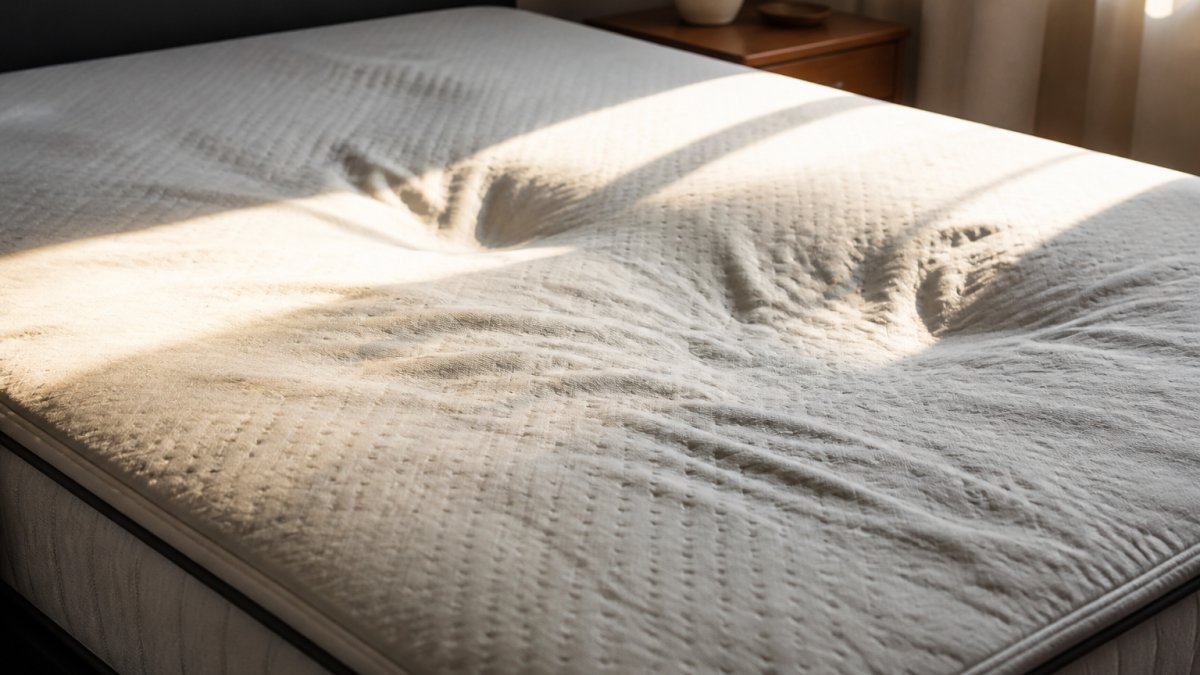
Waking with back or neck pain often signals mattress failure. As foam compresses and coils weaken, support diminishes and pressure points develop. If pain improves elsewhere, your mattress is likely the cause.
Excessive motion transfer indicates coil degradation. If you feel your partner moving throughout the night more than you used to, the coils may no longer be isolating motion properly.
Lumps, bunching, or uneven surfaces mean the internal structure has shifted. Foam layers may have separated, or coils may have broken. These issues worsen over time and cannot be repaired. Replacement becomes necessary.
Mattress Maintenance Tips to Extend Durability
Rotate your mattress every 3 months if not flippable. This distributes wear across different areas and prevents concentrated compression.
Use a mattress protector from day one. A quality protector shields the mattress from sweat, spills, and dust mites, preventing foam degradation and coil rust.
Support your mattress properly. A weak foundation accelerates wear on coils and foam. Use a sturdy box spring, platform bed, or slatted frame with proper spacing.
Keep your bedroom cool and dry (65-70°F, 30-50% humidity). Heat and humidity degrade foam and encourage mold growth.
Avoid jumping on your mattress or sitting on the edge repeatedly, as these actions concentrate stress and accelerate wear.
Best Mattress for Long Term: Support Levels Matter
The best mattress for long term matches your sleep position and body weight. Side sleepers need medium firmness; back sleepers prefer medium-firm; stomach sleepers need firmer support. A properly matched firmness level reduces stress on specific areas and extends lifespan. Durable Mattress offers medium, firm, and soft options to match your needs.
Choosing firmness based solely on brand reputation or online reviews is a common mistake. A mattress that's popular overall may be wrong for your body type, causing poor sleep and accelerated wear in pressure point areas.
Long-Term Value: Investment That Pays Off
True long-term value requires comparing purchase price, expected lifespan, warranty coverage, and total cost of ownership, not just the sticker price.
Cost Per Year of Use
Calculate cost per year by dividing purchase price by expected lifespan. A $1,200 mattress lasting 12 years costs $100/year; a $600 mattress lasting 5 years costs $120/year. A moderately priced hybrid lasting 12 years may offer better value than a budget mattress replaced every 5 years.
Warranty Coverage: What's Actually Included
Mattress warranties vary dramatically in scope, and most consumers misunderstand what they cover.
Sagging thresholds are the most important warranty detail. Most warranties cover 1.5 inches or more; some cover 1 inch; a few cover 0.75 inches.
Warranty duration ranges from 5-20 years. A 10-year warranty is standard for mid-range mattresses; budget mattresses often have 5-year warranties.
What's covered vs. excluded varies: Most cover manufacturing defects (broken coils, foam separation). Many exclude sagging from inadequate foundation support or normal wear.
Repair vs. replacement is critical. Some warranties cover repair only; others cover full replacement; a few cover only partial refunds. Always clarify what your warranty covers.
Prorated vs. non-prorated warranties differ significantly. Non-prorated warranties cover full repair or replacement for the entire period.
Hidden Ownership Costs
Beyond the purchase price and warranty, several costs affect long-term value:
Mattress protectors ($50-$200) extend lifespan by preventing moisture damage, dust mites, and stains. A waterproof protector prevents sweat and spills from degrading foam and corroding coils.
Foundation replacement may be necessary. A weak or damaged bed frame accelerates mattress wear. A sturdy platform bed or slatted frame costs $200-$800. Poor foundation support causes premature failure and warranty denial.
Warranty Claim Reality: Common Denial Reasons
Many mattress owners file warranty claims only to have them denied. Understanding common denial reasons helps you avoid them:
-
Inadequate foundation support: The most common denial reason. If your mattress is on a weak box spring, floor, or frame with gaps, the warranty is void. Verify your foundation meets the manufacturer's requirements before purchasing.
-
Sagging below the threshold: If your mattress sags 0.8 inches but the warranty covers 1.5 inches or more, the claim is denied. Measure sagging accurately before filing.
-
Missing proof of purchase: Keep your receipt and proof of purchase. Some manufacturers require this for warranty claims, even years later.
-
Normal wear and tear: Mattresses naturally soften over time. If the manufacturer determines your sagging is normal wear rather than a defect, the claim is denied.
-
Damage from misuse: Jumping on the mattress, sitting on the edge repeatedly, or allowing liquid damage voids the warranty. Document how you've used the mattress.
-
Stains or odors: These are almost never covered, even if they don't affect support.
Comparing True Ownership Cost
To compare two mattresses fairly, calculate total cost of ownership over 10 years:
Mattress A: $800 purchase price, 5-year lifespan, no warranty coverage for sagging under 1.5 inches.
- Year 0-5: $800 + $100 (protector) + $200 (foundation upgrade) = $1,100
- Year 5-10: $800 (replacement) + $100 (protector) = $900
- Total 10-year cost: $2,000
Mattress B: $1,400 purchase price, 12-year lifespan, 10-year non-prorated warranty covering sagging above 1 inch.
- Year 0-12: $1,400 + $150 (protector) + $200 (foundation) = $1,750
- Total 10-year cost: $1,750 (with 2 years of warranty remaining)
Mattress B costs $250 more over 10 years but provides better support for longer and includes warranty protection. This is better long-term value despite the higher initial price.
Don't assume a longer warranty means better durability. A 20-year prorated warranty that covers only 25% of replacement cost after year 10 may offer worse value than a 10-year non-prorated warranty. Always read the fine print.
Frequently Asked Questions
How long does a mattress last before it needs replacing?
Most quality mattresses last 7 to 10 years with proper care, though this varies based on construction, materials, and how often you flip or rotate it. Hybrid mattresses with flippable designs can extend durability by 2 to 3 years because you're distributing wear evenly across both sides. Budget-tier mattresses may show signs of wear within 5 to 7 years, while premium construction can reach 10 to 15 years. Track visible sagging, reduced support, and morning stiffness as signals to evaluate replacement.
What mattress materials are most durable for long-term use?
Hybrid mattresses combine memory foam, latex, and innerspring coils to distribute weight and reduce localized wear. Latex is naturally resilient and resists body impressions better than foam alone. High-density memory foam (5+ pounds per cubic foot) holds its shape longer than low-density alternatives. Flippable designs maximize durability by allowing you to alternate between sides, preventing premature sagging on one surface. Innerspring coils with reinforced edges resist edge collapse, a common durability issue in single-sided mattresses.
Does flipping a mattress really make it last longer?
Yes, flipping a mattress extends its lifespan by distributing body weight and pressure across both sides instead of concentrating wear on one surface. This prevents uneven sagging and body impressions that typically develop after 3 to 5 years. Flippable mattresses are engineered with consistent comfort on both sides, so each flip resets the wear cycle. Rotating (head to foot) also helps, but full flipping is more effective for long-term durability. Most manufacturers recommend flipping every 3 to 6 months for optimal results.
What's your return policy if the mattress doesn't work for my back pain?
Visit our website or contact our customer service team for current return policy details, trial periods, and warranty information. We offer options designed to give you confidence in your purchase and ensure you find the right firmness level for your specific needs. Our support team can answer questions about medium, firm, and soft options to help match your back pain requirements before you order.
Choosing a mattress that lasts requires understanding construction, materials, and maintenance. Durable Mattress builds mattresses engineered for longevity with 2-sided flippable design, hybrid construction, and available firmness levels that match your body's needs. Our mattresses prevent premature wear and extend your investment's lifespan. Shop Mattresses today and experience the difference quality construction makes for your long-term comfort.
Table of Contents
- Best Mattress for Side Sleepers: What Actually Matters
- The Mattress Firmness Scale for Side Sleepers
- Pressure Relief, Spinal Alignment, and Body Weight
- Benefits of 2-Sided Flippable Mattresses for Long-Term Durability
- How to Choose a Mattress for Side Sleeping
- Motion Isolation, Cooling, and Edge Support for Couples
- Common Mistakes Side Sleepers Make When Buying a Mattress
- Conclusion: Choosing the Best Mattress for Side Sleepers
- Frequently Asked Questions
Last Updated: October 7, 2026
Best Mattress for Side Sleepers: What Actually Matters
The best mattress for side sleepers keeps the spine straight while cushioning the shoulder and hip, and that single job drives every other decision. At Durable Mattress, we build 2-sided flippable hybrids around exactly this problem.
Your shoulder and hip carry concentrated load all night, so a mattress that feels great on day one can leave you aching by week three. Below, we'll show how firmness, body weight, and construction interact, and how to pick a surface you won't replace in two years.
Why Side Sleepers Have Different Needs
Back and stomach sleepers spread their weight across a wide area. Side sleepers don't. Your body contacts the mattress at the shoulder, ribcage, and hip, so three pressure points take the full load.
A surface that's too firm blocks the shoulder from sinking, pushing the spine out of line. A surface that's too soft lets the hips drop, bowing the lower back. The sleep health guidance from the National Sleep Foundation notes that mattress comfort directly affects how well you stay asleep, and for side sleepers that comfort is a narrow window.
The Mattress Firmness Scale for Side Sleepers
Most side sleepers do best on a medium or medium-firm mattress, roughly a 5 to 7 on the 1-to-10 firmness scale. That range lets the shoulder and hip sink just enough to level the spine without letting the midsection collapse.
Here's how the scale translates in practice:
- 1-3 (soft): Deep contouring. Best for lighter sleepers, but heavier sleepers sink too far.
- 4-6 (medium): Balanced give and support. The sweet spot for most side sleepers.
- 7-8 (medium-firm): Gentle cushioning with a firmer core. Good for heavier builds and combination sleepers.
- 9-10 (firm): Minimal sinkage. Usually too hard on shoulders and hips for side sleeping.
Soft, Medium, and Firm: What Each Does for Hips and Shoulders
Soft surfaces relieve shoulder pressure but let hips sag. Firm surfaces hold the hips up but jam the shoulder. Medium splits the difference, which is why it's the most recommended comfort level for side sleepers.
The practical test: lie on your side and check whether your spine forms a straight line from head to tailbone. If your waist dips, the mattress is too soft. If your shoulder aches, it's too firm.
Bring your own pillow to a showroom and place it between your knees. That small gap changes how your hips align, and it's the fastest way to feel whether a mattress is actually leveling your spine.
Pressure Relief, Spinal Alignment, and Body Weight
Pressure relief and spinal alignment are two sides of the same coin: the mattress must cushion the shoulder and hip while holding the midsection level.
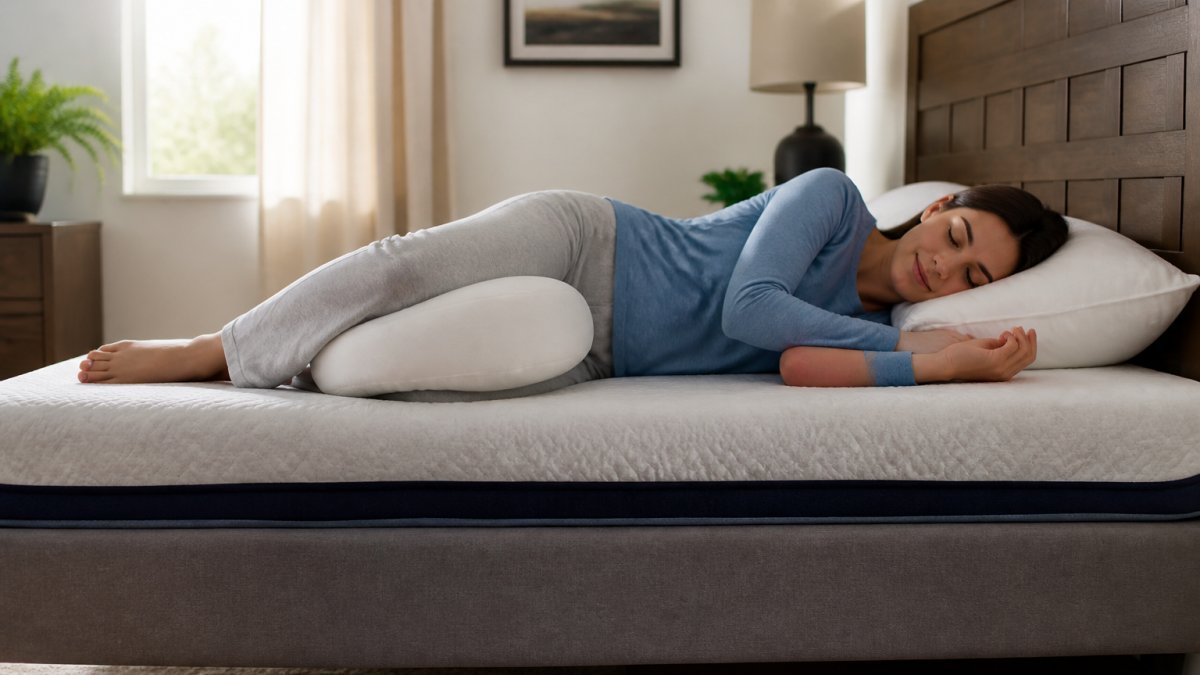
A comfort layer of memory foam or polyfoam compresses under load until it "bottoms out" against the firmer core below. A 120-pound side sleeper may compress that layer an inch, so a firm mattress feels like a board and the shoulder never sinks.
Matching Support to Build and Body Type
Side sleepers sort into three practical build tiers, and the firmness recommendation shifts with each one:
- Lighter builds (under roughly 130 pounds): Soft to medium, about a 4 to 6 on the 1-to-10 scale. A lighter sleeper doesn't generate enough load to compress a firm comfort layer, so the shoulder and hip stay perched on top. A plush or medium hybrid with a conforming top layer usually relieves pressure better than a firm one.
- Average builds (roughly 130 to 230 pounds): Medium to medium-firm, about a 5 to 7. This is the widest band and where most side sleepers land. The comfort layer compresses enough to cradle the shoulder while the core holds the hips level.
- Heavier builds (over roughly 230 pounds): Medium-firm to firm, about a 7 to 8, with a denser support core. A heavier sleeper needs a thicker, higher-density comfort layer and a stronger coil or foam core so the hips don't bottom out and the midsection doesn't collapse into a hammock.
Combination sleepers who roll onto their back or stomach should choose medium-firm, the most versatile comfort level across positions, though a true side sleeper with shoulder pain may still want the softer end of that range.
Pillow Height and the Full Side-Sleeping Setup
A mattress only solves half the alignment problem. On your side, your head needs a pillow tall enough to fill the gap between your ear and the mattress surface, or the neck bends and the upper spine follows.
The second piece is knee support. A pillow between the knees keeps the top hip from rolling forward and twisting the lower back. Test a mattress without a knee pillow and you're judging alignment with one variable missing.
Benefits of 2-Sided Flippable Mattresses for Long-Term Durability
A 2-sided flippable mattress is built with comfort layers on both faces, so you can rotate it over and use the other side. That spreads wear across two surfaces instead of one.
Most one-sided mattresses develop body impressions on the top layer because all the load lands in the same place, night after night.
Durable Mattress builds its hybrid collection this way on purpose: flip it on a schedule and the surface you sleep on stays closer to new for longer.
How to Choose a Mattress for Side Sleeping
Choosing a mattress for side sleeping comes down to four checks: firmness, pressure relief, support, and the terms behind the purchase. Get those right and you avoid the most expensive mistake in mattress buying: guessing.
Run through this before you commit:
- Confirm your firmness range. Start at medium and adjust up for weight or back pain.
- Check the support core. A hybrid with a responsive base holds alignment better than all-foam for most side sleepers.
- Test pressure points. Shoulder and hip should feel cushioned, not pinched.
- Read the fine print. Trial length, warranty, and return process decide your real risk.
- Plan for flipping. A 2-sided design only pays off if you actually rotate it.
Trial Periods, Warranties, and Return Policies
Trial periods, warranties, and return policies protect you when you buy without lying on the mattress first. A sleep trial lets you test it in your own bedroom, where your real sleep position shows up.
Look for a trial long enough to get past the adjustment period, a warranty that covers sagging rather than just manufacturing defects, and a return process that doesn't require you to arrange freight yourself. The FTC's guidance on buying big-ticket items online is a useful reminder to read return terms before you order, not after.
A warranty that only covers "manufacturing defects" often excludes the body impressions side sleepers care about most. Check whether the policy names a sagging depth threshold before you assume you're covered.
Motion Isolation, Cooling, and Edge Support for Couples
Couples need three things side sleepers often overlook: motion isolation, cooling, and edge support.
Motion isolation is about how quickly a disturbance dies out across the surface. Individually wrapped coils, also called pocketed coils, compress independently, so one partner's turn doesn't lift the other.
Cooling depends on airflow and on how much of your body contacts the surface. Memory foam is the usual heat culprit because it conforms and traps body heat.
Edge support matters more for couples than solo sleepers because two people share the perimeter.
When Partners Differ in Weight or Firmness Preference
If one partner is a 120-pound side sleeper who wants soft and the other is a 220-pound side sleeper who wants firm, no single firmness will fully satisfy both. Three workable approaches:
- Split the difference at medium-firm. It's the most versatile single surface, and a flippable design lets you choose which face is up.
- Choose a flippable 2-sided mattress. One face can be medium, the other firm, so the couple picks the side that suits the heavier or more pain-prone sleeper and adjusts from there.
- Use a split or dual-firmness setup if the gap is large. It costs more and limits your options, but it's the only way to give each sleeper a genuinely different feel.
A flippable medium-firm hybrid gives most couples the most room to compromise, pairing the motion isolation and airflow of a hybrid with two firmness options in one purchase.
| Feature | Why It Matters for Side Sleepers | What to Look For |
|---|---|---|
| Firmness | Levels the spine at shoulder and hip | Medium to medium-firm |
| Pressure relief | Cushions shoulder and hip | Contouring comfort layer |
| Support core | Prevents midsection sag | Responsive hybrid base |
| Motion isolation | Reduces partner disturbance | Individually wrapped coils or all-foam |
| Cooling | Prevents heat buildup | Breathable, open construction |
| Edge support | Firm perimeter for couples | Reinforced edges |
| Durability | Resists body impressions | 2-sided flippable design |
Motion isolation and cooling often pull in opposite directions. The all-foam mattress that isolates movement best is usually the one that traps the most heat, so a hot sleeper who also shares a bed may need to prioritize a hybrid with pocketed coils and accept slightly more motion transfer.
Common Mistakes Side Sleepers Make When Buying a Mattress
The biggest mistake is buying too firm. People assume firm equals supportive, then wake up with shoulder and hip pain because the surface never let the joint sink.
A second mistake is judging a mattress in the first ten minutes. Pressure problems show up after a few nights, not a few minutes, which is why a trial period matters more than a showroom test.
And the one nobody tells you about: people buy a one-sided mattress, never flip it, and then blame the brand when it sags.
Match firmness to your body weight first, then confirm the support core and sleep trial. Those three factors decide whether a mattress for side sleepers works for you long term.
Conclusion: Choosing the Best Mattress for Side Sleepers
Finding the best mattress for side sleepers means matching firmness to your build, confirming pressure relief at the shoulder and hip, and choosing a design that holds up over years, not months. Most people get the first two partly right and the last one completely wrong.
That's where Durable Mattress comes in. Our 2-sided flippable hybrid mattresses are built to be flipped for increased longevity, available in Medium, Firm, and Soft, and engineered to prevent premature wear so you get more out of the investment.
Frequently Asked Questions
What type of mattress is better for side sleepers?
Side sleepers generally do best on a medium to medium-firm mattress that lets the shoulders and hips sink in slightly while keeping the spine straight. Memory foam and hybrid mattresses are common picks because they contour to the body and reduce pressure points. A mattress that is too firm creates pressure at the shoulder and hip, while one that is too soft lets the midsection sag and throws the spine out of alignment.
Do side sleepers need firm or plush mattresses?
Most side sleepers land on medium or medium-firm rather than plush or extra-firm. Plush mattresses cushion the shoulder and hip but can let the lower back dip, while extra-firm surfaces push back against the shoulder and cause numbness. The right pick depends on body weight: lighter sleepers often do well on medium, and heavier sleepers usually need medium-firm for core support.
How does a flippable mattress design benefit side sleepers?
A 2-sided flippable mattress lets you rotate the sleep surface, so wear is spread across both sides instead of concentrating on one. For side sleepers, that means the comfort layer keeps its contouring and pressure relief for longer, which matters because compressed foam loses the give that protects shoulders and hips. Flipping also gives you two firmness options in one mattress if the two sides are built differently.
What is the best mattress firmness for side sleepers with hip pain?
Medium-firm is the usual starting point for side sleepers with hip pain, because it supports the pelvis without pressing hard into the hip. A surface that is too firm concentrates pressure on the hip joint, and one that is too soft lets the hips sink and rotate the spine. If hip pain persists after a few weeks on a new mattress, talk to a healthcare provider, since mattress firmness alone may not resolve it.
Buying a mattress you can't lie on first is a real risk, and side sleepers feel a wrong choice fastest. Durable Mattress removes most of that risk with a flippable hybrid design available in Medium, Firm, and Soft, so you can match the surface to your build and keep it supportive for years. Get started with Durable Mattress and choose a mattress built to last.
Double the life of your mattress today
Our mattresses will help you get the sleep you need. Not sure which one’s right for you? Check out our firmness guide below.